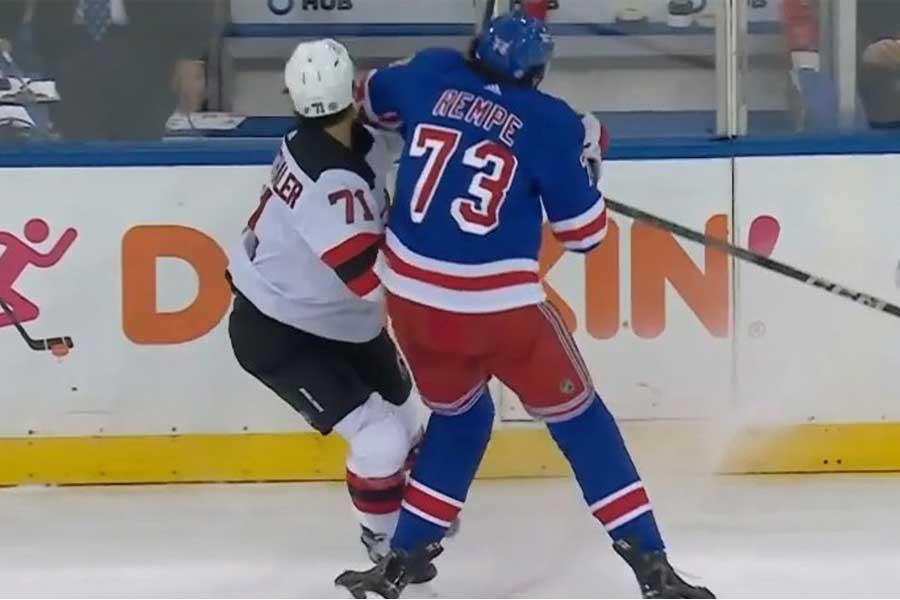
Elbowing (การใช้ศอกกระแทก) is a physical infraction in ice hockey that occurs when a player uses an extended elbow to strike or check an opponent in a manner that may or may not cause injury.
Under IIHF Rule 45, elbowing is considered a physical infraction. The referee evaluates the nature of the contact, the degree of force and violence, and whether the action recklessly endangered the opposing player.
Elbowing is different from normal body contact. A legal check should be performed within the rules and without deliberately using the elbow as the primary point of contact.
WHAT IS ELBOWING?
An elbowing penalty may be called when a player:
- Extends the elbow to make contact with an opponent.
- Uses the elbow to strike or check an opponent.
- Makes contact with excessive force using the elbow.
- Recklessly endangers an opponent through an elbowing action.
The important factor is the nature of the contact and the player’s action. The referee has discretion to determine the appropriate penalty based on the circumstances of the play.
REFEREE SIGNAL — ELBOWING
Official Signal
Tapping either elbow with the opposite hand.
The referee indicates an elbowing infraction by touching or tapping one elbow with the opposite hand.
This simple motion identifies the specific body part involved in the infraction and allows players, coaches, spectators and game officials to understand that the call is for Elbowing (การใช้ศอกกระแทก).
How the Signal Is Performed
- The referee stops play or indicates the penalty according to the game situation.
- The referee brings one hand toward the opposite arm.
- The hand taps or touches the elbow area.
- The signal identifies Elbowing — Rule 45.
- The referee then communicates the penalty to the penalty bench/officials as required.
Signal to remember:
Tap the elbow with the opposite hand = ELBOWING.
PENALTIES FOR ELBOWING
The IIHF Rule Book 2026/27 provides the referee with discretion based on the severity of the infraction.
Minor Penalty (โทษเบา)
A Minor Penalty (โทษเบา) may be assessed when a player is guilty of elbowing an opponent, with the penalty determined according to the degree of force and violence.
Major Penalty (โทษหนัก)
A Major Penalty (โทษหนัก) may be assessed when the elbowing action recklessly endangers the fouled player and a minor penalty would not be sufficient.
Major Penalty + Game Misconduct
A Major Penalty and Game Misconduct Penalty may be assessed when the player recklessly endangers an opponent and, in the referee’s judgment, a major penalty alone would not be sufficient.
The assessment considers factors such as:
- Severity of the infraction
- Severity of the contact
- Degree of violence
- Overall seriousness of the action
Supplementary discipline may also be applied by the appropriate authorities when deemed appropriate.
WHY ELBOWING IS DANGEROUS
The elbow is a hard and relatively small point of contact. An elbow delivered at high speed can cause significant injury, particularly when contact occurs around the head, face or upper body.
Because of this, officials must evaluate not only whether contact occurred, but also how the contact was made and the level of danger created by the action.
IIHF officiating emphasizes that officials must make decisions based on what they can properly observe on the ice, while working as a team to achieve consistent officiating.
ELBOWING VS. LEGAL BODY CHECK
| Elbowing (การใช้ศอกกระแทก) | Legal Body Check |
|---|---|
| Elbow is used to strike/check | Body is used to make contact |
| Elbow may be extended toward opponent | Contact is made within the rules |
| May involve excessive or reckless contact | Controlled and legal physical contact |
| Can result in a penalty | No penalty when performed legally |
The key distinction is the manner and nature of the contact, not simply the fact that physical contact occurred.
KEY POINTS FOR PLAYERS
Players should remember:
- Keep elbows under control during physical play.
- Avoid extending the elbow into an opponent.
- Do not use the elbow as the primary point of contact.
- Maintain awareness of an opponent’s position.
- Avoid reckless contact that could cause injury.
- Respect the referee’s decision and continue playing within the rules.
Quick Reference
Rule: 45 — Elbowing
Infraction: Using an extended elbow to strike/check an opponent
Referee Signal: Tap either elbow with the opposite hand
Possible Penalty: Minor / Major / Major + Game Misconduct, depending on severity
The IIHF’s current rules and officiating materials are available through its official rules and regulations resources.