yes

Penalty Shot

What Is a Penalty Shot?

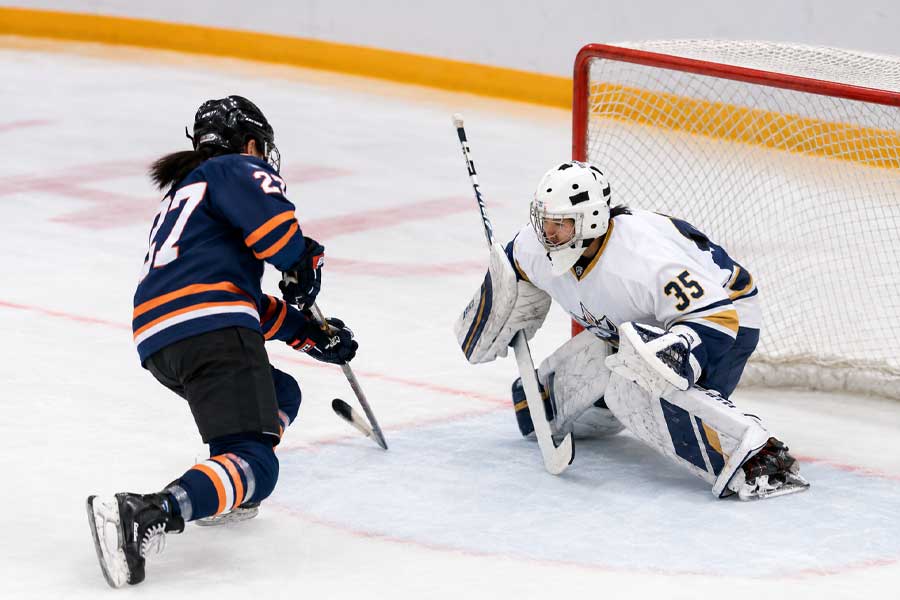
A Penalty Shot is a special scoring opportunity awarded to an attacking player when a defending player commits a specific infraction that illegally prevents a clear scoring opportunity.

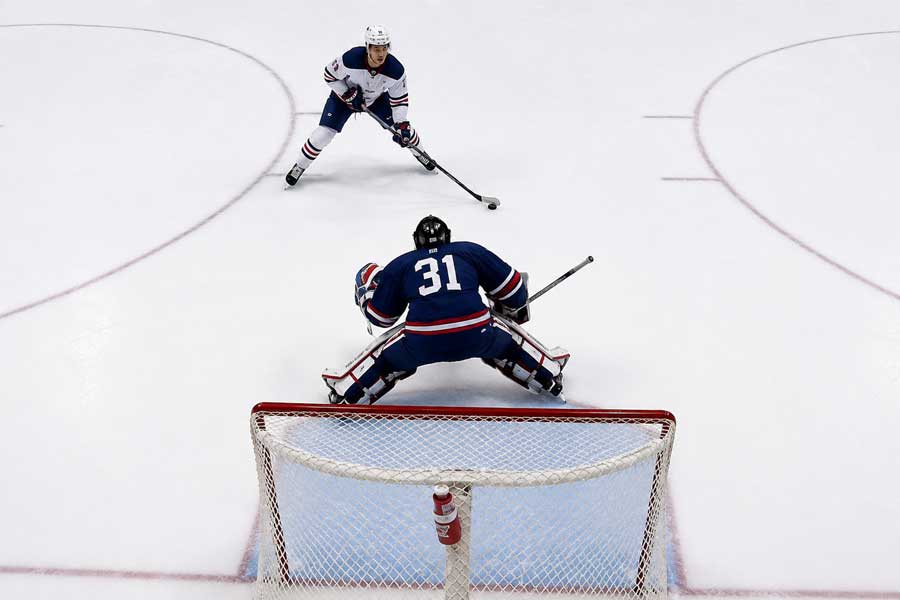
Unlike a normal penalty, the player taking the penalty shot is given a direct opportunity to score against the opposing goaltender, with no defending players between the shooter and the goalie.

The purpose of the penalty shot is to restore a significant scoring opportunity that was unfairly taken away by an infraction.

When Is a Penalty Shot Awarded?

A penalty shot may be awarded when an attacking player has a clear scoring opportunity and a defending player commits an infraction that prevents that opportunity.

Situations can include:

  • An attacking player being illegally denied a clear breakaway scoring opportunity.
  • A defending player deliberately dislodging the goal during a scoring opportunity.
  • A defending player committing certain illegal actions against an opponent who has a clear opportunity to score.
  • A player or team committing a specific infraction that, under the applicable competition rules, results in a penalty shot.

The exact circumstances depend on the official rulebook being used, such as the IIHF rules or the rules of a particular league or competition.


REFEREE SIGNAL — PENALTY SHOT

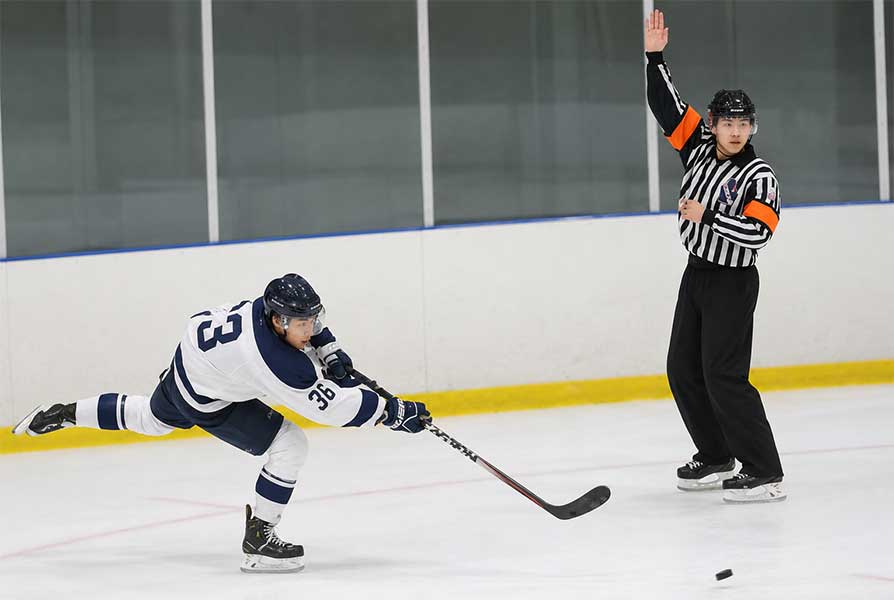
When a penalty shot is awarded, the referee indicates the decision using the appropriate penalty-shot signal.

The signal communicates to players, coaches, officials, and spectators that a penalty shot has been awarded.

How the Signal Is Performed

The referee points toward the center of the ice, indicating that a penalty shot will be taken.

The official signal should be clear and deliberate so that everyone involved understands the restart procedure.

What Does the Signal Mean?

The signal means:

“A penalty shot has been awarded.”

The designated player will take the shot against the opposing goaltender.


PENALTY SHOT PROCEDURE

Once the penalty shot has been awarded, the officials prepare for the attempt.

1. The Shooter Takes Position

The designated player takes position at the appropriate face-off/penalty-shot location.

2. The Goaltender Takes Position

Only the defending goaltender is permitted to defend the penalty shot.

The goaltender must remain within the applicable positioning requirements until the attempt begins.

3. The Referee Authorizes the Shot

The referee gives the appropriate signal to indicate that the player may begin the penalty-shot attempt.

4. The Player Attempts to Score

The player skates toward the goal and attempts to score against the goaltender.

The player is generally allowed one continuous attempt and must follow the applicable rules governing the penalty shot.

5. The Result Is Determined

The attempt ends when a goal is scored, the puck enters the goal area without becoming a goal, the player loses control of the puck, or the applicable rules otherwise determine that the attempt has ended.


IMPORTANT POINTS FOR PLAYERS

A penalty shot is not simply a free chance to shoot the puck.

Players must follow the specific rules governing the attempt.

Key points include:

  • The puck must remain in motion toward the goal during the attempt.
  • The shooter must follow the permitted movement and puck-handling rules.
  • The goaltender must follow the restrictions applicable to penalty-shot situations.
  • The referee has the final authority to determine whether the attempt has been completed and whether a goal is valid.

WHY THE PENALTY SHOT MATTERS

The penalty shot is one of the most dramatic moments in ice hockey.

It creates a direct one-on-one situation between:

SHOOTER vs. GOALTENDER

For the shooter, it is an opportunity to convert a major scoring chance.

For the goaltender, it is a test of positioning, patience, reading the shooter, and reaction speed.

For the referee, it is an important decision that can significantly affect the outcome of a game.


REFEREE SIGNALS — QUICK REFERENCE

Signal Meaning
Penalty Shot Signal A penalty shot has been awarded
Goal Signal A goal has been scored
Washout / No Goal The play does not result in a goal
Face-Off Direction Indicates where play will restart

Key Takeaway

The Penalty Shot signal is an important referee communication in ice hockey. It identifies a situation in which an attacking team has been awarded a direct scoring opportunity because an infraction has illegally denied a significant scoring chance.

Understanding referee signals helps players, coaches, officials, and spectators follow the game more accurately and understand why a particular decision has been made.

PENALTY SHOT = A DIRECT ONE-ON-ONE SCORING OPPORTUNITY
No Goal

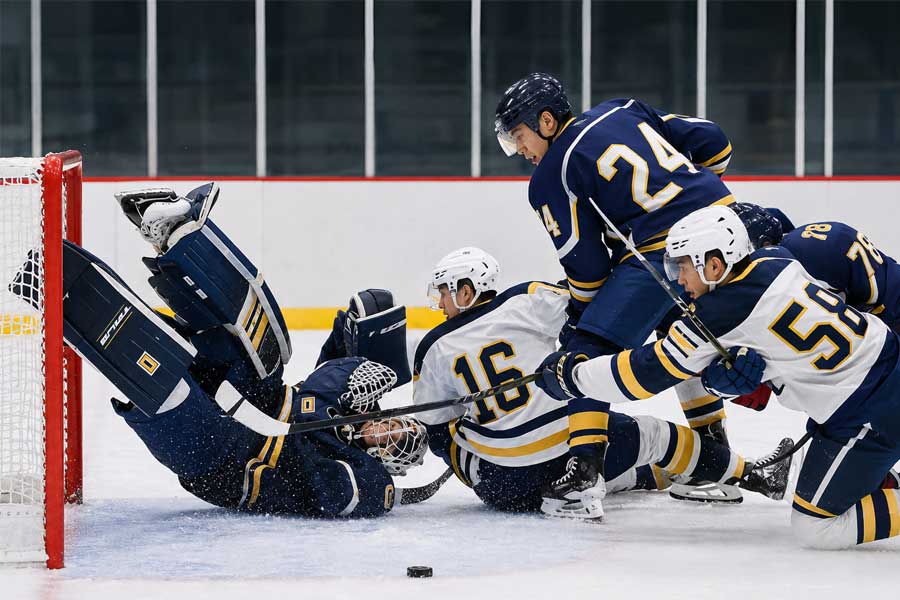
No Goal is a referee ruling indicating that a goal has not been awarded. The puck may have entered the net, but play is ruled dead or the apparent goal is disallowed because the conditions required for a valid goal were not met.

The referee may use the No Goal signal to clearly communicate to players, coaches, scorekeepers, and spectators that the apparent goal does not count.

When is a No Goal ruling used?

A goal may be ruled No Goal in situations such as:

  • The attacking player deliberately directs, kicks, or otherwise illegally propels the puck into the net, when the applicable rules do not permit it.
  • The puck enters the net after an infraction that causes the play to be stopped.
  • The attacking team interferes with the goalkeeper in a manner that prevents the goalkeeper from playing their position normally.
  • The puck enters the net after the referee has already stopped play.
  • The puck is directed into the goal by an action that is not permitted under the applicable playing rules.
  • A goal is scored during a situation where the attacking team is penalized and the rules require the goal to be disallowed.
  • Video review or an official determination establishes that the goal does not meet the requirements for a legal goal.

Referee Signal

When signaling No Goal, the referee communicates that the apparent goal is disallowed. The signal is intended to provide a clear visual indication that no goal has been awarded.

Depending on the specific rule situation and governing ruleset, the referee may also use an accompanying signal to explain the reason for the decision, such as goalkeeper interference, kicking the puck, hand pass, or another infraction.

Important Point

No Goal does not necessarily mean that the puck never entered the net.

It means that the goal is not legally awarded under the applicable rules.

For example, if a puck enters the net but the attacking player has interfered illegally with the goalkeeper, the referee can rule No Goal even though the puck clearly crossed the goal line.

Why the No Goal Signal Matters

The No Goal signal is important because it:

  • Clearly communicates the referee’s decision.
  • Prevents confusion after an apparent scoring play.
  • Helps players immediately understand that play will continue without awarding a goal.
  • Allows the scorekeeper to record the correct game situation.
  • Provides a clear visual decision for spectators and broadcasters.

Summary

NO GOAL = The apparent goal is disallowed and no goal is awarded.

The final decision is based on the applicable ice hockey rules and, where permitted, video review.

Goal

The GOAL signal is used by the referee to indicate that a goal has been legally scored.

After the puck completely crosses the goal line between the goal posts and below the crossbar, the referee signals the goal by pointing toward the center of the ice. This signal confirms that the goal has been counted and the play will proceed with a face-off at center ice.

Referee Signal

Signal: The referee points toward the center of the ice with one arm.

Meaning: A legal goal has been scored and the goal is awarded.

When Is the Goal Signal Used?

The referee gives the GOAL signal when:

  • The puck completely crosses the goal line.
  • The goal is scored according to the rules of play.
  • No rule violation has occurred that would disallow the goal.
  • The officials have determined that the goal should count after reviewing the play, when video review is available.

Important Point

The GOAL signal indicates that the goal has been awarded. However, the referee may need to communicate with the other officials or conduct a video review before play resumes if there is uncertainty about the play.

A goal may be disallowed if, for example, the puck was deliberately directed into the net by a hand or the attacking team committed an infraction that affected the play.

Why Is the GOAL Signal Important?

The GOAL signal provides a clear and immediate visual indication to players, coaches, scorekeepers, and spectators that a goal has been awarded.

Understanding this signal helps everyone quickly recognize the outcome of an important scoring play and follow the referee’s decision.


GOAL — QUICK REFERENCE

Signal: Pointing toward center ice
Meaning: Goal awarded
Result: The goal is counted and play restarts with a face-off at center ice.

Time-Out

In ice hockey, a Time-Out is a temporary stoppage in play requested by a team and granted by the referee according to the applicable competition rules.

REFEREE SIGNAL

The referee signals a Time-Out by using both hands to form the letter “T” in front of the chest.

This is one of the standard game-official signals used to clearly communicate to players, coaches, the timekeeper, and spectators that a team time-out has been granted.

HOW THE SIGNAL IS PERFORMED

  1. The referee stops play when appropriate.
  2. The referee brings both hands together in front of the chest.
  3. The hands are positioned to form the shape of a “T.”
  4. The signal indicates that a Time-Out has been granted.
  5. The game timekeeper records and manages the duration of the time-out.

WHEN CAN A TEAM REQUEST A TIME-OUT?

Under the IIHF rules, a team may request its time-out during an appropriate stoppage in play and before the referee has completed the player-change procedure and indicated the face-off location.

The request must therefore be made at the correct time. A team cannot simply request a time-out after the face-off procedure has already been completed.

IMPORTANT RESTRICTIONS

The IIHF rules include situations in which a time-out is not permitted. For example:

  • A time-out cannot be granted following a face-off violation.
  • A defensive team cannot be granted a time-out following icing.
  • A defensive team cannot be granted a time-out following certain goalkeeper-caused stoppages from a shoot-in beyond the center red line.
  • A time-out cannot be granted when a defending player accidentally dislodges the goal and causes a stoppage.
  • Once the referee has awarded a Penalty Shot and given the required instructions to the shooter and defending goalkeeper, a time-out cannot be granted.
  • A time-out is not permitted during a shootout.

Specific competition regulations may also contain additional provisions, so teams and officials should always follow the current rules governing their competition.

WHY IS THE TIME-OUT SIGNAL IMPORTANT?

The “T” signal provides a simple and universally recognizable visual indication that the stoppage is a Time-Out rather than an ordinary stoppage in play.

Clear communication between the referee, players, coaches, and off-ice officials is essential for maintaining the correct flow of the game.

QUICK REFERENCE

Signal: Both hands form a “T” in front of the chest.
Meaning: Time-Out.
Official: Referee.
Purpose: Indicates that a team time-out has been granted.

Official Rule Reference: IIHF Rule Book — Game Official Signals, Rule 87 — TIME-OUT. The IIHF signal is performed by using both hands to form a “T” in front of the chest.

Too Many Players

What is “Too Many Players on the Ice”?

Too Many Players on the Ice is an ice hockey infraction that occurs when a team has more players on the playing surface than permitted during play, most commonly because of an improper line change or substitution.

Under IIHF Rule 74, players may change at any time during play, provided that the player leaving the ice is within 1.50 metres (5 feet) of the Players’ Bench and is out of the play before the replacement enters. If a substitute enters before the departing teammate is within this permitted area and the team clearly has too many players on the ice, a Bench Minor Penalty may be assessed.

When is the infraction called?

The infraction can occur during a line change when:

  • A player enters the ice before the departing player is within the 1.50 m limit of the Players’ Bench.
  • The player entering or leaving the ice plays the puck while both players are still on the ice.
  • The player entering or leaving checks or makes physical contact with an opponent while both players are still on the ice.
  • A player leaves the ice through an exit other than the Players’ Bench during play.

A player entering the ice as a substitute is considered to be on the ice once both skates are on the ice. A retiring player with one skate on the ice and one skate in the Players’ Bench is considered off the ice.

Important Exception

If, during a substitution, the player entering or leaving is accidentally struck by the puck, play is not stopped and no penalty is assessed.

The key issue is whether the players involved in the change become actively involved in the play while the substitution is still in progress.


REFEREE SIGNALS — Too Many Players on the Ice

The official IIHF signal for Too Many Players on the Ice is:

The official indicates six (6) fingers with one hand, held in front of the chest.

How to perform the signal

  1. Stop play when the infraction requires an immediate stoppage.
  2. Raise one hand in front of the chest.
  3. Extend six fingers to indicate that the team has too many players on the ice.
  4. Communicate the infraction to the appropriate Referee when the call is made by a Linesperson.

The signal visually represents the presence of an extra player on the ice.

Who can call the infraction?

Under IIHF procedures, Referees and Linespersons may be involved in identifying and stopping play for Too Many Players on the Ice. Linespersons may stop play when they observe this violation and report the infraction to the Referee.

The IIHF also specifically notes that Linespersons have responsibility for stopping play in situations involving too many players on the ice.


PENALTY

A violation of Rule 74 results in a:

Bench Minor Penalty

The penalty is assessed to the offending team rather than to a specific player because the infraction normally results from a team substitution or line-change error.

If the offending team scores a goal before the official stops play to assess the Bench Minor, the goal is disallowed and the penalty for Too Many Players on the Ice is assessed.


COMMON EXAMPLE

A team has five skaters on the ice. During a line change, a sixth skater enters the ice before the departing player has reached the permitted 1.50 m area near the Players’ Bench.

If either player becomes involved in the play—for example, by playing the puck or making physical contact with an opponent—the officials can call Too Many Players on the Ice.

The result is a Bench Minor Penalty.


WHY THIS RULE MATTERS

Line changes are an essential part of ice hockey. Players must change quickly while maintaining the correct number of players on the ice.

Too Many Players on the Ice prevents a team from gaining an unfair numerical advantage during a substitution and helps maintain the competitive balance of the game.

The rule also emphasizes the importance of communication between players, coaches and game officials during line changes.


QUICK REFERENCE

Item Information
Rule IIHF Rule 74
Infraction Too Many Players on the Ice
Common Cause Illegal/improper line change
Penalty Bench Minor Penalty
Substitution limit Departing player within 1.50 m of Players’ Bench
Official Signal Six fingers displayed in front of the chest
Officials involved Referee / Linesperson
Typical result Stoppage of play + Bench Minor

Key Point

Too Many Players on the Ice is primarily a substitution and line-change infraction. The official signal is made by displaying six fingers with one hand in front of the chest.

Rules and interpretations can vary by competition or governing body. For IIHF competitions, always refer to the latest IIHF Official Rule Book and Situation Handbook.

Delay of Game

What Is Delay of Game?

Delay of Game is a penalty in ice hockey that occurs when a player or team deliberately causes a stoppage of play or otherwise interferes with the normal flow of the game.

Under the current IIHF Official Rule Book 2026/27, Rule 63 — Delaying the Game, a player or team may be penalized when, in the opinion of the Referee, they delay the game in any manner.

The purpose of this rule is to prevent players or teams from deliberately wasting time, stopping play unnecessarily, or gaining an unfair advantage by interrupting the normal progress of the game.


REFEREE SIGNAL — DELAY OF GAME

When calling a Delay of Game penalty, the Referee uses the designated penalty signal to communicate the infraction to the players, benches, other officials, and spectators.

The signal is made by bringing the non-whistle hand across the chest and then extending the arm forward.

The signal indicates that a player has been assessed a minor penalty for Delay of Game.

Penalty: Minor Penalty — 2 minutes

The exact signal should be interpreted together with the Referee’s verbal call and the specific situation that caused the stoppage.


COMMON SITUATIONS THAT CAN RESULT IN DELAY OF GAME

Under IIHF Rule 63.2, a minor penalty for Delay of Game can be assessed in several situations.

1. Deliberately Freezing the Puck

A player, including a goalkeeper in situations covered by the rule, may be penalized for deliberately holding, freezing, or playing the puck with the stick, skates, or body in a manner intended to cause a stoppage of play.

For a goalkeeper, this provision applies when outside the goal crease area.

2. Deliberately Shooting or Batting the Puck Out of Play

A player may receive a penalty for deliberately shooting or batting the puck outside the playing area, whether during play or after a stoppage of play.

This can include intentionally using the hand, leg, foot, arm, or stick to send the puck out of the playing area.

3. Shooting the Puck Directly Out of the Playing Surface

A minor penalty can be assessed when a player shoots or bats the puck directly, without it being deflected, out of the playing surface from the defending zone in situations where protective glass is present.

The determining factor is the position of the puck when the player made contact with it.

4. Deliberately Displacing the Goal Post

A player who deliberately moves the goal post from its normal position may be penalized for Delay of Game.

The Referee stops play when the offending team gains control of the puck. In certain situations involving an imminent scoring opportunity on an open net, the Referee may award a goal under the applicable rule.

5. Deliberately Falling on or Covering the Puck

A player other than the goalkeeper may be penalized if they deliberately fall on or gather the puck into their body.

However, a player who drops to their knees to block a shot is not automatically penalized if the puck is simply shot underneath them or becomes lodged in them as part of the play.


WHY IS DELAY OF GAME PENALIZED?

The rule exists to protect the pace, fairness, and continuity of the game.

Without this rule, a team could intentionally:

  • Waste valuable playing time
  • Stop play repeatedly
  • Prevent an opponent from developing an attack
  • Gain a tactical advantage by sending the puck out of play
  • Deliberately prevent the game from restarting normally

The penalty therefore discourages intentional delays and helps maintain the flow of the game.


EXAMPLE SITUATION

Situation:

A defending player is under pressure in their own zone. Instead of making a normal clearing play, the player deliberately shoots the puck directly over the protective glass and out of the playing area.

Referee’s Decision:

The Referee stops play and assesses a Minor Penalty — Delay of Game, provided the situation meets the requirements of Rule 63.2.

Result:

The offending team plays shorthanded for two minutes, subject to the normal penalty administration rules.


IMPORTANT NOTE

Not every puck that leaves the playing area automatically results in a Delay of Game penalty.

The Referee must determine whether the action meets the conditions of the rule. For example, the IIHF rule specifically distinguishes between a puck deliberately sent out of play and situations where the puck leaves the playing area without the required deliberate action.

Therefore, players, coaches, and spectators should consider how and where the puck was played, rather than simply whether the puck went out of the rink.


DELAY OF GAME — QUICK REFERENCE

Item Information
Rule IIHF Rule 63
Infraction Delaying the Game
Penalty Minor Penalty (โทษเบา)
Penalty Time 2 minutes
Called By Referee
Common Examples Deliberately sending puck out of play, deliberately freezing puck, deliberately displacing goal post, covering puck
Purpose Prevent intentional delays and preserve game flow

REFEREE SIGNALS — WHY THEY MATTER

Referee signals are an essential part of ice hockey officiating. Because games are fast and noisy, visual signals allow officials to communicate decisions clearly to players, coaches, scorekeepers, broadcasters, and spectators.

The IIHF provides official materials and procedures to promote consistent officiating and interpretation of the rules.

Understanding the Delay of Game signal helps everyone watching or participating in the game recognize when a stoppage has resulted from a specific rule violation.


SUMMARY

Delay of Game is designed to prevent deliberate actions that unnecessarily stop or slow the game.

When the Referee determines that a player has intentionally delayed play in a manner covered by the rule, a Minor Penalty of two minutes may be assessed.

Knowing the referee signal and understanding the situations covered by IIHF Rule 63 helps players, coaches, officials, and fans better understand the decisions made during an ice hockey game.

Kneeing (ใช้เข่าชน)

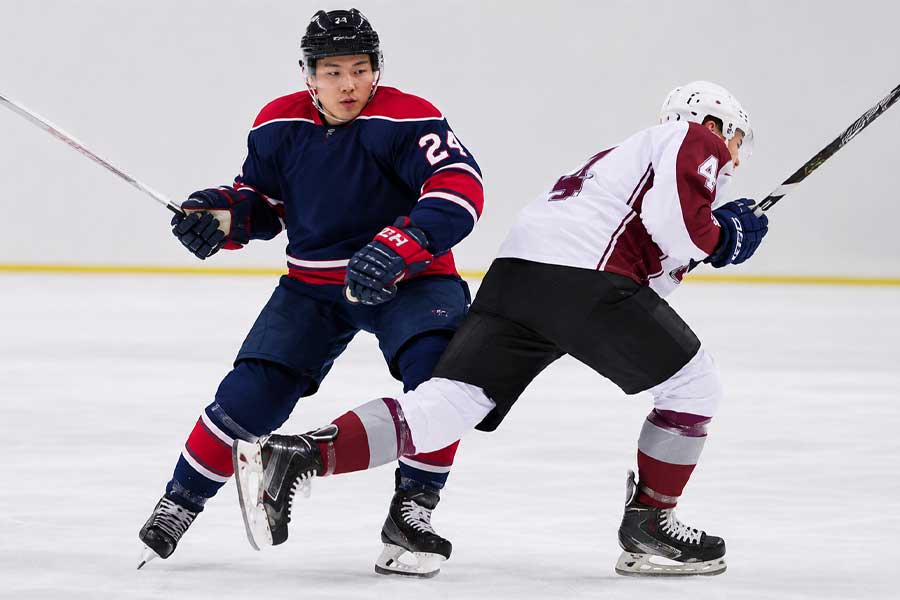
Kneeing (ใช้เข่าชน) is a physical infraction in ice hockey that occurs when a player leads with the knee and, in some situations, extends the leg outward to make contact with an opponent.

Under IIHF Official Playing Rule 50, kneeing is considered an illegal form of physical contact because it can create dangerous knee-to-knee or leg-to-leg collisions and may expose an opponent to a significant risk of injury.

What is Kneeing?

Kneeing occurs when a player uses the knee or extends the leg outward as the primary means of making contact with an opponent.

A typical example is when a player attempts to deliver a body check but extends one knee toward the opponent instead of making contact with the upper body.

The key point is that the illegal contact is generated by the knee or leg rather than a legal body check.

Recent IIHF disciplinary decisions have also emphasized situations where a player adjusts their position and extends the knee, resulting in dangerous knee-on-knee or leg-on-leg contact.


PENALTIES FOR KNEEING

Under IIHF Rule 50, the penalty depends on the severity of the infraction.

Minor Penalty (โทษเบา)

The referee may assess a Minor Penalty (โทษเบา) when a player is guilty of kneeing an opponent. The severity of the infraction is taken into consideration when determining the appropriate penalty.

Major Penalty + Game Misconduct

A Major Penalty and automatic Game Misconduct Penalty may be assessed when the player recklessly endangers the opponent by kneeing and a Minor Penalty would not provide sufficient sanction.

The referee considers factors including:

  • Severity of the infraction
  • Severity of the contact
  • Degree of violence
  • General reprehensibility of the action

Supplementary Discipline — การลงโทษเพิ่มเติม

In appropriate cases, additional disciplinary action may be imposed by the proper authorities following the game.


REFEREE SIGNAL — KNEEING

The official IIHF signal for Kneeing (ใช้เข่าชน) is:

“Slapping either knee with the palm of the hand, while keeping both skates on the ice.”

How the referee performs the signal

  1. The referee keeps both skates on the ice.
  2. The referee uses the palm of the hand.
  3. The referee slaps or taps either knee.
  4. The signal identifies the infraction as Kneeing (ใช้เข่าชน).

This signal is specifically associated with Rule 50 — Kneeing in the IIHF Game Official Signals.


WHY KNEEING IS PENALIZED

Kneeing is treated seriously because contact involving the knee can be unpredictable and potentially dangerous.

Unlike a legal body check, where the player generally attempts to make controlled contact with the opponent’s body, kneeing involves the knee or extended leg becoming the point of contact.

This can create:

  • Knee-to-knee collisions
  • Leg-to-leg contact
  • Loss of balance
  • Serious lower-body injuries
  • Dangerous falls on the ice

For this reason, officials are expected to evaluate both the action and the severity of the contact when determining the appropriate penalty.


KNEEING VS. A LEGAL BODY CHECK

A legal body check and kneeing should not be confused.

Legal Body Check

A player attempts to make controlled body contact with an opponent in accordance with the applicable rules.

Kneeing (ใช้เข่าชน)

A player leads with the knee or extends the leg outward to make contact with the opponent.

One important factor for officials is determining how the contact occurred and which part of the body created the primary contact.


EXAMPLE OF A KNEEING INFRACTION

A player approaches an opponent who has possession of the puck and attempts to make a body check.

Instead of maintaining a controlled body position, the checking player extends one knee outward. The opponent moves into the contact, resulting in a direct knee-to-knee collision.

The action may be penalized as Kneeing under Rule 50, particularly when the knee extension creates dangerous contact or recklessly endangers the opponent. Recent IIHF disciplinary cases demonstrate that an intentional attempt to injure is not necessarily required for the action to be considered a violation.


KEY POINTS FOR PLAYERS AND COACHES

Players should:

  • Keep their knees and legs under control when delivering a body check.
  • Avoid extending a knee toward an opponent.
  • Maintain proper body position during physical contact.
  • Avoid adjusting the body in a way that creates dangerous knee-on-knee contact.
  • Understand that reckless kneeing can result in a Major Penalty and Game Misconduct.

Coaches should emphasize body positioning, balance, timing and safe checking technique as part of player development.


QUICK REFERENCE

Item Information
Infraction Kneeing (ใช้เข่าชน)
IIHF Rule Rule 50
Category Physical Infraction
Minor Minor Penalty (โทษเบา)
Serious Infraction Major Penalty + Game Misconduct
Additional Discipline May apply
Referee Signal Slap either knee with palm
Skates Both skates remain on the ice

KNEEING — REFEREE SIGNALS SUMMARY

Kneeing (ใช้เข่าชน)

Signal:
The referee slaps either knee with the palm of the hand while keeping both skates on the ice.

Meaning:
The player has been penalized for leading with the knee or extending the leg outward to make contact with an opponent.

Rule:
IIHF Rule 50 — Kneeing.

Elbowing (การใช้ศอกกระแทก)

Elbowing (การใช้ศอกกระแทก) is a physical infraction in ice hockey that occurs when a player uses an extended elbow to strike or check an opponent in a manner that may or may not cause injury.

Under IIHF Rule 45, elbowing is considered a physical infraction. The referee evaluates the nature of the contact, the degree of force and violence, and whether the action recklessly endangered the opposing player.

Elbowing is different from normal body contact. A legal check should be performed within the rules and without deliberately using the elbow as the primary point of contact.

WHAT IS ELBOWING?

An elbowing penalty may be called when a player:

  • Extends the elbow to make contact with an opponent.
  • Uses the elbow to strike or check an opponent.
  • Makes contact with excessive force using the elbow.
  • Recklessly endangers an opponent through an elbowing action.

The important factor is the nature of the contact and the player’s action. The referee has discretion to determine the appropriate penalty based on the circumstances of the play.


REFEREE SIGNAL — ELBOWING

Official Signal

Tapping either elbow with the opposite hand.

The referee indicates an elbowing infraction by touching or tapping one elbow with the opposite hand.

This simple motion identifies the specific body part involved in the infraction and allows players, coaches, spectators and game officials to understand that the call is for Elbowing (การใช้ศอกกระแทก).

How the Signal Is Performed

  1. The referee stops play or indicates the penalty according to the game situation.
  2. The referee brings one hand toward the opposite arm.
  3. The hand taps or touches the elbow area.
  4. The signal identifies Elbowing — Rule 45.
  5. The referee then communicates the penalty to the penalty bench/officials as required.

Signal to remember:
Tap the elbow with the opposite hand = ELBOWING.


PENALTIES FOR ELBOWING

The IIHF Rule Book 2026/27 provides the referee with discretion based on the severity of the infraction.

Minor Penalty (โทษเบา)

A Minor Penalty (โทษเบา) may be assessed when a player is guilty of elbowing an opponent, with the penalty determined according to the degree of force and violence.

Major Penalty (โทษหนัก)

A Major Penalty (โทษหนัก) may be assessed when the elbowing action recklessly endangers the fouled player and a minor penalty would not be sufficient.

Major Penalty + Game Misconduct

A Major Penalty and Game Misconduct Penalty may be assessed when the player recklessly endangers an opponent and, in the referee’s judgment, a major penalty alone would not be sufficient.

The assessment considers factors such as:

  • Severity of the infraction
  • Severity of the contact
  • Degree of violence
  • Overall seriousness of the action

Supplementary discipline may also be applied by the appropriate authorities when deemed appropriate.


WHY ELBOWING IS DANGEROUS

The elbow is a hard and relatively small point of contact. An elbow delivered at high speed can cause significant injury, particularly when contact occurs around the head, face or upper body.

Because of this, officials must evaluate not only whether contact occurred, but also how the contact was made and the level of danger created by the action.

IIHF officiating emphasizes that officials must make decisions based on what they can properly observe on the ice, while working as a team to achieve consistent officiating.


ELBOWING VS. LEGAL BODY CHECK

Elbowing (การใช้ศอกกระแทก) Legal Body Check
Elbow is used to strike/check Body is used to make contact
Elbow may be extended toward opponent Contact is made within the rules
May involve excessive or reckless contact Controlled and legal physical contact
Can result in a penalty No penalty when performed legally

The key distinction is the manner and nature of the contact, not simply the fact that physical contact occurred.


KEY POINTS FOR PLAYERS

Players should remember:

  • Keep elbows under control during physical play.
  • Avoid extending the elbow into an opponent.
  • Do not use the elbow as the primary point of contact.
  • Maintain awareness of an opponent’s position.
  • Avoid reckless contact that could cause injury.
  • Respect the referee’s decision and continue playing within the rules.

Quick Reference

Rule: 45 — Elbowing
Infraction: Using an extended elbow to strike/check an opponent
Referee Signal: Tap either elbow with the opposite hand
Possible Penalty: Minor / Major / Major + Game Misconduct, depending on severity

The IIHF’s current rules and officiating materials are available through its official rules and regulations resources.

Interference (การกีดขวาง)

What is Interference?

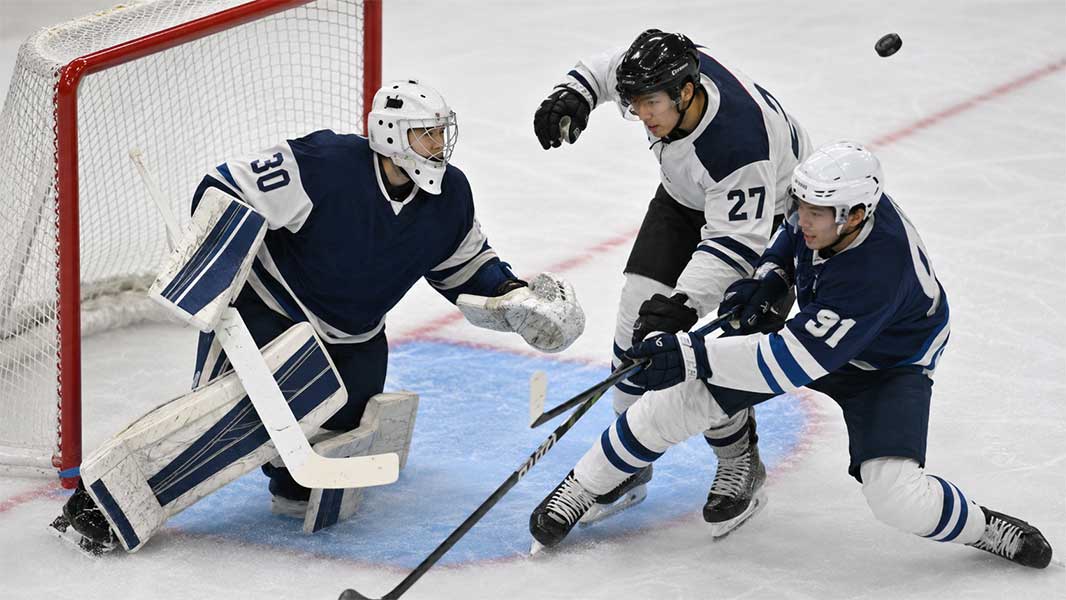
Interference (การกีดขวาง) is a restraining infraction in ice hockey that occurs when a player obstructs or prevents an opponent who is not in possession of the puck from skating, receiving a pass, or moving freely on the ice.

Under the IIHF rules, players are expected to compete for position through skating and legitimate body position. A player cannot use their stick, free hand, body, or other illegal means to prevent an opponent from reaching the puck or moving into an area of play.

Interference is designed to protect the flow of the game and ensure that players who do not have the puck are still able to move freely and participate in the play.


Common Examples of Interference

Interference can occur in several situations, including:

  • Blocking an opponent who does not have possession of the puck.
  • Preventing an opponent from skating toward the puck.
  • Using the body to impede an opponent without first establishing a legitimate body position.
  • Moving laterally into an opponent without establishing body position.
  • Holding or restraining an opponent who is attempting to forecheck.
  • Deliberately checking a player who is no longer considered to be in possession of the puck — commonly referred to as a late hit.
  • Preventing a player from recovering their dropped stick or equipment in certain situations.
  • A player from the bench interfering with an opponent or the puck.

Body Position and Interference

One of the most important concepts when judging interference is body position.

A player is generally entitled to the ice they occupy. A player who is skating in front of or beside an opponent and traveling in the same direction may use their body position to block or lengthen the opponent’s route.

However, a player cannot simply move laterally into an opponent and make contact without first establishing proper body position.

Players are also not permitted to use their stick, free hand, or other illegal actions to artificially maintain or establish body position.

Key principle:

A player may use legitimate body position — but may not illegally restrain an opponent.

This distinction is particularly important when determining whether physical contact is a legal body position play or an interference infraction.


REFEREE SIGNAL

Interference Signal

When calling Interference (การกีดขวาง), the Referee uses the designated interference signal to communicate the infraction to the players, coaches, officials, and spectators.

Signal Description

The Referee brings the arms across the front of the body in a crossed-arm motion, clearly indicating that an opponent has been illegally obstructed or prevented from participating freely in the play.

The signal is normally accompanied by the whistle and followed by the appropriate penalty announcement.

What the Signal Means

“A player has illegally obstructed or impeded an opponent who was not in possession of the puck.”


Penalty for Interference

The standard penalty for interference is a Minor Penalty (โทษเบา).

Depending on the circumstances and severity of the infraction, additional or more severe penalties may apply. Under the IIHF rules, reckless interference that endangers an opponent may result in a Major Penalty (โทษหนัก), and in particularly serious circumstances a Major Penalty plus Game Misconduct may be assessed.

Interference can also involve players or team personnel on the bench. Depending on whether the individual can be identified, the appropriate penalty can be assessed as a player penalty or a Bench Minor Penalty.


Interference vs. Legal Physical Contact

Not every collision between players is interference.

A player may legally compete for position and make legitimate physical contact when the opponent is in possession of the puck and the contact complies with the rules.

The key questions for officials include:

  1. Who has possession of the puck?
  2. Was the opponent attempting to play the puck?
  3. Was legitimate body position established?
  4. Did the player use illegal means to restrain the opponent?
  5. Was the contact a late hit?

Correct interpretation of these factors is essential when determining whether contact should be considered legal play or interference.


INTERFERENCE — QUICK GUIDE

ประเภทการแข่งขัน Possible Ruling
Obstructing a player without the puck Interference (การกีดขวาง)
Blocking an opponent after establishing legal body position Generally legal
Moving laterally into a player without body position Interference (การกีดขวาง)
Using the stick or free hand to restrain an opponent Interference (การกีดขวาง)
Deliberate late hit on a player no longer in possession Interference / Late Hit
Reckless interference that endangers an opponent Major penalty or additional penalty

Boarding (ผลักอัดขอบสนาม)

What is Boarding?

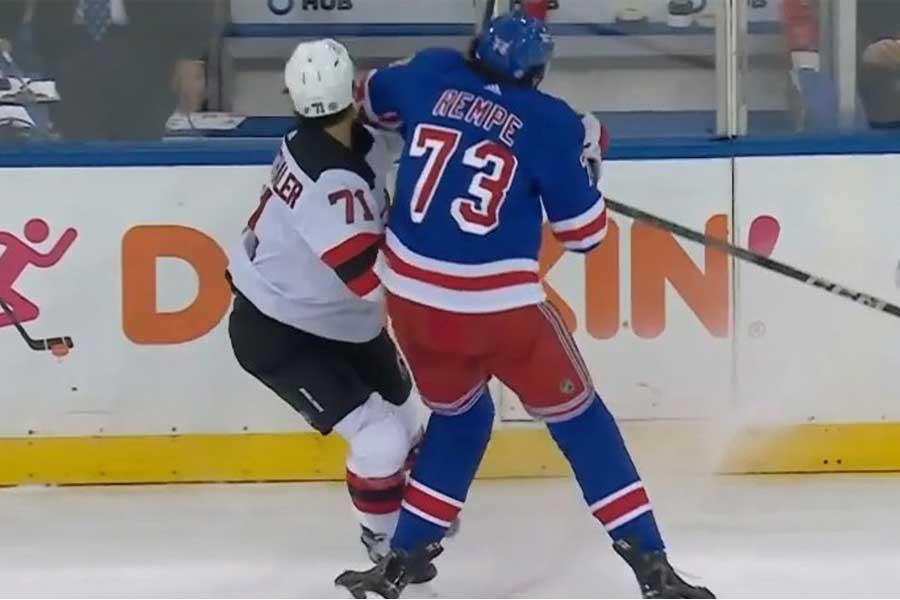
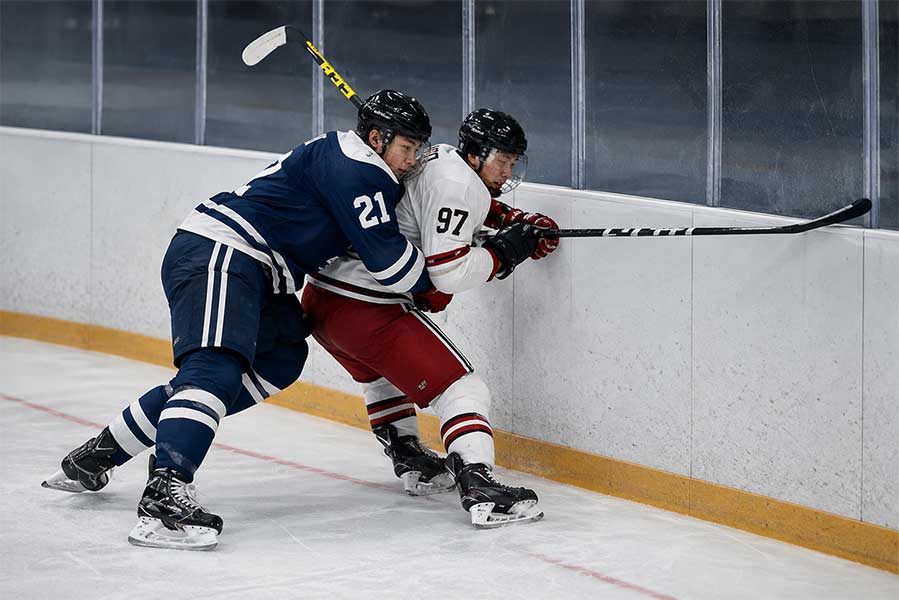
Boarding (ผลักอัดขอบสนาม) is a physical infraction in ice hockey that occurs when a player checks or pushes a defenseless opponent in a manner that causes the opponent to hit or impact the boards violently or dangerously.

Under IIHF Rule 41 — Boarding, the referee considers the circumstances of the play, including the position of the opponent, the nature and force of the contact, and whether the contact could have been avoided or minimized.

Players have a responsibility to recognize when an opponent is in a vulnerable or defenseless position and must avoid or minimize dangerous contact.


When Can Boarding Be Called?

A Boarding penalty may be assessed when:

  • A player checks or pushes an opponent who is in a defenseless position.
  • The contact causes the opponent to hit the boards violently or dangerously.
  • The player fails to avoid or minimize contact when the opponent is vulnerable.
  • Unnecessary contact with a player playing the puck during an obvious icing or off-side play causes that player to impact the boards.

The referee has significant discretion in determining the severity of the infraction.

If there is no contact with the boards in circumstances that would otherwise resemble boarding, the action may instead be treated as Charging (การพุ่งชน / ชาร์จคู่ต่อสู้).


Penalties for Boarding

Depending on the severity of the contact and the degree of danger involved, the referee may impose different levels of penalty.

Minor Penalty (โทษเบา)
A Minor Penalty may be assessed based on the degree of force and violence of the impact with the boards.

Major Penalty (โทษหนัก)
A Major Penalty may be assessed when the player recklessly endangers the opponent and a Minor Penalty would not be sufficient.

Major Penalty + Game Misconduct
In situations involving reckless endangerment where a Major Penalty alone is considered insufficient, the referee may assess a Major Penalty together with a Game Misconduct.

Supplementary discipline may also be applied by the appropriate authority when deemed necessary.


REFEREE SIGNAL — BOARDING

Official IIHF Signal

The official signal for Boarding (ผลักอัดขอบสนาม) is:

“Striking the clenched fist of one hand into the open palm of the opposite hand in front of the chest.”

In simple terms, the referee makes a closed fist strike into the open palm in front of the chest.

This signal identifies Rule 41 — Boarding.


How to Recognize the Signal

When a referee calls Boarding, look for the following movement:

  1. One hand is formed into a closed fist.
  2. The opposite hand is held open with the palm facing upward or toward the fist.
  3. The clenched fist strikes into the open palm.
  4. The movement is performed in front of the chest.

This is the official IIHF game-official signal for Boarding.


Boarding vs. Other Physical Infractions

Boarding should not be confused with other physical infractions.

Boarding (ผลักอัดขอบสนาม)
Dangerous contact causes a defenseless opponent to hit or impact the boards.

Charging (การพุ่งชน / ชาร์จคู่ต่อสู้)
A player skates, jumps, or charges into an opponent in an illegal manner.

Checking from Behind (ชนจากด้านหลัง)
A player makes contact from behind, driving an opponent dangerously toward the boards or playing surface.

The distinction between these infractions depends on the specific circumstances of the play and the referee’s judgment.


Why Is Boarding Penalized?

Boarding is considered a serious safety issue because a player who is unable to protect themselves may be driven into the boards with significant force.

The boards are an immovable surface, and a high-impact collision can create a significant risk of injury, particularly when the opponent is unable to anticipate or absorb the contact.

The purpose of Rule 41 is therefore not to eliminate physical play from ice hockey, but to prevent dangerous contact against vulnerable players.


Key Point for Players

Always be aware of your opponent’s position before making a check.

If an opponent is in a vulnerable or defenseless position, the responsibility is on the player delivering the check to avoid or minimize contact.

Play hard. Play fair. Play safe.

Quick Reference

Item Information
Infraction Boarding (ผลักอัดขอบสนาม)
IIHF Rule Rule 41
Category Physical Infraction
Main concern Dangerous impact with the boards
Official signal Closed fist striking open palm
Signal location In front of the chest
Possible penalties Minor / Major / Major + Game Misconduct
Official authority Referee

Source: IIHF Official Rule Book 2026/27, Rule 41 — Boarding; Appendix I — Game Official Signals.