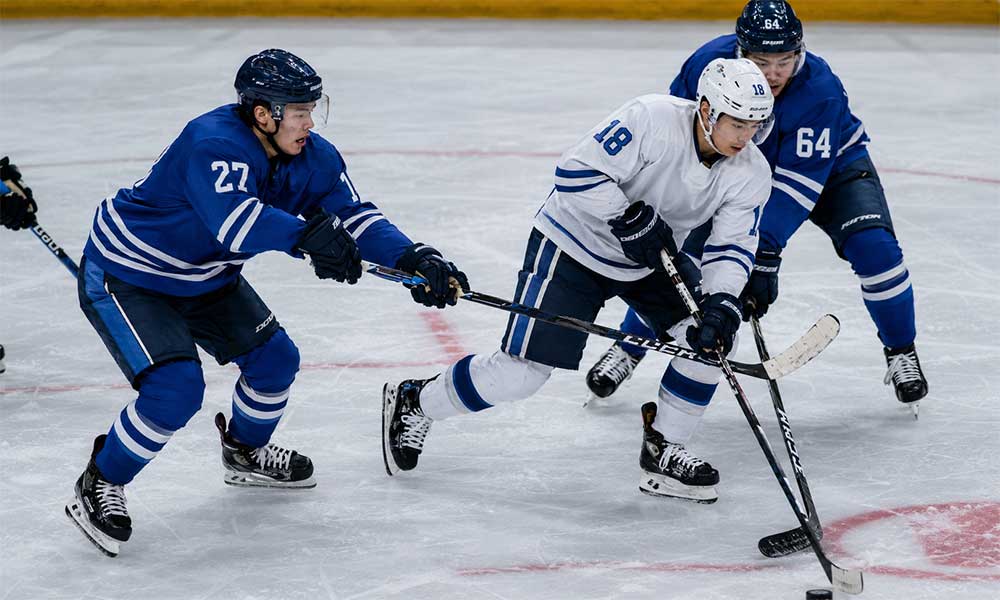
SLASHING IN ICE HOCKEY
REFEREE SIGNALS — Official Referee Signal for Slashing
Slashing (การฟันด้วยไม้ฮอกกี้) is one of the stick infractions in ice hockey. It occurs when a player swings their stick at an opponent, whether or not contact is made. Under IIHF Rule 61, a forceful or powerful chop with the stick against an opponent’s body, stick, or on or near the hands can be penalized when the action is judged not to be an attempt to play the puck.
🏒 What Is Slashing?
Slashing is generally associated with a player using the stick in a forceful chopping or swinging motion against another player.
The infraction may occur when the stick makes contact with:
- The opponent’s body
- The opponent’s stick
- The hands or area near the hands
- Other areas where the action is considered dangerous or excessive
Importantly, contact does not have to occur for an action to be considered slashing. The act of swinging the stick at an opponent can itself constitute the infraction.
However, not every stick-to-player contact is automatically slashing. The IIHF rules specifically state that non-aggressive stick contact with the pants or the front of the shin pads should not be penalized as slashing. The referee evaluates the nature, force and circumstances of the action.
🚨 REFEREE SIGNAL — SLASHING
The official IIHF signal for Slashing is:
“A chopping motion with the edge of one hand across the opposite forearm.”
How the signal looks
The referee makes a chopping motion across the opposite forearm, using the edge of one hand to represent the action of a hockey stick striking another player.
This gesture visually represents the chopping action associated with a slashing infraction and allows players, coaches and spectators to quickly identify the penalty being called.
🟥 PENALTY FOR SLASHING
Under IIHF Rule 61.2, the referee may assess a Minor Penalty (โทษเบา) for slashing, with the decision based on the degree of force and violence involved.
In more serious situations, a Major Penalty and automatic Game Misconduct Penalty may be assessed when the player recklessly endangers the opponent and a minor penalty would not be sufficient. Factors include:
- Severity of the infraction
- Severity of the contact
- Degree of violence
- Overall seriousness of the action
Serious slashing incidents can also result in additional disciplinary measures after the game, depending on the circumstances and the applicable competition regulations.
⚠️ Examples of Slashing
Examples may include:
1. Striking an opponent’s hands
A player swings the stick and strikes an opponent’s hands rather than attempting to play the puck.
2. Forcefully striking an opponent’s stick
A player delivers a powerful chop against an opponent’s stick without a legitimate attempt to play the puck.
3. Swinging the stick at an opponent without contact
A player aggressively swings the stick toward an opponent, even if the stick does not make contact.
4. Dangerous or reckless stick swing
A player makes a violent swing that creates a significant risk of injury to an opponent.
These situations are judged by the referee according to the circumstances and the degree of force involved.
🏒 Slashing vs. Playing the Puck
One of the important distinctions in applying the rule is intent and the nature of the stick action.
A player may legitimately use the stick to attempt to play the puck. However, if the stick action becomes a forceful or powerful chop against an opponent, their stick, or their hands and is judged not to be an attempt to play the puck, it can be penalized as slashing.
Therefore, players should maintain control of their stick and avoid unnecessary or dangerous swinging motions.
👨⚖️ Why the Referee Signal Matters
Referee signals are an essential part of communication in ice hockey.
Because the game moves at high speed, players and spectators may not immediately hear or understand the referee’s verbal announcement. The standardized hand signal provides a clear visual explanation of the type of infraction.
For Slashing, the chopping motion across the opposite forearm immediately communicates that a stick-related penalty has been called.
Learning these signals helps players, coaches, parents and fans better understand what is happening during a game.
📌 Quick Reference
| Item | Details |
|---|---|
| Infraction | Slashing (การฟันด้วยไม้ฮอกกี้) |
| IIHF Rule | Rule 61 |
| Category | Stick Infraction |
| Referee Signal | Chopping motion with the edge of one hand across the opposite forearm |
| Typical Penalty | Minor Penalty (โทษเบา) |
| Serious Cases | Major Penalty + Game Misconduct may apply |
| Contact Required? | No |
| Main Concern | Forceful or powerful stick action not considered an attempt to play the puck |
Official Reference: IIHF Official Rule Book 2026/27, Rule 61 – Slashing and Appendix I – Game Official Signals.