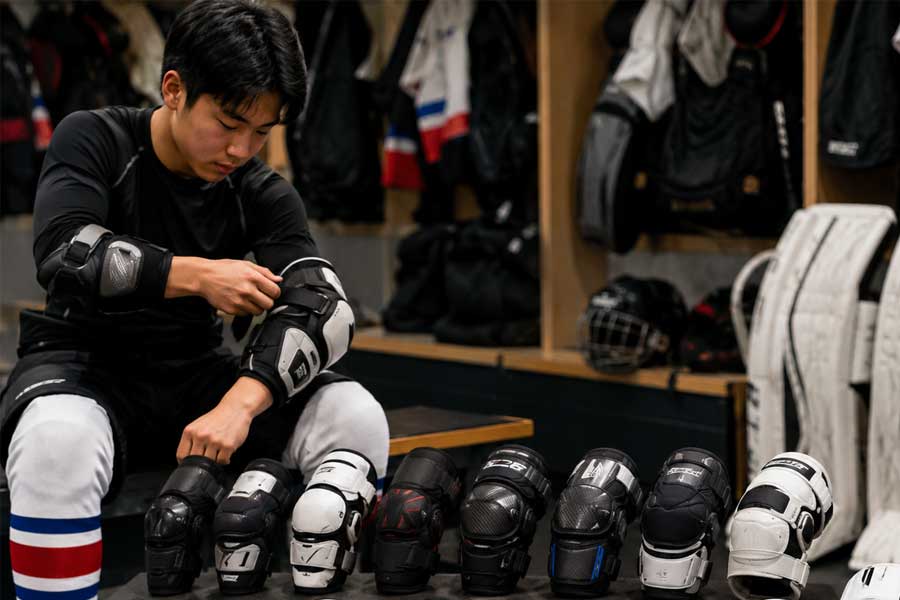
Elbow Pads are an essential piece of protective equipment in ice hockey. They are designed to protect the elbows, forearms, and parts of the upper arm from impacts, falls, contact with other players, and collisions with the ice or boards.
Ice hockey is a fast and physical sport. Players can lose their balance, fall onto the ice, or make contact with another player during a play. Properly fitted elbow pads help reduce the risk of injuries while allowing players to move their arms freely and handle the stick effectively.
What Are Elbow Pads?
Elbow pads are protective gear worn over the player’s arms. They generally consist of several sections that cover the elbow joint, forearm, and upper arm.
The elbow area normally includes a hard or reinforced protective shell surrounded by impact-absorbing padding. The design allows the elbow to remain protected while still providing enough flexibility for skating, passing, shooting, and stickhandling.
Why Are Elbow Pads Important?
The elbow is particularly vulnerable when a player falls or receives contact during a game. A direct impact can cause bruising, cuts, or more serious injuries.
Elbow pads provide several important benefits:
- Impact Protection — Helps absorb and distribute force from collisions and falls.
- Elbow Protection — Protects the elbow joint from direct contact with the ice, boards, or another player.
- Forearm Protection — Covers the forearm against impacts and contact from sticks or other equipment.
- Upper Arm Protection — Provides additional protection around the lower part of the upper arm.
- Mobility — Allows players to move their arms naturally while skating and playing.
- Confidence — Proper protection can give players greater confidence when competing for the puck.
Main Parts of an Elbow Pad
Although designs vary between brands and models, most elbow pads include several important components.
1. Elbow Cap
The elbow cap is the primary protective section covering the elbow joint. It is usually made from a hard or reinforced material designed to resist impacts.
2. Forearm Protection
The forearm section protects the lower arm from contact with the ice, boards, sticks, and other players.
3. Bicep or Upper Arm Protection
The upper section provides protection around the lower part of the upper arm and helps create a more complete protective system.
4. Impact-Absorbing Foam
Foam padding is positioned around the protective shell to absorb and disperse impact energy.
5. Straps and Adjustment System
Straps help keep the elbow pad securely positioned during play. A good adjustment system prevents the pad from rotating or sliding down the arm.
How Should Elbow Pads Fit?
Correct fit is one of the most important factors when choosing elbow pads.
An elbow pad should remain securely positioned on the arm without restricting movement or causing discomfort. The elbow should sit naturally inside the protective cup, while the forearm and upper-arm sections should provide adequate coverage.
A properly fitted elbow pad should:
- Stay in position during skating and contact.
- Cover the elbow joint completely.
- Provide sufficient forearm coverage.
- Allow comfortable arm movement.
- Not feel excessively tight.
- Not slide down or rotate during play.
- Work comfortably with the player’s gloves and shoulder pads.
Players should avoid choosing elbow pads simply because they are the same size as another piece of equipment. Different brands and models can have different sizing systems, so players should always check the manufacturer’s sizing guide and try the equipment on whenever possible.
How to Choose Elbow Pads
When selecting elbow pads, players should consider several factors.
Protection Level
Players who participate in competitive or highly physical hockey may prefer models with more extensive impact protection.
Fit
The pad should fit securely without creating pressure points or restricting movement.
Mobility
A good elbow pad should allow natural movement of the arms and shoulders. This is especially important for shooting, passing, and stickhandling.
Comfort
Players may wear elbow pads for long periods during practices and games, so comfortable padding and ventilation can make a significant difference.
Adjustment System
Secure and easy-to-use straps help keep the equipment correctly positioned throughout the game.
Compatibility
Elbow pads should work comfortably with the player’s shoulder pads and gloves without creating excessive gaps or restricting movement.
Common Types of Elbow Pad Fit
Different elbow pads may use different fitting designs.
Traditional Fit
Provides a more relaxed feel with additional space around the arm. It may be suitable for players who prefer greater freedom of movement.
Contoured Fit
Designed to sit closer to the body and provide a more secure, close-fitting feel.
Hybrid Designs
Combine elements of traditional and contoured designs to provide a balance between mobility, comfort, and protection.
The best option depends on the player’s body shape, playing style, position, and personal preference.
Elbow Pads and Player Safety
Elbow pads are an important part of a complete hockey protection system, but they should not be considered a guarantee against injury.
Players should always use properly fitted protective equipment and follow the rules of the game. Equipment should also be inspected regularly for damaged shells, worn straps, loose components, or deteriorated padding.
If an elbow pad has suffered a significant impact or has visible damage, it should be inspected carefully and replaced when necessary.
Maintenance and Care
Taking care of elbow pads can help maintain their performance and comfort.
After practice or a game:
- Remove the elbow pads from the hockey bag.
- Allow them to air dry in a well-ventilated area.
- Avoid leaving damp equipment inside a closed hockey bag.
- Check straps and protective components regularly.
- Clean the equipment according to the manufacturer’s instructions.
- Do not use harsh chemicals or cleaning methods that could damage the protective materials.
Proper drying is particularly important because moisture and sweat can contribute to unpleasant odors and deterioration of materials over time.
Elbow Pads for Young Players
Young hockey players should use elbow pads designed for their age and body size. Proper fit is especially important because oversized equipment can move out of position and reduce protection.
Parents and coaches should regularly check the fit as young players grow. Equipment that was properly fitted at the beginning of the season may become too small or incorrectly positioned as the player grows.
Conclusion
Elbow Pads are an essential part of ice hockey protective equipment. They protect the elbow and surrounding areas while allowing players to maintain the mobility required for skating, passing, shooting, and stickhandling.
Choosing the right size, fit, protection level, and adjustment system can make elbow pads more comfortable and effective. Regular inspection and proper care are also important to keep the equipment in good condition.
For every hockey player, from beginner to competitive athlete, properly fitted elbow pads are an important part of playing the game with confidence and protection.