Shin Guards are an essential piece of protective equipment in ice hockey. They are designed to protect the lower legs, shins, knees, and the areas around the front of the legs from impacts caused by hockey pucks, sticks, skates, collisions, and falls on the ice.
Because ice hockey is a fast and physical sport, players can be exposed to high-speed pucks and accidental contact during every shift. A properly fitted pair of shin guards helps reduce the risk of injuries while allowing players to skate, turn, and move comfortably.
What Are Shin Guards?
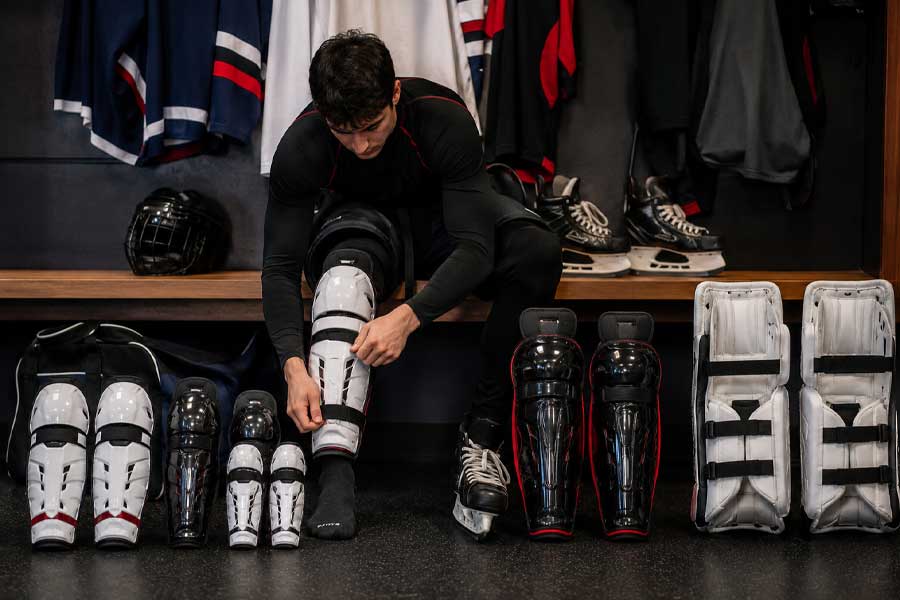
Shin guards are protective shells worn on the front of the lower legs. They normally consist of a hard outer shell combined with foam or other impact-absorbing materials.
The shin guard is shaped to cover the shin and knee area while allowing the player to bend the leg naturally. Many models also include straps or fastening systems that help keep the shin guard securely in position during skating and gameplay.
Why Are Shin Guards Important?
Shin guards provide protection against several common hazards in ice hockey, including:
- Direct impact from a hockey puck
- Contact with a hockey stick
- Accidental contact with another player’s skate
- Collisions between players
- Falls and contact with the ice
- Impact during blocking or defensive play
The lower leg is particularly vulnerable because players are frequently positioned close to the ice surface and puck. Shin guards create a protective barrier between the player’s body and these impacts.
Main Parts of a Shin Guard
A typical ice hockey shin guard includes several important components:
1. Hard Protective Shell
The outer shell provides impact protection and helps distribute the force of a puck, stick, or other contact over a larger area.
2. Knee Cap
The knee section protects the kneecap and surrounding area. It is designed to provide protection while still allowing the player to bend and skate naturally.
3. Shin Protection
The main lower section covers the shin bone, one of the most exposed areas of the lower leg.
4. Impact-Absorbing Foam
Foam padding is placed inside the shin guard to absorb and reduce impact forces while improving comfort.
5. Straps and Fastening System
Straps help keep the shin guard in the correct position. A secure fit is important because a shin guard that moves during play may leave parts of the leg exposed.
6. Calf and Ankle Protection
Some shin guards provide additional coverage around the calf and lower leg to improve overall protection.
Shin Guards for Players
For forwards and defensemen, shin guards are an important part of everyday protective equipment. Players should choose a model that provides sufficient coverage without restricting skating or leg movement.
Forwards may prefer lighter and more flexible designs because they often accelerate, turn, and change direction quickly. Defensemen may prefer models with additional coverage and protection because they can experience more puck impacts while blocking shots and defending their zone.
Shin Guards for Goaltenders
Goaltenders also require protection for their lower legs, but their equipment is designed differently from regular player shin guards.
Goaltenders normally use specialized leg pads rather than standard player shin guards. Goalie leg pads are much larger and are designed to protect the legs while also helping the goaltender make saves and control rebounds.
Under or around the goalie leg equipment, additional protective gear may be used depending on the player’s equipment setup and level of play.
Choosing the Right Shin Guards
When selecting shin guards, players should consider several factors:
Correct Size
The shin guard should cover the knee and shin properly without being excessively long or short.
Secure Fit
The guard should stay in position while skating, stopping, turning, and making contact with other players.
Comfort
Padding should provide protection without creating excessive pressure points.
Mobility
The design should allow the player to bend the knees and skate naturally.
Protection Level
Players who regularly face high-speed shots or physical contact may benefit from models with more extensive protection.
How Should Shin Guards Fit?
A properly fitted shin guard should sit securely over the shin and knee without interfering with the player’s skating stride.
The knee should sit comfortably inside the knee cap area. The lower part of the shin guard should provide adequate coverage while working correctly with the player’s hockey skates.
Players should avoid wearing shin guards that are too small because they may leave areas of the lower leg exposed. Shin guards that are too large can restrict movement or interfere with other equipment.
Shin Guard and Hockey Sock
Shin guards are normally worn underneath the hockey sock. The sock helps hold the shin guard in place and provides a clean layer between the protective equipment and the player’s leg.
Players should make sure the shin guard and hockey sock work together properly so that the protective equipment does not shift during play.
Maintenance and Care
Proper care can help extend the life of shin guards.
After training or a game:
- Remove the shin guards from the hockey bag when possible.
- Allow them to dry in a well-ventilated area.
- Wipe away sweat and moisture.
- Check straps and fasteners regularly.
- Inspect the shell and padding for cracks or damage.
- Replace damaged equipment when necessary.
Avoid leaving wet shin guards inside a closed hockey bag for long periods, as moisture can create unpleasant odors and contribute to deterioration of the materials.
Shin Guards for Children and Young Players
Young players should wear shin guards that are correctly sized for their height and leg length. Children grow quickly, so parents should regularly check whether the equipment still provides adequate coverage.
Buying equipment that is excessively large simply to allow room for growth is not recommended because oversized shin guards can move out of position and reduce protection.
Conclusion
Shin guards are a fundamental part of ice hockey protective equipment. They protect the player’s knees and lower legs from pucks, sticks, skates, collisions, and falls while allowing the player to move freely on the ice.
Choosing the correct size, maintaining a secure fit, and regularly inspecting the equipment are important steps for safe and comfortable play. For goaltenders, specialized leg pads provide the primary lower-leg protection and are designed specifically for the demands of the goaltending position.
ICE HOCKEY FAMILY
Learn • Play • Protect • Love Ice Hockey