yes

Mouthguard

Mouthguard in Ice Hockey

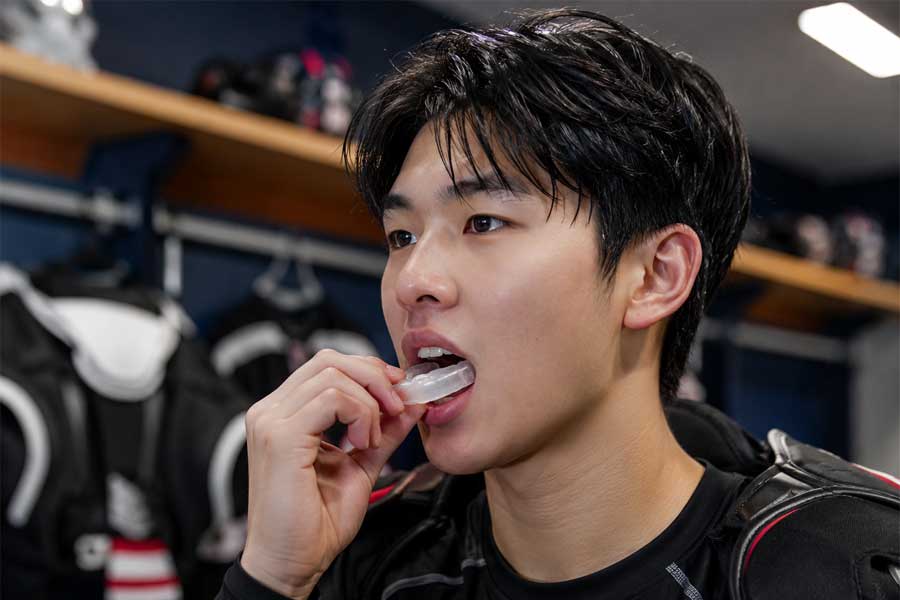
A Mouthguard is an important piece of protective equipment used in ice hockey to help protect the teeth, gums, jaw and other structures inside the mouth from impacts. Ice hockey is a fast-paced sport involving high-speed skating, sticks, pucks and physical contact, so players can be exposed to accidental impacts to the face and mouth during both training and competition.

The International Ice Hockey Federation (IIHF) recommends that all players wear a mouthguard, preferably a custom-made mouthguard, and recommends wearing it properly whenever on the ice. The IIHF states that a mouthguard is designed to protect the teeth and jaws from impact and may also help reduce the risk of concussion.

What Is a Mouthguard?

A mouthguard is a flexible protective device placed inside the mouth, usually covering the upper teeth. It is designed to absorb and distribute some of the force generated by an impact, helping reduce direct contact between the teeth and surrounding structures.

Mouthguards are available in several forms, including:

  • Stock Mouthguard – A pre-formed mouthguard that is ready to use but may provide a less precise fit.
  • Boil-and-Bite Mouthguard – A thermoplastic mouthguard that is softened in hot water and then molded around the teeth for a better fit.
  • Custom-Made Mouthguard – Made specifically for an individual by a dental professional. This type generally provides the most precise fit and is the type preferred by the IIHF.

Why Is a Mouthguard Important in Ice Hockey?

Ice hockey is played at high speed and involves equipment and situations that can create sudden impacts. A mouthguard provides an additional layer of protection for the mouth and jaw.

Its main benefits include:

1. Protecting the Teeth

A mouthguard can help reduce the chance of chipped, fractured or damaged teeth when the mouth is exposed to an impact.

2. Protecting the Jaw and Mouth

The mouthguard provides cushioning between the upper and lower teeth and can help reduce the force transmitted through the jaw during certain impacts.

3. Reducing the Risk of Soft-Tissue Injuries

A properly fitted mouthguard can help reduce contact between the teeth and the lips, cheeks and other soft tissues inside the mouth.

4. Additional Protection During Physical Contact

Players may experience falls, collisions with other players, contact with the boards, or accidental contact with a stick or puck. A mouthguard provides an additional layer of protection during these situations.

5. Supporting Player Safety

A mouthguard should be considered part of a player’s overall protective-equipment system rather than a replacement for other equipment such as a helmet, face protection or neck protection.

Mouthguard for Players

For forwards and defensemen, a mouthguard is particularly useful because these players frequently skate at high speed and may be involved in physical battles, puck battles and collisions.

Players should choose a mouthguard that:

  • Fits securely and comfortably.
  • Does not interfere significantly with breathing or speaking.
  • Remains in position during skating and physical movement.
  • Is appropriate for the player’s age and level of play.
  • Is inspected regularly for damage or excessive wear.

A custom-made mouthguard can provide a more precise fit and is strongly recommended by the IIHF.

Mouthguard for Goalkeepers

Goalkeepers also benefit from wearing a mouthguard. Although goalkeepers occupy a different position from skaters, they can still be exposed to pucks, sticks, collisions and falls.

Goalkeepers should therefore consider a mouthguard as part of their overall protective equipment. It should work comfortably together with the goalkeeper’s helmet and face mask without interfering with breathing or communication.

The IIHF rules specifically require goalkeepers to wear an approved protective face mask during game action, while the mouthguard serves as additional protection for the teeth and jaw.

Choosing the Right Mouthguard

When choosing a mouthguard for ice hockey, consider the following factors:

Fit:
It should fit securely without constantly falling out or requiring the player to bite down excessively to keep it in place.

Comfort:
A comfortable mouthguard is more likely to be worn correctly and consistently.

Protection:
Choose a product designed specifically for sports protection and appropriate for the player’s age and level.

Breathing and Communication:
Players should be able to breathe comfortably and communicate with teammates and coaches.

Quality and Condition:
Replace a mouthguard if it becomes damaged, excessively worn, deformed or no longer fits properly.

Custom-Made Mouthguard

A custom-made mouthguard is produced according to an individual’s dental structure. A dental professional takes an impression or digital scan of the teeth and creates a mouthguard designed for that specific mouth.

This type of mouthguard generally offers a more precise fit than generic models. For players who train and compete regularly, particularly young athletes, a discussion with a dentist about the appropriate type of mouthguard can be beneficial.

How to Use a Mouthguard Properly

Players should:

  1. Check the mouthguard before every training session or game.
  2. Make sure it fits securely.
  3. Wear it correctly throughout time on the ice.
  4. Avoid chewing or deliberately biting the mouthguard.
  5. Clean it after use.
  6. Store it in a ventilated protective case.
  7. Allow it to dry before storage.
  8. Check regularly for cracks, tears or deformation.
  9. Replace it when it no longer fits properly or becomes damaged.

Players should also follow the equipment requirements of their league, tournament, rink and national governing body because rules can differ according to competition and age category.

Mouthguard and Other Hockey Equipment

A mouthguard is only one component of an ice hockey player’s protective equipment.

A complete protective system may include:

  • Helmet
  • Face protection / visor or cage
  • Neck laceration protector
  • Shoulder pads
  • Elbow pads
  • Hockey gloves
  • Hockey pants
  • Shin guards
  • Skates
  • Mouthguard

Goalkeepers use specialized equipment including a goalkeeper mask, chest and arm protector, leg pads, blocker, catching glove and goalkeeper skates.

Important Safety Note

A mouthguard does not eliminate the possibility of dental injury, jaw injury or concussion. It should be used together with appropriate protective equipment, safe playing techniques, proper coaching and compliance with the rules of the competition.

Equipment requirements can also change between seasons and may differ between organizations. Players and teams should always check the latest rules applicable to their competition. The IIHF maintains the current official rulebooks and regulations on its website.
Neck Guard

What is a Neck Guard?

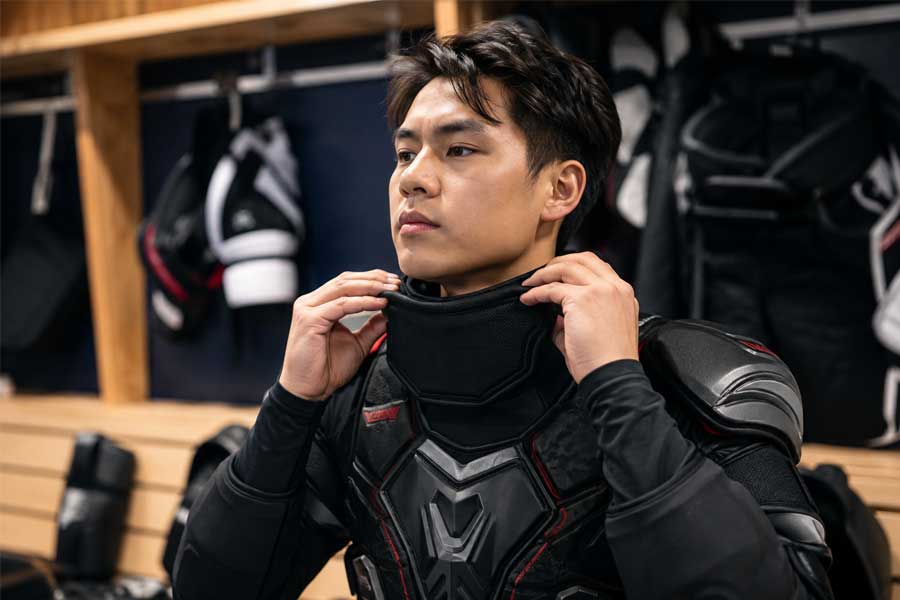
A Neck Guard, also known as a Neck Laceration Protector or Neck and Throat Protector, is an important piece of protective equipment used in ice hockey. It is designed to protect the player’s neck and throat area from cuts or laceration injuries that can occur from contact with skate blades, hockey sticks, or other sharp edges during play.

Because ice hockey involves high-speed skating, physical contact and rapidly moving equipment, protecting the neck is an important part of a player’s overall safety equipment.

Under the current IIHF Official Rule Book 2026/27, a neck laceration protector designed specifically for this purpose is mandatory for players in all categories of IIHF competitions. The IIHF also requires it to be worn properly, to cover as much of the neck as possible, and not to be modified or altered.

Main Purpose of a Neck Guard

The primary purpose of a Neck Guard is to provide a protective barrier around the neck and throat. It is particularly important because the neck contains vulnerable areas that are not naturally protected by other hockey equipment.

A Neck Guard can help:

  • Reduce the risk of cuts and lacerations to the neck.
  • Protect the front and sides of the throat area.
  • Provide an additional layer of protection between the skin and skate blades or sticks.
  • Improve overall safety when playing at high speed and during physical contact.
  • Provide additional protection for young and developing players.

A Neck Guard is not designed to stop every type of impact or injury, so it should always be used together with the other appropriate protective equipment.

Neck Guard for Players

For ice hockey players, the Neck Guard is normally worn around the neck underneath the jersey. Most designs use a soft, flexible construction that allows the player to turn their head and move naturally while skating.

A good Neck Guard should:

  • Fit comfortably around the neck.
  • Cover a substantial portion of the neck and throat.
  • Stay securely in position during skating and contact.
  • Allow normal head and neck movement.
  • Be made from appropriate cut-resistant protective materials.
  • Not interfere with the helmet, shoulder pads or jersey.

Players should always follow the manufacturer’s instructions for fitting, cleaning and maintenance.

Neck Protection for Goalkeepers

Goalkeepers face many of the same risks as skaters, but their equipment configuration is different. In addition to their neck protection, goalkeepers normally wear a throat protector attached to the lower area of the facemask.

Under IIHF rules, a goalkeeper may attach a throat protector to the chin area of the facemask, provided that it is made from a material that will not cause injury.

Goalkeepers should ensure that their neck and throat protection does not interfere with their vision, head movement or the proper operation of the mask.

Neck Guard and Throat Protector – What Is the Difference?

Although the terms are sometimes used interchangeably, they can refer to different pieces of equipment.

Neck Guard / Neck Laceration Protector
Designed primarily to protect the neck and throat from lacerations, particularly from skate blades.

Throat Protector
Usually refers to a rigid or semi-rigid protective component positioned in front of the throat. For goalkeepers, it may be attached directly to the facemask.

Some modern products combine neck and throat protection into one integrated design.

Choosing the Right Neck Guard

When selecting a Neck Guard, players and parents should consider several factors:

1. Proper Fit
The protector should fit securely without being excessively tight. It should remain in position while skating, turning and making contact.

2. Coverage
Choose a design that provides good coverage of the neck and throat. The current IIHF rule specifically calls for a design that covers as much of the neck as possible.

3. Cut-Resistant Protection
Look for products specifically designed and tested for ice hockey neck-laceration protection.

4. Comfort and Mobility
A Neck Guard should allow the player to move their head naturally without restricting skating or stick handling.

5. Quality and Condition
Inspect the protector regularly for damage, worn materials, loose stitching or deterioration. Replace it if its protective performance or structural integrity is compromised.

6. Competition Requirements
Always check the rules of the league, tournament, federation or age category in which the player participates. Equipment requirements can vary between competitions.

How to Wear a Neck Guard Correctly

A Neck Guard should be positioned so that it provides continuous protection around the intended area of the neck and throat.

Players should:

  1. Put the Neck Guard on before the jersey.
  2. Position it comfortably around the neck.
  3. Make sure it covers the intended protective area.
  4. Secure all fasteners correctly.
  5. Check that it does not move excessively during skating.
  6. Make sure the jersey does not push the protector out of position.
  7. Inspect the equipment regularly.

Do not cut, remove, alter or modify the protective material. Under the current IIHF rules, the neck laceration protector must not be modified or altered.

Why Is a Neck Guard Important?

Ice hockey is a fast and physical sport. Players can fall, collide with other players, be struck by sticks or come into contact with skate blades.

A neck injury can be serious, which is why neck protection should be considered an essential part of a player’s equipment rather than an optional accessory.

For children and young players, developing good equipment habits from an early age is especially important. Wearing a properly fitted Neck Guard every time they go onto the ice helps make safety part of their normal hockey routine.

Neck Guard for Every Hockey Player

Whether playing recreational hockey, youth hockey, competitive hockey or professional-level hockey, players should use appropriate neck protection that meets the requirements of their competition.

The International Ice Hockey Federation (IIHF) currently requires neck laceration protection for players in all categories of IIHF competitions.

Always check the latest rules of your local federation, league or tournament before participating in a game.

Hockey Stick

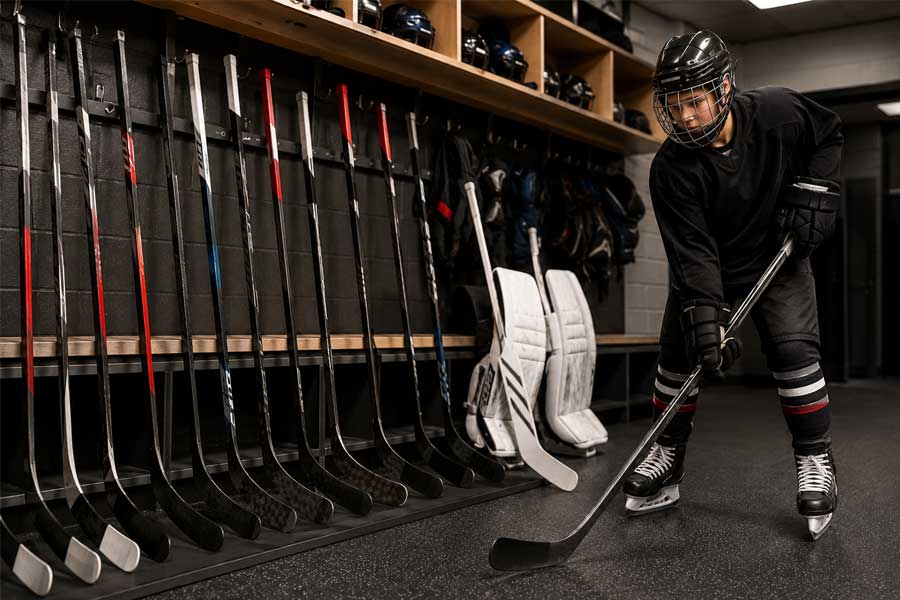
The Hockey Stick is one of the most important pieces of equipment in ice hockey. It is used by players to control, pass, carry, shoot, and handle the puck, while goaltenders use a specially designed stick to stop shots and control the puck around the goal crease.

Modern hockey sticks are designed to be lightweight, strong, and responsive. Choosing the right stick can significantly affect a player’s shooting power, puck control, passing accuracy, and overall performance on the ice.

1. Hockey Stick for Players

A standard player hockey stick consists of two main sections:

  • Shaft – The long section that the player holds with both hands.
  • Blade – The curved lower section that makes contact with the puck.

Player sticks are available in different lengths, flex ratings, blade patterns, and materials. These characteristics allow players to select a stick that matches their age, body size, playing style, and position.

Stick Length

The correct stick length is important for puck control and skating posture. A stick that is too long or too short can make handling the puck more difficult.

Young players generally use shorter and lighter sticks, while adult players usually use longer sticks with specifications suited to their strength and playing style.

Stick Flex

Flex describes how much the shaft bends when force is applied to it.

A lower flex number generally means the stick bends more easily, while a higher flex number requires more force to load the shaft.

Choosing the right flex depends on factors such as:

  • Player’s body size and strength
  • Shooting technique
  • Playing position
  • Personal preference

A properly selected flex can help players generate better shot speed while maintaining control and consistency.

Blade Pattern and Curve

The blade is available in different curve patterns and face angles. These differences affect:

  • Puck control
  • Passing
  • Wrist shots
  • Snap shots
  • Slap shots
  • Backhand control

Players often choose a blade pattern based on their position and individual playing style.

2. Types of Player Hockey Sticks

Wooden Hockey Sticks

Wooden sticks are traditional and are still used by some recreational players and beginners. They are generally durable and provide a familiar feel when handling the puck.

Composite Hockey Sticks

Composite sticks are made from materials such as carbon fiber and other lightweight composites. They are widely used in modern competitive hockey because they provide a combination of low weight, stiffness, and energy transfer.

Composite sticks are commonly available as:

  • One-piece sticks
  • Two-piece stick systems

Modern professional and competitive players frequently use lightweight composite sticks for improved shooting performance and puck handling.

3. Hockey Stick for Goaltenders

A Goaltender Stick, also called a goalie stick, is significantly different from a regular player stick.

The lower portion of a goalie stick has a much wider blade designed to help the goaltender block shots and control rebounds. The shaft is also designed to provide a strong grip and allow the goaltender to move the puck when necessary.

A goaltender may use the stick to:

  • Block shots
  • Deflect pucks away from the net
  • Control rebounds
  • Cover the lower part of the goal
  • Pass or clear the puck
  • Move the puck to teammates

Goaltender sticks are available in different sizes and designs to accommodate different player heights and preferences.

4. Choosing the Right Hockey Stick

When selecting a hockey stick, players and parents should consider several important factors:

Age and Height

The stick should be appropriate for the player’s age, height, and physical development. Youth sticks are shorter and lighter, making them easier for young players to control.

Weight

A lighter stick can make puck handling and shooting easier, while the overall construction must still provide sufficient durability for the player’s level of play.

Flex

The flex should match the player’s strength and shooting technique. The correct flex allows the player to load the stick effectively during a shot.

Position and Playing Style

Forwards, defensemen, and goaltenders may have different preferences.

For example, an offensive player may prioritize a stick that provides quick release and good puck control, while a defenseman may prefer characteristics that support powerful shots and passing.

Handedness

Players need to select a stick based on whether they shoot left-handed or right-handed.

Handedness refers to which hand is positioned lower on the shaft when the player holds the stick in a normal shooting position.

5. Hockey Stick Safety and Care

A hockey stick can experience significant stress during shooting, passing, checking, and contact with other sticks or the boards. Players should regularly inspect their sticks for damage.

Check for:

  • Cracks in the shaft
  • Damage to the blade
  • Loose or damaged tape
  • Splinters on wooden sticks
  • Visible damage to composite materials

A damaged stick should be replaced when it is no longer safe or reliable for play.

Players should also avoid leaving sticks in extreme heat or direct sunlight for extended periods, as excessive heat can affect some materials and construction components.

6. Stick Tape

Many players use hockey tape on the blade and shaft.

Tape on the blade can help provide additional grip and improve the player’s feel for the puck. Tape on the shaft can improve grip and help protect the surface of the stick.

Players may use different taping techniques depending on personal preference and playing style.

7. Hockey Stick for Different Age Groups

Hockey sticks are generally available in different categories to suit players of different ages and sizes, such as:

  • Youth – Designed for very young players
  • Junior – Designed for younger developing players
  • Intermediate – Designed for teenagers and smaller players
  • Senior – Designed primarily for adult players

The exact specifications vary between manufacturers, so players should always check the manufacturer’s size and flex recommendations.

Conclusion

The Hockey Stick is a fundamental piece of ice hockey equipment for both players and goaltenders. The right stick can help improve puck control, passing, shooting, and overall confidence on the ice.

When choosing a hockey stick, players should consider length, weight, flex, blade pattern, handedness, playing position, and skill level. Most importantly, the stick should be comfortable, appropriate for the player’s size, and suitable for their style of play.

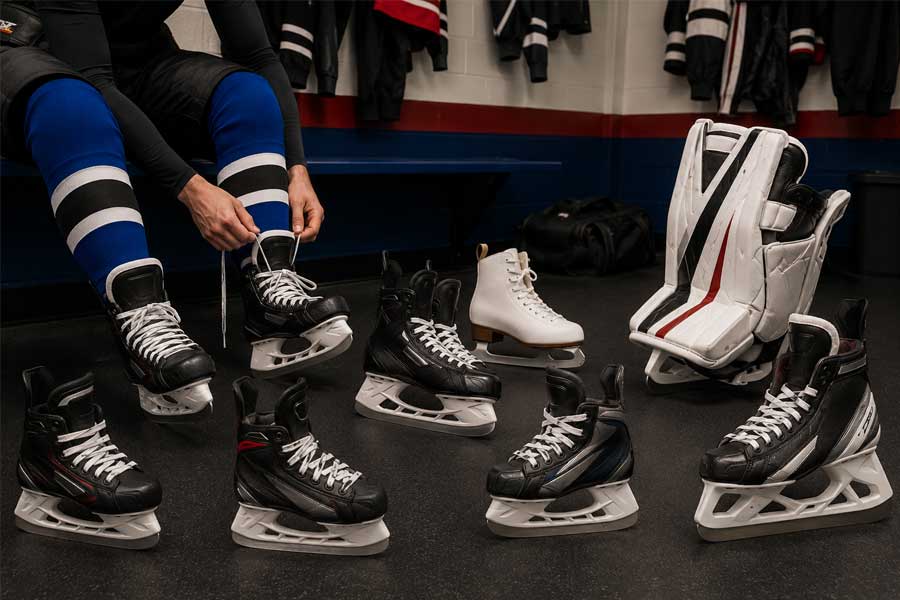
Hockey Skates

Ice hockey skates are one of the most important pieces of equipment for every ice hockey player. They are specially designed to provide stability, speed, agility, protection, and precise control while skating, turning, stopping, and accelerating on the ice.

Unlike recreational ice skates, hockey skates are built to withstand the high-impact and fast-paced nature of competitive ice hockey. A good pair of skates should fit securely around the foot and ankle while still allowing the player to move naturally and comfortably.

Main Parts of Ice Hockey Skates

1. Boot
The boot surrounds and supports the player’s foot and ankle. Modern hockey skate boots are usually made from strong, lightweight synthetic materials or composite materials. The boot needs to provide a balance between protection, stiffness, and comfort.

2. Holder
The holder is the plastic or composite component attached to the bottom of the boot. It connects the boot to the steel runner and allows the runner to be replaced when necessary.

3. Runner / Steel Blade
The steel runner is the part that makes direct contact with the ice. It is designed with a specific profile and hollow to provide the right balance between grip, glide, turning, and stopping.

4. Tongue
The tongue protects the top of the foot and helps distribute pressure from the laces. Many hockey skates use a reinforced tongue to provide additional protection against sticks, pucks, and other impacts.

5. Laces and Eyelets
Laces secure the foot inside the skate and allow the player to adjust the tightness around different areas of the foot and ankle. Proper lacing helps improve stability and control.

6. Ankle and Heel Support
The heel and ankle area helps keep the foot securely positioned inside the boot. Proper heel lock is important because excessive movement inside the skate can reduce skating efficiency and increase the risk of discomfort or injury.

Ice Hockey Skates for Players

Player skates are designed for quick acceleration, sharp turns, fast stops, and rapid changes of direction. Players need a skate that provides good energy transfer while remaining comfortable enough for long periods on the ice.

Skates are available in different levels, from entry-level models for beginners to high-performance models designed for advanced and professional players. The main differences can include boot stiffness, materials, weight, fit, holder construction, and runner technology.

Goaltender Skates

Goaltender skates are specifically designed for the unique movements of ice hockey goalkeepers. They generally have a different blade and holder configuration compared with player skates.

The design emphasizes stability, lateral movement, and protection. Goaltender skates are built to support movements such as butterfly positioning, lateral pushes, quick recoveries, and movement within the crease.

Because goalkeepers frequently drop into butterfly positions and move from side to side, their skates must provide a stable platform while protecting the foot and lower leg from pucks and sticks.

Choosing the Right Ice Hockey Skates

Choosing the correct skate size and fit is extremely important. Hockey skates should fit more snugly than ordinary shoes, but they should never cause excessive pain, numbness, or pressure points.

When selecting skates, players should consider:

  • Foot length and width
  • Heel lock and ankle support
  • Overall skate fit
  • Boot stiffness
  • Playing level and skating ability
  • Frequency of use
  • Player position
  • Age and foot growth, especially for children

For young players, parents should avoid buying skates that are excessively large simply to allow more room for growth. A skate that is too large can reduce stability and skating control.

Skate Sharpening

Regular skate sharpening is essential for maintaining grip and control on the ice. The steel runner is sharpened with a hollow that creates two edges, allowing the skater to grip the ice while still maintaining the ability to glide.

The appropriate sharpening depends on factors such as the player’s weight, skating style, ice conditions, and personal preference. Players should also regularly inspect their runners for damage, excessive wear, or loss of proper edges.

Skate Maintenance

Proper maintenance can significantly extend the life of hockey skates.

After every use, players should:

  • Wipe moisture from the boot and steel
  • Allow the skates to dry naturally
  • Avoid leaving wet skates inside a closed equipment bag
  • Use skate guards when walking off the ice
  • Check the steel and holder regularly
  • Inspect laces, eyelets, and boot materials
  • Have damaged components repaired or replaced when necessary

Never use hard plastic skate guards while storing wet skates for extended periods because trapped moisture can contribute to rust and damage to the steel.

Safety and Performance

Ice hockey skates are more than footwear. They are a critical connection between the player and the ice. Proper fit, correct sharpening, regular maintenance, and suitable skate selection can improve skating performance while helping players maintain stability and control.

Whether playing recreational hockey, youth hockey, competitive hockey, or playing as a goaltender, choosing the right skates is an important part of building a safe and effective hockey equipment setup.

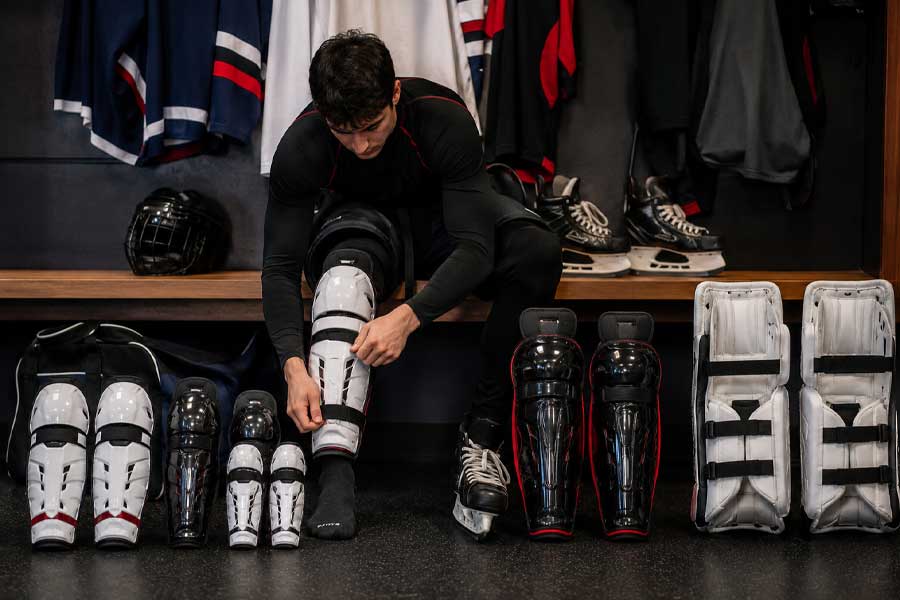
Shin Guards

Shin Guards are an essential piece of protective equipment in ice hockey. They are designed to protect the lower legs, shins, knees, and the areas around the front of the legs from impacts caused by hockey pucks, sticks, skates, collisions, and falls on the ice.

Because ice hockey is a fast and physical sport, players can be exposed to high-speed pucks and accidental contact during every shift. A properly fitted pair of shin guards helps reduce the risk of injuries while allowing players to skate, turn, and move comfortably.

What Are Shin Guards?

Shin guards are protective shells worn on the front of the lower legs. They normally consist of a hard outer shell combined with foam or other impact-absorbing materials.

The shin guard is shaped to cover the shin and knee area while allowing the player to bend the leg naturally. Many models also include straps or fastening systems that help keep the shin guard securely in position during skating and gameplay.

Why Are Shin Guards Important?

Shin guards provide protection against several common hazards in ice hockey, including:

  • Direct impact from a hockey puck
  • Contact with a hockey stick
  • Accidental contact with another player’s skate
  • Collisions between players
  • Falls and contact with the ice
  • Impact during blocking or defensive play

The lower leg is particularly vulnerable because players are frequently positioned close to the ice surface and puck. Shin guards create a protective barrier between the player’s body and these impacts.

Main Parts of a Shin Guard

A typical ice hockey shin guard includes several important components:

1. Hard Protective Shell
The outer shell provides impact protection and helps distribute the force of a puck, stick, or other contact over a larger area.

2. Knee Cap
The knee section protects the kneecap and surrounding area. It is designed to provide protection while still allowing the player to bend and skate naturally.

3. Shin Protection
The main lower section covers the shin bone, one of the most exposed areas of the lower leg.

4. Impact-Absorbing Foam
Foam padding is placed inside the shin guard to absorb and reduce impact forces while improving comfort.

5. Straps and Fastening System
Straps help keep the shin guard in the correct position. A secure fit is important because a shin guard that moves during play may leave parts of the leg exposed.

6. Calf and Ankle Protection
Some shin guards provide additional coverage around the calf and lower leg to improve overall protection.

Shin Guards for Players

For forwards and defensemen, shin guards are an important part of everyday protective equipment. Players should choose a model that provides sufficient coverage without restricting skating or leg movement.

Forwards may prefer lighter and more flexible designs because they often accelerate, turn, and change direction quickly. Defensemen may prefer models with additional coverage and protection because they can experience more puck impacts while blocking shots and defending their zone.

Shin Guards for Goaltenders

Goaltenders also require protection for their lower legs, but their equipment is designed differently from regular player shin guards.

Goaltenders normally use specialized leg pads rather than standard player shin guards. Goalie leg pads are much larger and are designed to protect the legs while also helping the goaltender make saves and control rebounds.

Under or around the goalie leg equipment, additional protective gear may be used depending on the player’s equipment setup and level of play.

Choosing the Right Shin Guards

When selecting shin guards, players should consider several factors:

Correct Size
The shin guard should cover the knee and shin properly without being excessively long or short.

Secure Fit
The guard should stay in position while skating, stopping, turning, and making contact with other players.

Comfort
Padding should provide protection without creating excessive pressure points.

Mobility
The design should allow the player to bend the knees and skate naturally.

Protection Level
Players who regularly face high-speed shots or physical contact may benefit from models with more extensive protection.

How Should Shin Guards Fit?

A properly fitted shin guard should sit securely over the shin and knee without interfering with the player’s skating stride.

The knee should sit comfortably inside the knee cap area. The lower part of the shin guard should provide adequate coverage while working correctly with the player’s hockey skates.

Players should avoid wearing shin guards that are too small because they may leave areas of the lower leg exposed. Shin guards that are too large can restrict movement or interfere with other equipment.

Shin Guard and Hockey Sock

Shin guards are normally worn underneath the hockey sock. The sock helps hold the shin guard in place and provides a clean layer between the protective equipment and the player’s leg.

Players should make sure the shin guard and hockey sock work together properly so that the protective equipment does not shift during play.

Maintenance and Care

Proper care can help extend the life of shin guards.

After training or a game:

  • Remove the shin guards from the hockey bag when possible.
  • Allow them to dry in a well-ventilated area.
  • Wipe away sweat and moisture.
  • Check straps and fasteners regularly.
  • Inspect the shell and padding for cracks or damage.
  • Replace damaged equipment when necessary.

Avoid leaving wet shin guards inside a closed hockey bag for long periods, as moisture can create unpleasant odors and contribute to deterioration of the materials.

Shin Guards for Children and Young Players

Young players should wear shin guards that are correctly sized for their height and leg length. Children grow quickly, so parents should regularly check whether the equipment still provides adequate coverage.

Buying equipment that is excessively large simply to allow room for growth is not recommended because oversized shin guards can move out of position and reduce protection.

Conclusion

Shin guards are a fundamental part of ice hockey protective equipment. They protect the player’s knees and lower legs from pucks, sticks, skates, collisions, and falls while allowing the player to move freely on the ice.

Choosing the correct size, maintaining a secure fit, and regularly inspecting the equipment are important steps for safe and comfortable play. For goaltenders, specialized leg pads provide the primary lower-leg protection and are designed specifically for the demands of the goaltending position.

ICE HOCKEY FAMILY
Learn • Play • Protect • Love Ice Hockey