What is a Neck Guard?
A Neck Guard, also known as a Neck Laceration Protector or Neck and Throat Protector, is an important piece of protective equipment used in ice hockey. It is designed to protect the player’s neck and throat area from cuts or laceration injuries that can occur from contact with skate blades, hockey sticks, or other sharp edges during play.
Because ice hockey involves high-speed skating, physical contact and rapidly moving equipment, protecting the neck is an important part of a player’s overall safety equipment.
Under the current IIHF Official Rule Book 2026/27, a neck laceration protector designed specifically for this purpose is mandatory for players in all categories of IIHF competitions. The IIHF also requires it to be worn properly, to cover as much of the neck as possible, and not to be modified or altered.
Main Purpose of a Neck Guard
The primary purpose of a Neck Guard is to provide a protective barrier around the neck and throat. It is particularly important because the neck contains vulnerable areas that are not naturally protected by other hockey equipment.
A Neck Guard can help:
- Reduce the risk of cuts and lacerations to the neck.
- Protect the front and sides of the throat area.
- Provide an additional layer of protection between the skin and skate blades or sticks.
- Improve overall safety when playing at high speed and during physical contact.
- Provide additional protection for young and developing players.
A Neck Guard is not designed to stop every type of impact or injury, so it should always be used together with the other appropriate protective equipment.
Neck Guard for Players
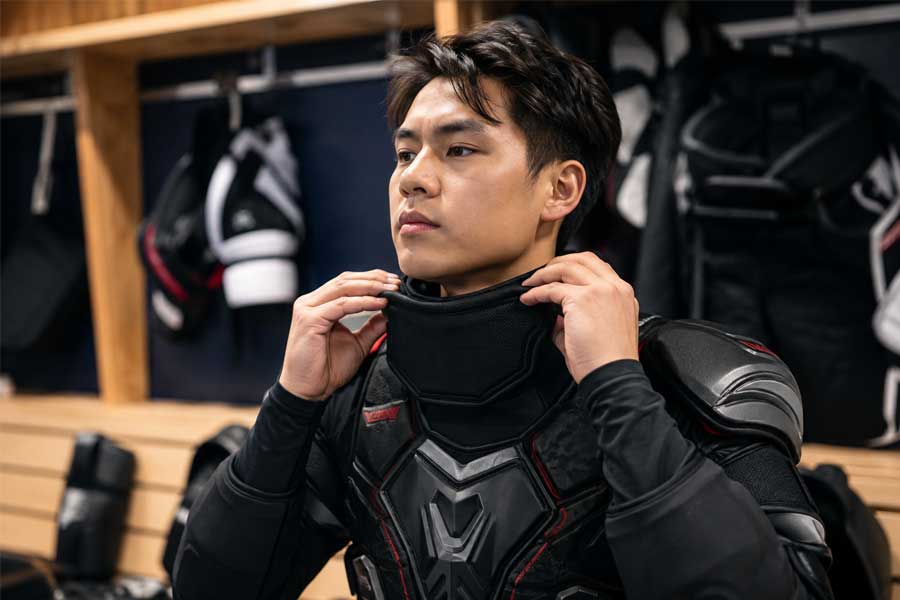
For ice hockey players, the Neck Guard is normally worn around the neck underneath the jersey. Most designs use a soft, flexible construction that allows the player to turn their head and move naturally while skating.
A good Neck Guard should:
- Fit comfortably around the neck.
- Cover a substantial portion of the neck and throat.
- Stay securely in position during skating and contact.
- Allow normal head and neck movement.
- Be made from appropriate cut-resistant protective materials.
- Not interfere with the helmet, shoulder pads or jersey.
Players should always follow the manufacturer’s instructions for fitting, cleaning and maintenance.
Neck Protection for Goalkeepers
Goalkeepers face many of the same risks as skaters, but their equipment configuration is different. In addition to their neck protection, goalkeepers normally wear a throat protector attached to the lower area of the facemask.
Under IIHF rules, a goalkeeper may attach a throat protector to the chin area of the facemask, provided that it is made from a material that will not cause injury.
Goalkeepers should ensure that their neck and throat protection does not interfere with their vision, head movement or the proper operation of the mask.
Neck Guard and Throat Protector – What Is the Difference?
Although the terms are sometimes used interchangeably, they can refer to different pieces of equipment.
Neck Guard / Neck Laceration Protector
Designed primarily to protect the neck and throat from lacerations, particularly from skate blades.
Throat Protector
Usually refers to a rigid or semi-rigid protective component positioned in front of the throat. For goalkeepers, it may be attached directly to the facemask.
Some modern products combine neck and throat protection into one integrated design.
Choosing the Right Neck Guard
When selecting a Neck Guard, players and parents should consider several factors:
1. Proper Fit
The protector should fit securely without being excessively tight. It should remain in position while skating, turning and making contact.
2. Coverage
Choose a design that provides good coverage of the neck and throat. The current IIHF rule specifically calls for a design that covers as much of the neck as possible.
3. Cut-Resistant Protection
Look for products specifically designed and tested for ice hockey neck-laceration protection.
4. Comfort and Mobility
A Neck Guard should allow the player to move their head naturally without restricting skating or stick handling.
5. Quality and Condition
Inspect the protector regularly for damage, worn materials, loose stitching or deterioration. Replace it if its protective performance or structural integrity is compromised.
6. Competition Requirements
Always check the rules of the league, tournament, federation or age category in which the player participates. Equipment requirements can vary between competitions.
How to Wear a Neck Guard Correctly
A Neck Guard should be positioned so that it provides continuous protection around the intended area of the neck and throat.
Players should:
- Put the Neck Guard on before the jersey.
- Position it comfortably around the neck.
- Make sure it covers the intended protective area.
- Secure all fasteners correctly.
- Check that it does not move excessively during skating.
- Make sure the jersey does not push the protector out of position.
- Inspect the equipment regularly.
Do not cut, remove, alter or modify the protective material. Under the current IIHF rules, the neck laceration protector must not be modified or altered.
Why Is a Neck Guard Important?
Ice hockey is a fast and physical sport. Players can fall, collide with other players, be struck by sticks or come into contact with skate blades.
A neck injury can be serious, which is why neck protection should be considered an essential part of a player’s equipment rather than an optional accessory.
For children and young players, developing good equipment habits from an early age is especially important. Wearing a properly fitted Neck Guard every time they go onto the ice helps make safety part of their normal hockey routine.
Neck Guard for Every Hockey Player
Whether playing recreational hockey, youth hockey, competitive hockey or professional-level hockey, players should use appropriate neck protection that meets the requirements of their competition.
The International Ice Hockey Federation (IIHF) currently requires neck laceration protection for players in all categories of IIHF competitions.
Always check the latest rules of your local federation, league or tournament before participating in a game.