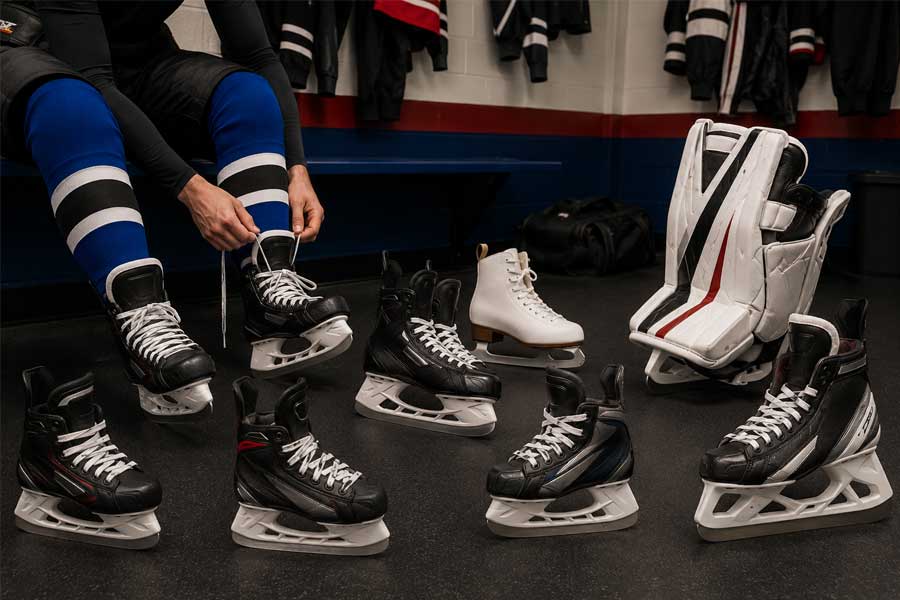
Ice hockey skates are one of the most important pieces of equipment for every ice hockey player. They are specially designed to provide stability, speed, agility, protection, and precise control while skating, turning, stopping, and accelerating on the ice.
Unlike recreational ice skates, hockey skates are built to withstand the high-impact and fast-paced nature of competitive ice hockey. A good pair of skates should fit securely around the foot and ankle while still allowing the player to move naturally and comfortably.
Main Parts of Ice Hockey Skates
1. Boot
The boot surrounds and supports the player’s foot and ankle. Modern hockey skate boots are usually made from strong, lightweight synthetic materials or composite materials. The boot needs to provide a balance between protection, stiffness, and comfort.
2. Holder
The holder is the plastic or composite component attached to the bottom of the boot. It connects the boot to the steel runner and allows the runner to be replaced when necessary.
3. Runner / Steel Blade
The steel runner is the part that makes direct contact with the ice. It is designed with a specific profile and hollow to provide the right balance between grip, glide, turning, and stopping.
4. Tongue
The tongue protects the top of the foot and helps distribute pressure from the laces. Many hockey skates use a reinforced tongue to provide additional protection against sticks, pucks, and other impacts.
5. Laces and Eyelets
Laces secure the foot inside the skate and allow the player to adjust the tightness around different areas of the foot and ankle. Proper lacing helps improve stability and control.
6. Ankle and Heel Support
The heel and ankle area helps keep the foot securely positioned inside the boot. Proper heel lock is important because excessive movement inside the skate can reduce skating efficiency and increase the risk of discomfort or injury.
Ice Hockey Skates for Players
Player skates are designed for quick acceleration, sharp turns, fast stops, and rapid changes of direction. Players need a skate that provides good energy transfer while remaining comfortable enough for long periods on the ice.
Skates are available in different levels, from entry-level models for beginners to high-performance models designed for advanced and professional players. The main differences can include boot stiffness, materials, weight, fit, holder construction, and runner technology.
Goaltender Skates
Goaltender skates are specifically designed for the unique movements of ice hockey goalkeepers. They generally have a different blade and holder configuration compared with player skates.
The design emphasizes stability, lateral movement, and protection. Goaltender skates are built to support movements such as butterfly positioning, lateral pushes, quick recoveries, and movement within the crease.
Because goalkeepers frequently drop into butterfly positions and move from side to side, their skates must provide a stable platform while protecting the foot and lower leg from pucks and sticks.
Choosing the Right Ice Hockey Skates
Choosing the correct skate size and fit is extremely important. Hockey skates should fit more snugly than ordinary shoes, but they should never cause excessive pain, numbness, or pressure points.
When selecting skates, players should consider:
- Foot length and width
- Heel lock and ankle support
- Overall skate fit
- Boot stiffness
- Playing level and skating ability
- Frequency of use
- Player position
- Age and foot growth, especially for children
For young players, parents should avoid buying skates that are excessively large simply to allow more room for growth. A skate that is too large can reduce stability and skating control.
Skate Sharpening
Regular skate sharpening is essential for maintaining grip and control on the ice. The steel runner is sharpened with a hollow that creates two edges, allowing the skater to grip the ice while still maintaining the ability to glide.
The appropriate sharpening depends on factors such as the player’s weight, skating style, ice conditions, and personal preference. Players should also regularly inspect their runners for damage, excessive wear, or loss of proper edges.
Skate Maintenance
Proper maintenance can significantly extend the life of hockey skates.
After every use, players should:
- Wipe moisture from the boot and steel
- Allow the skates to dry naturally
- Avoid leaving wet skates inside a closed equipment bag
- Use skate guards when walking off the ice
- Check the steel and holder regularly
- Inspect laces, eyelets, and boot materials
- Have damaged components repaired or replaced when necessary
Never use hard plastic skate guards while storing wet skates for extended periods because trapped moisture can contribute to rust and damage to the steel.
Safety and Performance
Ice hockey skates are more than footwear. They are a critical connection between the player and the ice. Proper fit, correct sharpening, regular maintenance, and suitable skate selection can improve skating performance while helping players maintain stability and control.
Whether playing recreational hockey, youth hockey, competitive hockey, or playing as a goaltender, choosing the right skates is an important part of building a safe and effective hockey equipment setup.