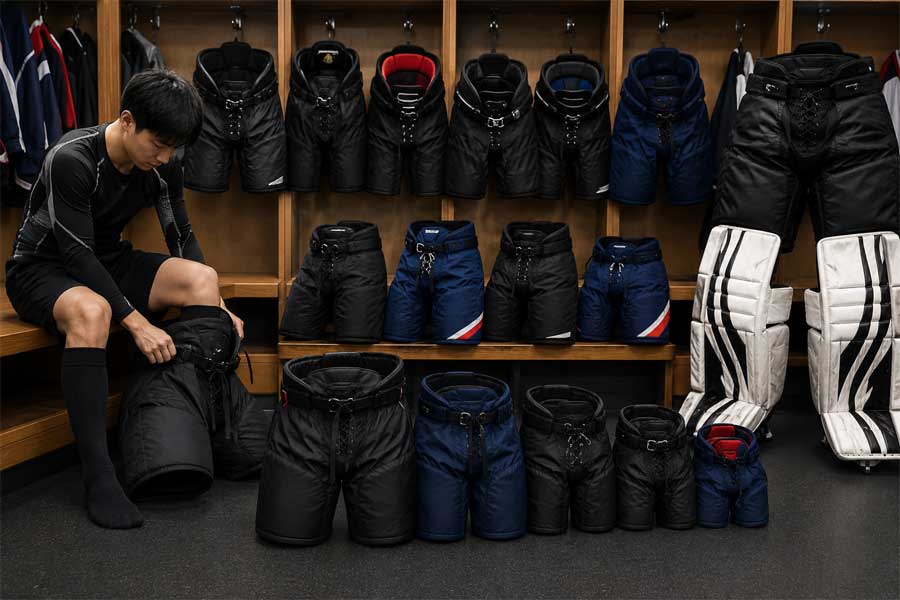
Hockey Pants: Essential Protection in Ice Hockey
Hockey Pants are an important piece of protective equipment in ice hockey. They are designed to protect the lower body from impacts, falls, collisions, sticks, pucks, and contact with the ice.
Unlike ordinary sports shorts, hockey pants are specially constructed with protective padding around key areas such as the hips, thighs, pelvis, and lower back. They allow players to move freely while providing protection during fast and physical play.
The International Ice Hockey Federation (IIHF) recognizes pants as part of the protective equipment used by ice hockey players. Protective equipment must be designed and used for player protection and must comply with applicable safety and competition regulations.
What Are Hockey Pants?
Hockey pants are padded protective shorts worn over the player’s lower-body base layer and under the jersey. They are usually made from durable synthetic materials combined with internal protective foams and molded protective components.
The design provides a balance between:
- Protection
- Mobility
- Comfort
- Flexibility
- Durability
Hockey pants are normally secured around the waist and extend down the upper part of the thighs. The length and fit are designed to work together with the player’s shin guards and other protective equipment.
What Do Hockey Pants Protect?
Hockey pants are designed to provide protection to several vulnerable areas of the lower body.
1. Hips
The hip area can receive significant impact during collisions, falls, and contact with the boards. Protective padding helps absorb and distribute impact.
2. Thighs
The thighs can be exposed to sticks, pucks, collisions, and falls. Padding in this area helps reduce the force of impacts.
3. Pelvis and Groin Area
Hockey pants provide protective coverage around the pelvic region. This protection works together with other equipment to reduce the risk of injury.
Players should also use an appropriate athletic protector designed for ice hockey.
4. Lower Back
Many hockey pants include padding around the rear and lower-back area to provide additional protection when a player falls or is involved in contact.
Main Features of Hockey Pants
Modern hockey pants are designed with several important features.
Protective Padding
High-density foam and molded protective materials are positioned around the hips, thighs, pelvic area, and lower back.
Adjustable Waist
Many models include adjustable belts, straps, or fastening systems that allow the player to achieve a secure and comfortable fit.
Flexible Construction
Hockey pants need to provide protection without restricting skating movements. Players must be able to accelerate, turn, stop, crouch, and change direction quickly.
Durable Outer Shell
The exterior is designed to withstand repeated contact, falls, and friction during play.
Ventilation
Some hockey pants incorporate ventilation zones or breathable materials to help manage heat and moisture during intense activity.
Why Proper Fit Is Important
The effectiveness of hockey pants depends greatly on proper fit.
Pants that are too loose can move out of position during skating or collisions. Pants that are too tight may restrict movement and reduce comfort.
When selecting hockey pants, players should check:
- Waist fit
- Thigh coverage
- Hip protection
- Pelvic coverage
- Range of motion
- Compatibility with shin guards
- Comfort when skating
The pants should remain securely positioned during movement without interfering with skating technique.
Player Hockey Pants vs. Goalkeeper Pants
Although both players and goalkeepers wear protective pants, their designs and purposes are different.
Player Hockey Pants
Player pants are designed primarily for skating mobility and protection against physical contact.
They generally provide protection around:
- Hips
- Thighs
- Pelvis
- Lower back
The design is relatively streamlined so players can skate, pivot, accelerate, and move efficiently.
The IIHF identifies pants as part of the standard equipment used by players and also regulates how uniforms and protective equipment are worn during competition.
Goalkeeper Hockey Pants
Goalkeeper pants are specially designed for the unique movements and protection requirements of a goaltender.
Goalkeepers frequently move into a deep crouch, drop to their knees, slide laterally, and cover the lower part of the net. Their pants therefore require different protective construction from standard player pants.
Goalkeeper pants generally provide substantial protection around the:
- Hips
- Thighs
- Pelvic area
- Lower body
The IIHF 2026/27 rules specify that goalkeeper pants must be anatomically proportional and size-specific. The rules also regulate the construction and positioning of thigh protection and prohibit unnecessary padding or modifications that are not required for protection.
Hockey Pants and the Goalkeeper’s Equipment System
Goalkeeper pants are not used alone. They work together with other pieces of specialized goalkeeper equipment, including:
- Goalie mask
- Chest and arm protector
- Goalie pants
- Leg pads
- Blocker
- Catch glove
- Goalie stick
- Skates
The IIHF describes the goalkeeper as being heavily protected because of the demands of the position and the speed of the puck.
The pants must allow the goalkeeper to move into the butterfly position and other goaltending movements without creating unnecessary gaps or interference with the leg pads.
How to Choose the Right Hockey Pants
When purchasing hockey pants, consider the following factors.
1. Correct Size
Choose a size that provides complete protection while allowing unrestricted movement.
2. Protection Level
Beginners, recreational players, competitive players, and professionals may have different requirements. Higher-level players may prefer pants with more advanced protective materials and construction.
3. Mobility
Try the pants while standing, crouching, and simulating skating movements. The pants should not restrict hip or leg movement.
4. Comfort
Comfort is important because hockey players may wear their equipment for extended periods during practices and games.
5. Compatibility With Other Equipment
Hockey pants should work properly with the player’s shin guards, shoulder pads, elbow pads, socks, and jersey.
Hockey Pants for Young Players
For children and beginner players, proper sizing is especially important.
Young players are still developing skating technique and balance, so equipment should provide adequate protection without being excessively heavy or restrictive.
Parents and coaches should regularly check:
- Whether the pants still fit correctly
- Whether protective padding has shifted
- Whether straps and fasteners remain functional
- Whether the equipment has become damaged
- Whether the player can move comfortably
Children can outgrow hockey equipment relatively quickly, so fit should be checked regularly.
Care and Maintenance
Proper maintenance can extend the life of hockey pants.
After Every Session
Allow the pants to dry completely after training or competition. Avoid leaving damp equipment inside a closed hockey bag for long periods.
Inspect the Padding
Regularly check for cracked protective components, damaged foam, loose stitching, or broken fastening systems.
Clean the Pants
Follow the manufacturer’s cleaning instructions. Do not use cleaning methods that could damage protective materials.
Check Before Games
Before entering the ice, make sure the pants are properly secured and that all protective components remain in their correct positions.
Safety and Competition Considerations
Protective equipment should be used for protection rather than to gain an advantage or increase the risk of injury to another player.
The IIHF states that protective equipment must conform to applicable safety standards and be used to protect players. Officials may require equipment that does not comply with the rules to be corrected or removed.
Competition rules can vary depending on the league, tournament, age group, and governing organization. Players should always check the rules applicable to their competition.
For official international competitions, the latest IIHF rulebook should be consulted. The IIHF currently publishes the 2026/27 Official Rule Book as its latest rulebook.
Conclusion
Hockey pants are much more than ordinary sports shorts. They are an essential part of an ice hockey player’s protective equipment, helping protect the hips, thighs, pelvis, and lower back while allowing the player to skate and move efficiently.
For goalkeepers, specialized goalie pants provide additional protection and are designed to work together with the rest of the goaltending equipment.
Choosing the correct size, maintaining the equipment properly, and following applicable safety regulations are all important parts of playing ice hockey safely.
Hockey Pants = Protection + Mobility + Comfort + Confidence on the Ice