OFFSIDE IN ICE HOCKEY
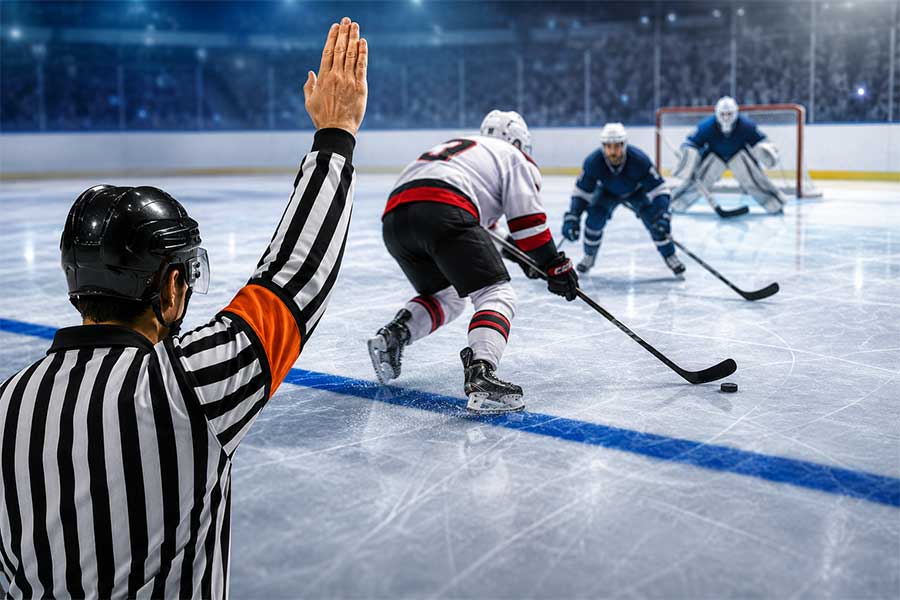
REFEREE SIGNALS — OFFSIDE
What Is Offside?
In ice hockey, Offside occurs when an attacking player enters the attacking zone before the puck completely crosses the blue line.
The key principle is simple: the puck must enter the attacking zone before the attacking players do.
The attacking zone is generally considered to begin at the blue line. For a player to be legally onside, the player must not precede the puck into the attacking zone.
How Is Offside Called?
When an offside situation occurs, the Linesperson stops play and signals the infraction.
The Linesperson’s primary responsibility is to determine whether attacking players have legally entered the attacking zone in relation to the puck.
A typical sequence is:
- The puck approaches the blue line.
- An attacking player crosses the blue line before the puck.
- The Linesperson determines that the player has entered the zone illegally.
- The play is ruled Offside.
- Play is stopped or the appropriate delayed-offside procedure is applied, depending on the situation and applicable rules.
REFEREE SIGNAL — OFFSIDE
Official Offside Signal
The standard signal associated with an offside situation is made by the Linesperson.
The Linesperson raises an arm to indicate the offside situation and communicates the ruling to the players, officials, and spectators.
The signal allows everyone around the rink to quickly recognize that the attacking team has entered the zone illegally.
OFFSIDE = Attacking player enters the attacking zone before the puck.
Delayed Offside
In situations where the rules permit a delayed offside, the Linesperson may allow play to continue rather than immediately stopping the game.
The attacking team must clear the attacking zone before the puck is played or advanced in a way that creates an offside situation.
If all attacking players legally exit the zone, the offside situation can be cleared and play may continue.
This is commonly referred to as delayed offside.
Why Is the Blue Line Important?
The blue line is one of the most important reference points for determining offside.
Players and officials must constantly judge the relationship between:
- The puck
- The player’s skates
- The blue line
- The attacking zone
The puck must legally enter the attacking zone before an attacking player does.
Because hockey moves extremely quickly, Linespersons must maintain excellent positioning, awareness, and timing.
Offside vs. Icing
Offside and icing are two different infractions and should not be confused.
Offside relates to entering the attacking zone illegally.
Icing generally relates to sending the puck from behind the center red line across the opponent’s goal line without it being legally played under the applicable rules.
The Linespersons are responsible for making these important judgments during play.
Key Points for Players
Players should remember these basic principles:
- Watch the puck when approaching the blue line.
- Do not enter the attacking zone ahead of the puck.
- Maintain awareness of your teammates and the blue line.
- Follow the Linesperson’s signal.
- When delayed offside is called, clear the attacking zone as quickly as possible.
Understanding offside helps players make better decisions when entering the offensive zone and reduces unnecessary stoppages in play.
REFEREE SIGNALS — Quick Reference
| Situation | Official | Meaning |
|---|---|---|
| Offside | Linesperson | An attacking player entered the attacking zone before the puck |
| Delayed Offside | Linesperson | Offside situation is being delayed while the attacking team clears the zone |
| Play Stoppage | Referee / Linesperson | Play has been stopped according to the applicable rule |
Remember
PUCK FIRST — PLAYERS SECOND.
The fundamental idea behind offside is that the puck must establish entry into the attacking zone before the attacking players.