Shoulder Pads in Ice Hockey
Shoulder Pads are an essential piece of protective equipment in ice hockey. They are designed to help protect the upper body from impacts that can occur during skating, body contact, collisions with the boards, falls on the ice, and contact with the puck or hockey stick.
Shoulder pads are normally worn underneath the hockey jersey and are designed to provide protection while still allowing players to move their arms, rotate their shoulders, and skate freely. They are part of the standard protective equipment used by ice hockey players.
What Do Shoulder Pads Protect?
Modern ice hockey shoulder pads generally provide protection to several important areas of the upper body, including:
- Shoulders — Helps protect the shoulder joint from direct impacts.
- Shoulder Blades — Provides padding around the upper back and shoulder blade area.
- Collarbone — Helps protect the clavicle from impacts and contact.
- Chest — Provides additional protection to the upper chest.
- Ribs and Upper Back — Some designs extend protection around the sides and back of the torso.
- Upper Arms — Provides protection around the upper portion of the arms.
The exact coverage varies depending on the design, size, model, and level of protection.
Why Are Shoulder Pads Important?
Ice hockey is a fast and physical sport. Players can reach high speeds and may experience sudden contact with other players, the boards, or the ice. A properly fitted shoulder pad can provide an important layer of protection against these impacts.
Shoulder pads are particularly useful when a player falls, is checked into the boards, or receives contact around the upper body. However, no protective equipment can eliminate the risk of injury completely. Players should always use properly fitted equipment and follow the safety rules of their league or governing organization.
Main Parts of Shoulder Pads
Most ice hockey shoulder pads consist of several protective sections:
1. Shoulder Caps
The shoulder caps sit over the shoulders and are designed to distribute impact away from the shoulder joint.
2. Chest Protection
Padding across the front of the torso helps protect the chest from impacts involving players, boards, sticks, and pucks.
3. Back Protection
The rear section provides additional protection around the upper back and shoulder blade area.
4. Sternum and Collarbone Protection
Many designs include additional padding around the center of the chest and collarbone area.
5. Bicep or Upper-Arm Protection
Some shoulder pads include adjustable protection around the upper arms. This section should work together with the elbow pads without restricting movement.
Choosing the Right Shoulder Pads
Choosing the correct size is extremely important. Shoulder pads that are too large may move around during play and can interfere with skating and stickhandling. Pads that are too small may leave important areas insufficiently protected.
When trying on shoulder pads, players should check that:
- The shoulder caps sit securely on the shoulders.
- The chest protection remains centered.
- The pads do not slide excessively when moving the arms.
- The shoulder pads allow a full range of motion.
- The upper-arm protection works comfortably with the elbow pads.
- The equipment does not interfere with the hockey jersey.
- The player can skate, shoot, pass, and turn comfortably.
For young players, sizing should be checked regularly because children can outgrow protective equipment quickly.
Shoulder Pads and Mobility
Protection is important, but mobility is equally important in modern ice hockey. Players need to rotate their shoulders, raise their arms, handle the stick, pass, shoot, and maintain balance while skating.
Modern shoulder pads are therefore designed to combine protective padding with lighter construction and greater freedom of movement. The best shoulder pad is not necessarily the largest or most heavily padded model; it should provide appropriate protection while allowing the player to move naturally.
How to Wear Shoulder Pads Correctly
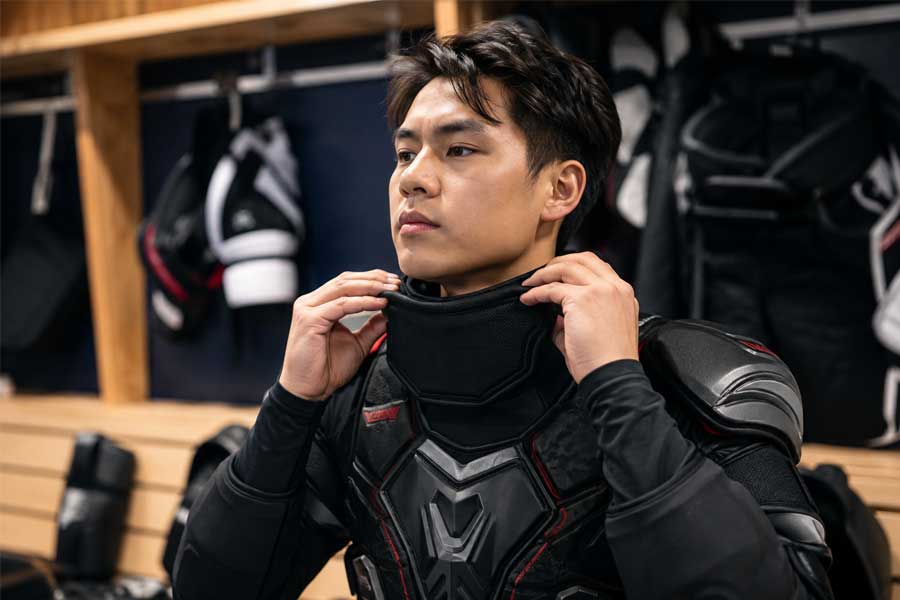
Shoulder pads should be worn underneath the hockey jersey and positioned correctly before entering the ice.
Players should make sure that the shoulder caps are correctly positioned over the shoulders and that the chest and back protection remains centered. The straps or adjustment systems should be secured without making the equipment excessively tight.
Shoulder pads should also work together with other protective equipment, especially the elbow pads, hockey pants, helmet, gloves, and neck protection.
Care and Maintenance
Proper care can help keep shoulder pads clean and in good condition.
After every practice or game:
- Remove the shoulder pads from the hockey bag.
- Allow them to air-dry in a well-ventilated area.
- Avoid leaving wet equipment inside a closed hockey bag.
- Check the straps, stitching, padding, and protective shells regularly.
- Clean the equipment according to the manufacturer’s instructions.
- Replace damaged or heavily worn protective components when necessary.
Good equipment maintenance is especially important because hockey gear is frequently exposed to sweat, moisture, and repeated impacts.
Shoulder Pads for Different Players
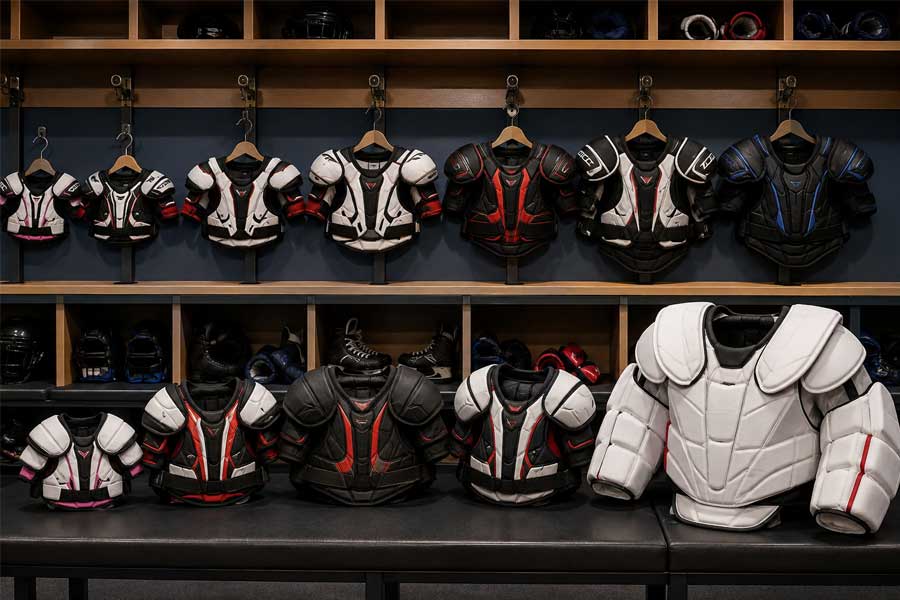
Shoulder pads are available in different sizes and designs for Youth, Junior, Intermediate, and Senior players. Some models prioritize maximum coverage, while others focus more on lightweight construction and mobility.
Players should select equipment according to their age, body size, playing level, position, personal preference, and the rules of their league.
Safety First
Shoulder pads are an important part of an ice hockey player’s protective equipment, but they should not be considered a guarantee against injury. Correct fitting, proper use, regular equipment inspection, and safe playing techniques are all important parts of injury prevention.
Players should also check the equipment requirements of their specific hockey association or competition because equipment regulations can differ between leagues and age groups.
Conclusion
Shoulder Pads are more than just protective gear — they are an important part of a player’s confidence and safety on the ice.
A good pair of shoulder pads should provide appropriate protection for the shoulders, chest, collarbone, back, and upper arms while allowing the player to skate and handle the puck comfortably.
For every ice hockey player, from beginner to advanced level, selecting the right shoulder pads and wearing them correctly is an important step toward safer and more enjoyable hockey.