What is Boarding in Ice Hockey?
Boarding in ice hockey is a severe and highly dangerous penalty called when a player checks, pushes, or trips an opponent defencelessly, causing them to impact the boards violently.
Characteristics of a Boarding Offense
- The Action: It occurs when a player delivers a body check, a push from behind, or a trip that causes an opponent to lose control and throw their body violently into the boards.
- The Danger: This foul typically happens in the “danger zone”—a short distance away from the boards. The vulnerable player cannot brace for impact, risking severe head, face, neck, or spinal cord injuries.
Penalties and Consequences
Referees determine the severity of the penalty based on the force of the impact and whether there was an intent to injure:
| Penalty Type | Time Spent in the Penalty Box | Criteria for the Call |
|
|
|
|
|
|
|
|
|
The Referee’s Hand Signal
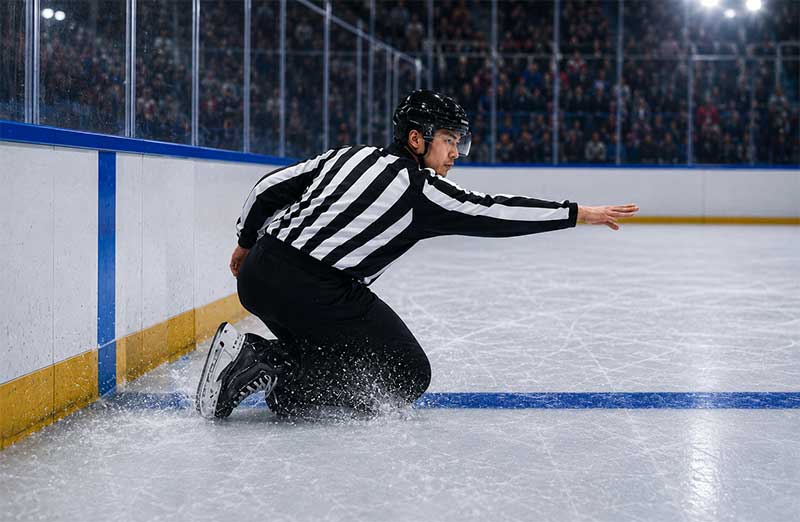
- When calling a boarding penalty, the referee will signal by striking a clenched fist of one hand into the open palm of the other hand in front of the chest. This motion visually mimics a player crashing into the boards.

Visualizing a Boarding Incident
Visual examples of boarding capture the exact moment a defending player checks an opponent from behind or hits them while they are in a vulnerable position. Unlike a legal body check, the victim is thrown completely out of control into the wall.
A picture of the incident during boarding.
3 Key Elements That Define a Boarding Foul in These Visuals:
-
- Dangerous Position: As seen in hits from behind, the player faces the boards, leaving them with no time or ability to use their hands or arms to absorb the impact.
- The Danger Zone: This mostly occurs when a player is roughly 3 to 5 feet away from the boards. This specific distance causes the player to fly through the air, making their head or neck the first point of contact with the boards.
- The Official’s Call: Following the impact, the referee executes the boarding hand signal to stop play, assess the disciplinary actions, and send the offending player to the penalty box.