
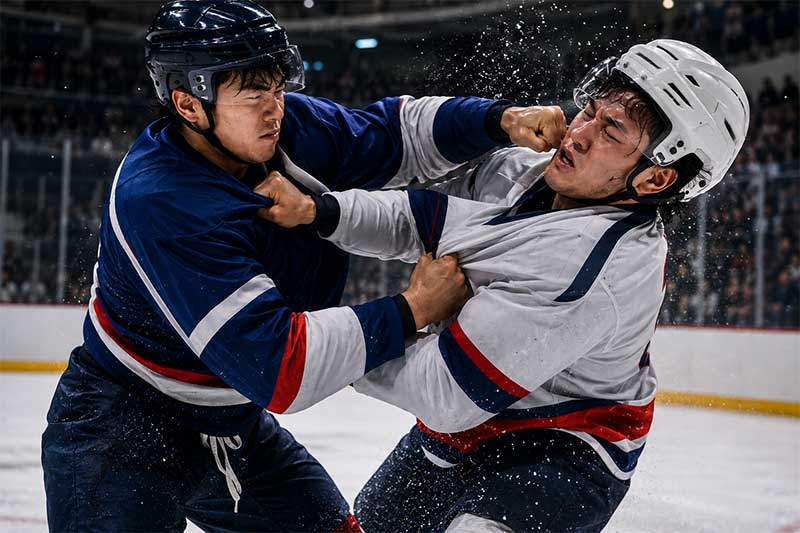
In ice hockey, fighting is a unique part of the sport, but it is not simply “allowed.” The rules vary by league, and players are penalized for fighting.
🏒 How fighting works
- A fight usually starts after a confrontation
- Two players may agree to fight after a hit, collision, or other altercation.
- Players typically drop their gloves and sticks before fighting.
- Fighting is generally between two willing participants.
- The fight continues until it ends
- Players may grapple and throw punches.
- The linesmen (assistant referees) normally wait for the players to stop or become unable to continue safely before intervening.
- They then separate the players.
- Both players are penalized
- In the NHL, a standard fighting penalty is typically 5 minutes in the penalty box.
- Unlike many other penalties, a player is generally not automatically ejected simply for receiving a standard fighting major.
- Additional penalties can apply if the fight involves other infractions.
- There are situations with heavier punishment
Fighting can result in additional penalties or suspension when a player:- Instigates or starts a fight in certain circumstances
- Is an aggressor
- Continues fighting after the officials attempt to stop it
- Fights outside the normal circumstances of play
- Uses an especially dangerous or inappropriate action
⚠️ Important distinction
Fighting is much more accepted in some professional leagues than in amateur/youth hockey.
For example:
| Situation | Typical treatment |
|---|---|
| NHL fight | 5-minute major penalty |
| International/IIHF hockey | Fighting is penalized more severely |
| Youth hockey | Fighting is generally prohibited and can result in ejection/suspension |
| Recreational hockey | Usually prohibited under league rules |
Why does fighting exist in hockey?
Historically, fighting developed partly as a form of enforcement and deterrence—players could respond to dangerous hits or protect teammates. However, modern hockey increasingly emphasizes player safety, and leagues have progressively tightened rules surrounding fighting.
One important point: A player cannot legally assume that “both players agreed to fight, so there is no penalty.” Both participants can still be penalized.