yes

Blog

Ice Hockey Rink

Ice Hockey Rink

An ice hockey rink is the enclosed ice surface where ice hockey is played. It is surrounded by boards and protective glass and contains specific lines, circles, zones, goals, benches, and penalty boxes.

🏒 Main Areas of an Ice Hockey Rink

  1. Center Ice – The middle of the rink, marked by the center face-off circle.
  2. Center Red Line – Divides the rink into two halves.
  3. Blue Lines – Two blue lines divide the rink into three zones:
    • Defensive Zone
    • Neutral Zone
    • Attacking Zone
  4. Goal Lines – Located near each end of the rink.
  5. Face-Off Circles – Used for face-offs at the start of play and after certain stoppages.
  6. Goal Crease – The marked area immediately in front of each goal where the goaltender operates.
  7. Goals – Each team defends one goal and attempts to score in the opponent’s goal.
  8. Boards & Protective Glass – Surround the ice and keep the puck and players within the playing area.
  9. Players’ Benches – Where players and team staff sit during the game.
  10. Penalty Boxes – Where players serve penalties.

📏 Rink Dimensions

Under the current IIHF rules, the official rink is 60 meters long and 26–30 meters wide, with rounded corners having a radius of 7.0–8.5 meters. (IIHF Blob)

The IIHF rink is therefore generally wider than the typical NHL playing surface, while maintaining the same 60 m length used for international competition. (IIHF Blob)

❄️ Rink Surface

The playing surface is a white sheet of ice maintained at a consistent quality suitable for competition. The official markings include the red center line, blue lines, goal lines, face-off spots and circles, and goal creases. (IIHF Blob)

For a website article, a good title structure would be:

Ice Hockey Rink: Layout, Dimensions, Zones & Markings

Ice Hockey Equipment

Ice Hockey Equipment

Ice hockey requires specialized equipment designed to provide protection, comfort, mobility, and performance on the ice. Whether you are a beginner or an experienced player, wearing the correct equipment is essential for safety and confidence.

1. Hockey Helmet

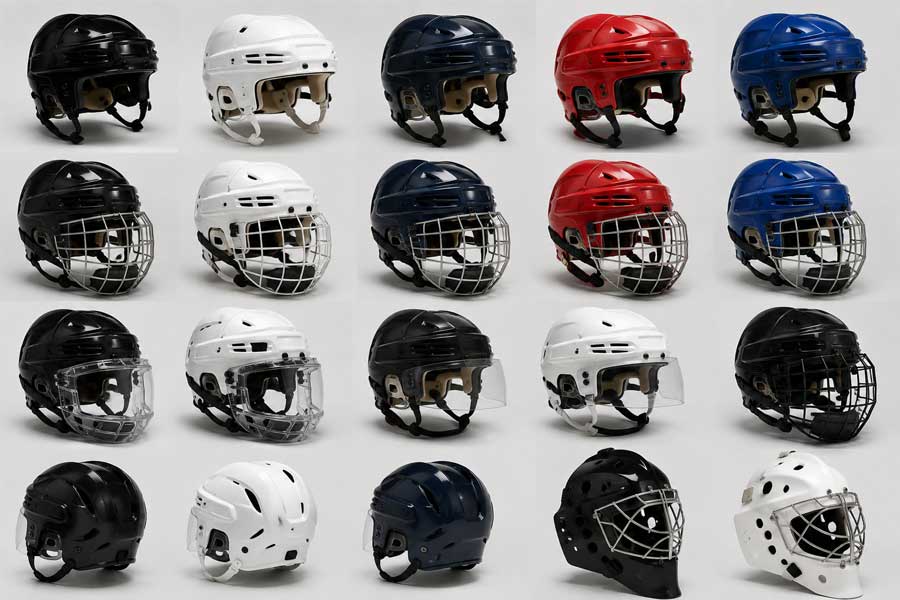
A hockey helmet protects the head from impacts caused by falls, collisions, sticks, and pucks. Players should use a properly fitted helmet with an appropriate face protection system, such as a cage or visor.

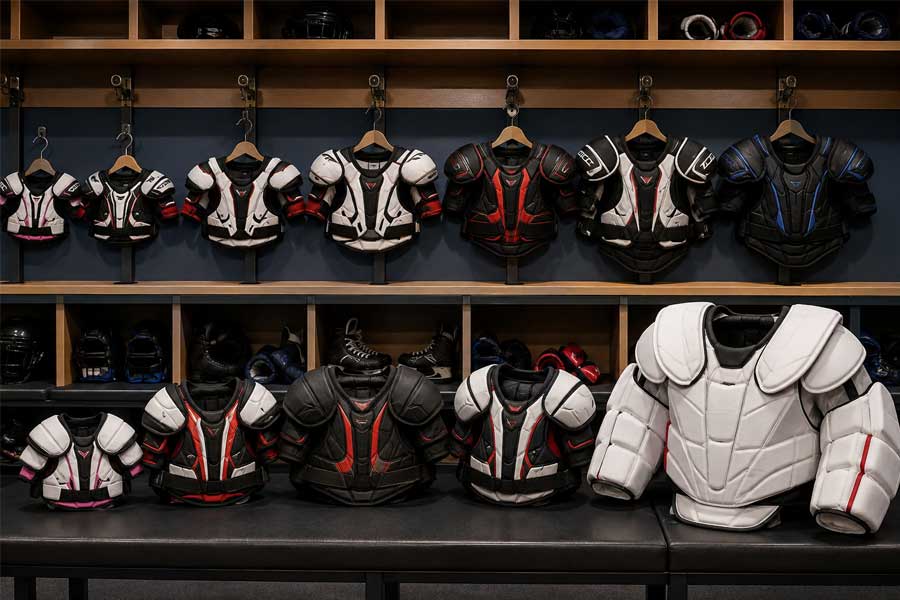
2. Shoulder Pads

Shoulder pads protect the shoulders, chest, upper back, and upper arms. They are designed to absorb impact while allowing players to move their arms freely.

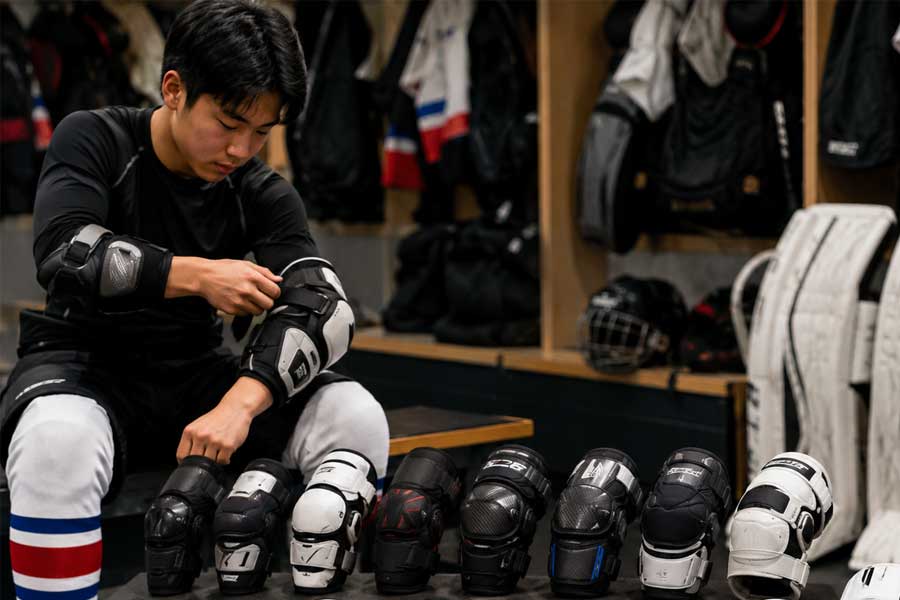
3. Elbow Pads

Elbow pads protect the elbows and forearms from falls and collisions. They should fit securely without restricting movement.

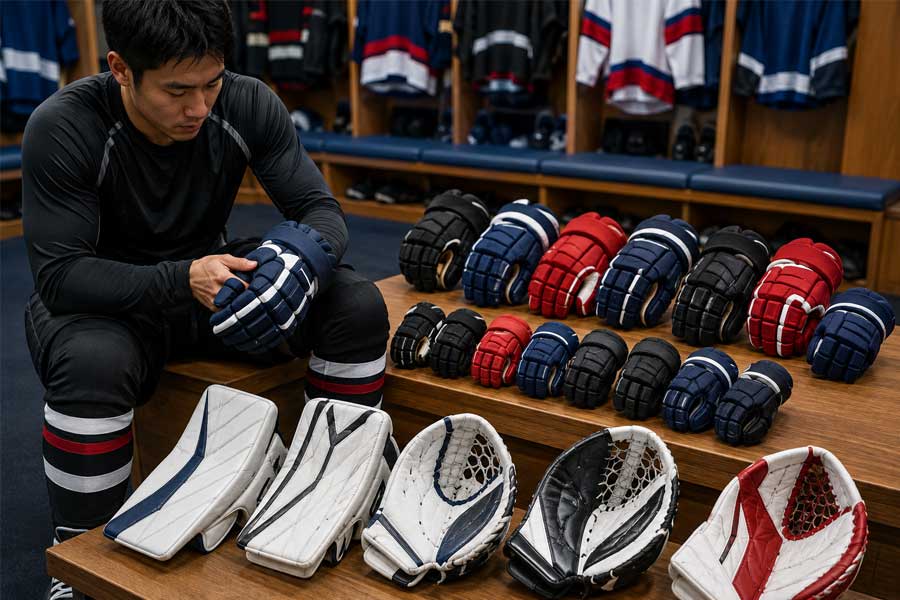
4. Hockey Gloves

Hockey gloves protect the hands, fingers, and wrists while providing flexibility for gripping the stick and controlling the puck.

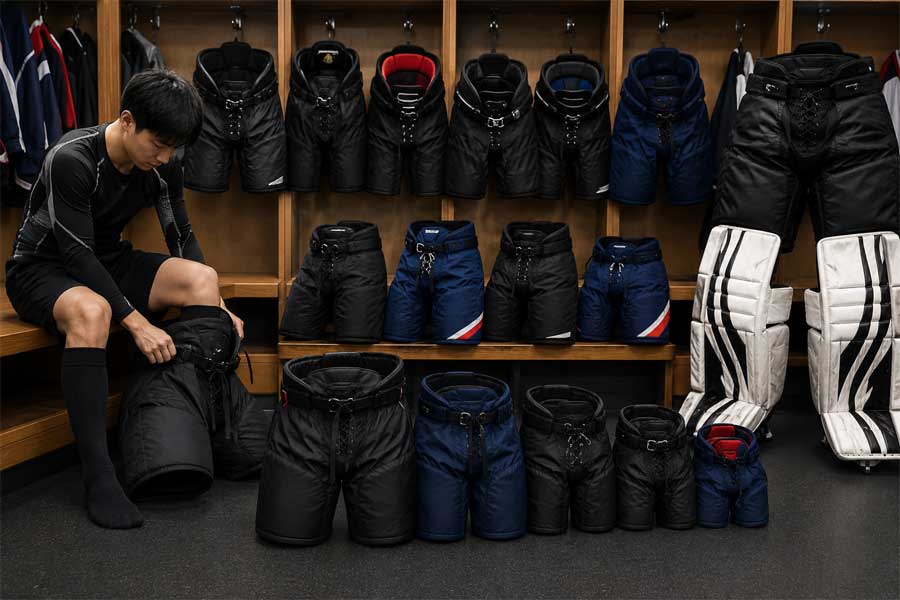
5. Hockey Pants

Hockey pants provide protection for the hips, thighs, lower back, and upper legs. They help absorb impacts during falls and contact with other players.

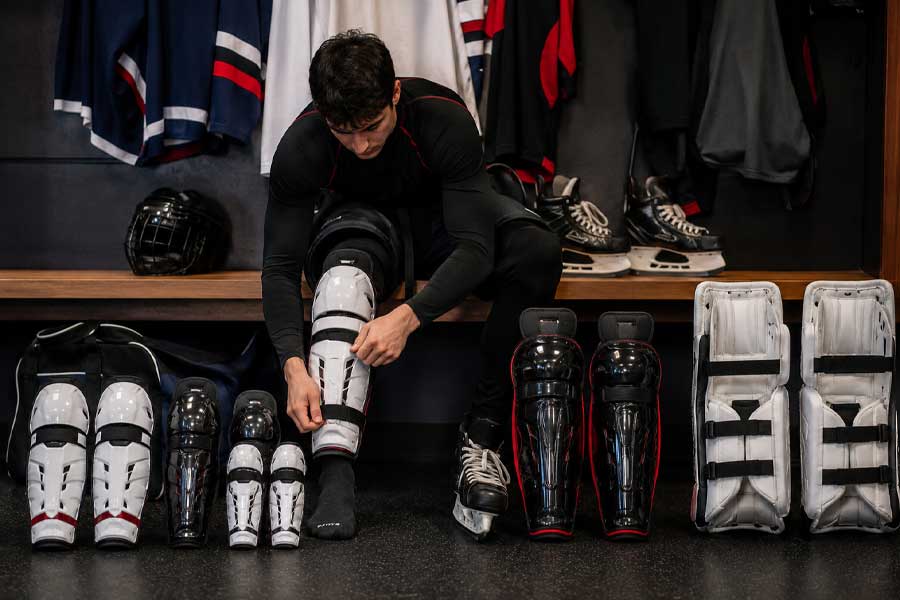
6. Shin Guards

Shin guards protect the shins and knees from pucks, sticks, and collisions. Properly fitted shin guards should cover the knee and extend down toward the top of the skate.

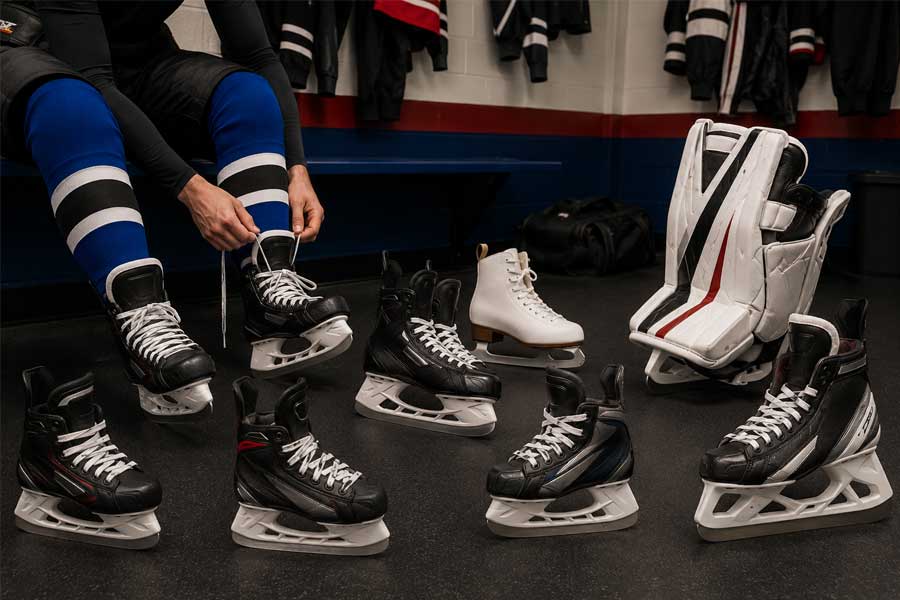
7. Hockey Skates

Hockey skates are specially designed for speed, balance, quick turns, and acceleration on ice. A good pair of skates should fit snugly and provide strong ankle support.

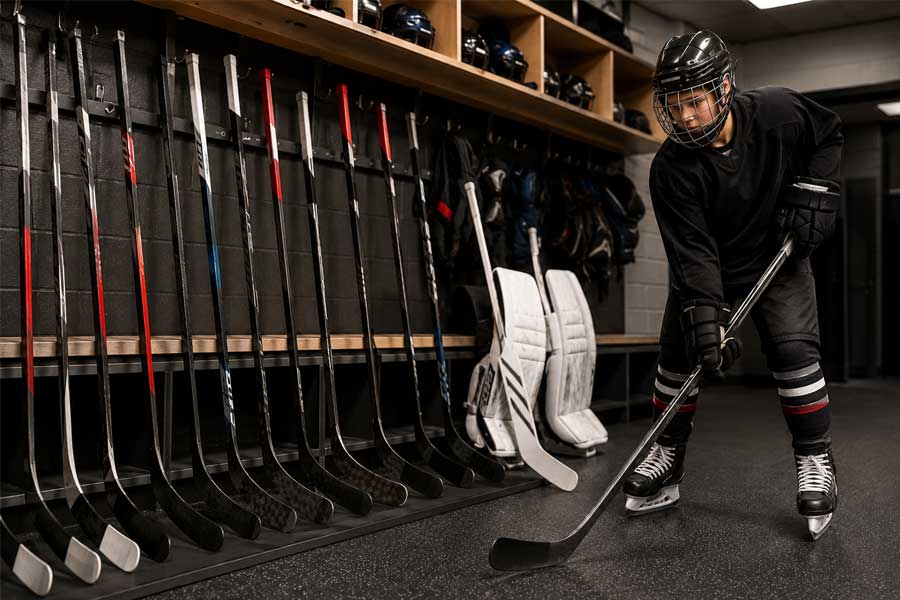
8. Hockey Stick

The hockey stick is used to control, pass, shoot, and handle the puck. Sticks are available in different lengths, flex ratings, materials, and blade patterns.

9. Hockey Jersey

The hockey jersey is worn over the protective equipment and identifies the team and player number. It is designed to provide freedom of movement during play.

10. Protective Cup

A protective cup provides protection for the groin area. It is an important piece of protective equipment for players of all levels.

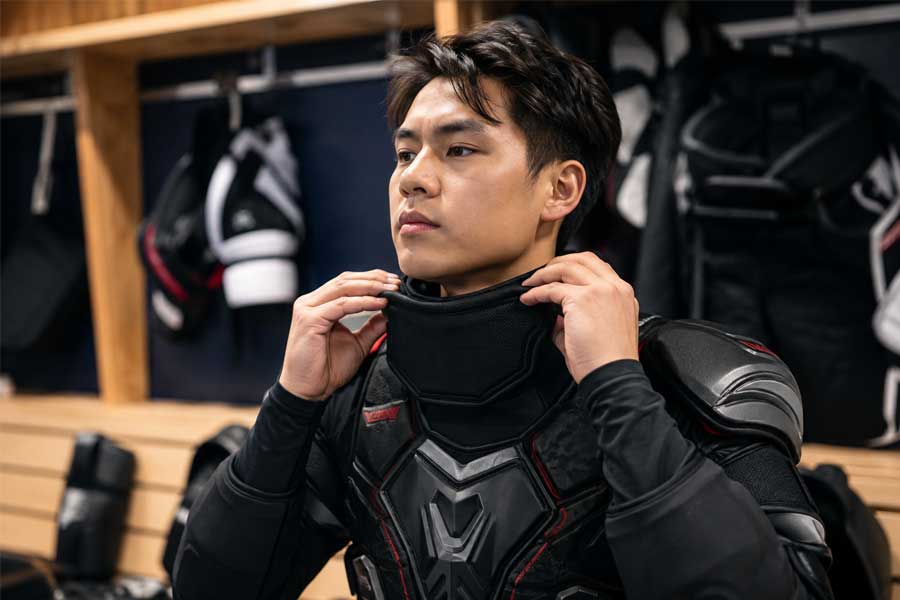
11. Neck Guard

A neck guard helps protect the neck and throat area, particularly from skate blades and other sharp equipment. It is especially important for younger players.

12. Hockey Socks

Hockey socks are worn over the shin guards and typically extend from the ankle area to the upper thigh. They are usually secured with hockey tape or a hockey garter system.

13. Mouthguard

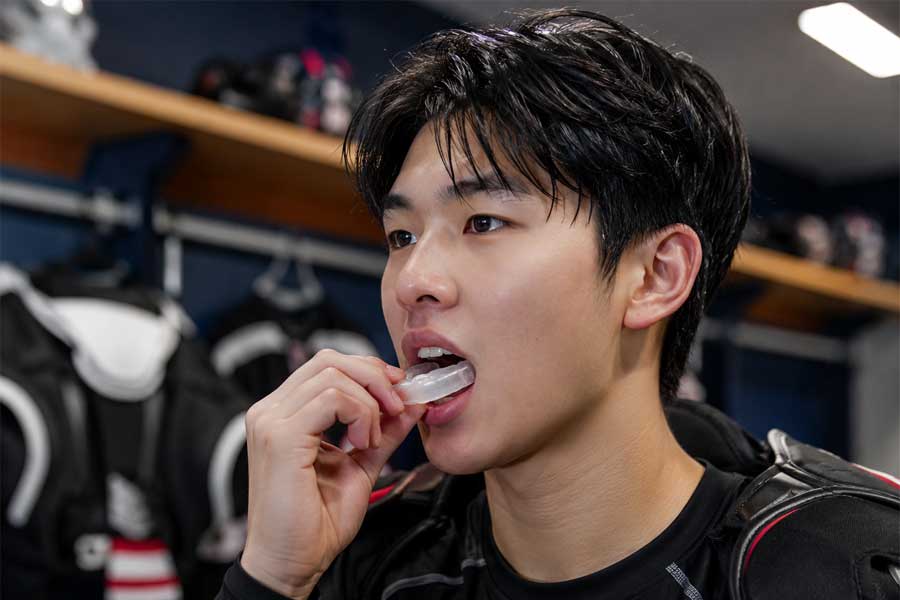
A mouthguard helps protect the teeth, lips, cheeks, and mouth from impacts. It can also reduce the risk of certain dental injuries.

Essential Equipment Checklist

Helmet → Shoulder Pads → Elbow Pads → Gloves → Hockey Pants → Shin Guards → Skates → Stick → Jersey → Protective Cup → Neck Guard → Hockey Socks → Mouthguard

For Beginners

If you are just starting ice hockey, the most important thing is to make sure your equipment fits correctly. Equipment that is too large, too small, or improperly adjusted can reduce both protection and mobility. A qualified hockey equipment specialist or coach can help with proper fitting.

Ice Hockey Positions

Ice Hockey Positions

In ice hockey, each team typically has six players on the ice: three forwards, two defensemen, and one goaltender.

  • 🥅 Goaltender (Goalie) — Protects the net and stops the opposing team from scoring.
  • 🏒 Center — Plays in the middle of the forward line, takes faceoffs, creates plays, and helps both attack and defense.
  • Left Wing — Plays primarily on the left side and focuses on attacking, shooting, and supporting the center.
  • Right Wing — Plays primarily on the right side and contributes to scoring, forechecking, and defensive support.
  • 🛡️ Left Defenseman — Protects the defensive zone, blocks shots, wins the puck, and starts offensive plays.
  • 🛡️ Right Defenseman — Works with the other defenseman to protect the goal and move the puck out of the defensive zone.

Simple formation:

Positions can change quickly during play, so players must communicate and work together as a team.

How to Play Ice Hockey

How to Play Ice Hockey

Ice hockey is a fast-paced team sport played on an ice rink. The goal is to score more goals than the opposing team by shooting a puck into the opponent’s net.

🏒 Basic Rules

  • Teams: Each team typically has 6 players on the ice—5 skaters and 1 goaltender.
  • Objective: Shoot the puck into the opponent’s goal to score.
  • Game structure: A standard game is divided into three periods.
  • Movement: Players use ice skates to move around the rink and use hockey sticks to control and pass the puck.
  • Passing: Players can pass the puck to teammates using their sticks.
  • Shooting: Players attempt to score by shooting the puck past the opposing goaltender.
  • Body contact: Physical contact is permitted in some forms and under specific rules, depending on the competition and age level.
  • Offside: Players cannot enter the attacking zone ahead of the puck.
  • Icing: A player generally cannot shoot the puck from behind the center red line all the way past the opponent’s goal line without it being touched, subject to the applicable rules.

🥅 How a Team Scores

A goal is scored when the entire puck crosses the goal line between the goalposts and underneath the crossbar.

👥 Player Positions

The main positions are:

  • Goaltender (Goalie) – Protects the net.
  • Defensemen – Defend their own zone and help move the puck forward.
  • Forwards – Attack and create scoring opportunities. The three forward positions are center, left wing, and right wing.

⚡ How the Game Works

Players constantly transition between offense and defense. A team may try to maintain possession, pass the puck around the offensive zone, create a shooting opportunity, and score. When possession is lost, the team immediately switches to defense and attempts to regain the puck.

In simple terms:
Skate → Control the puck → Pass → Attack → Shoot → Score! 🏒🥅

What Is Ice Hockey?

🏒 What Is Ice Hockey?

Ice hockey is a fast-paced team sport played on an ice rink. Two teams compete to score goals by shooting a rubber puck into the opponent’s net using hockey sticks.

Each team typically has six players on the ice at a time:

  • 🥅 1 Goaltender
  • 🏒 5 Skaters — usually a combination of forwards and defensemen

Players wear protective equipment—including a helmet, gloves, shoulder pads, elbow pads, shin guards, and skates—because the game is played at high speed and involves physical contact.

❄️ How the Game Works

Players use their sticks to pass, control, and shoot the puck while skating around the rink. The team that scores the most goals by the end of the game wins.

Ice hockey is known for its:
Speed • Skill • Teamwork • Strategy • Courage • Sportsmanship

For young players, ice hockey is also a great way to develop skating ability, coordination, discipline, confidence, and teamwork.

History of Ice Hockey

🏒 History of Ice Hockey

Ice hockey is a fast-paced team sport played on ice, combining skating, puck control, passing, shooting, and physical play. Its origins can be traced to stick-and-ball games played in Europe centuries ago, but the modern form of ice hockey developed in Canada during the 19th century.

🇨🇦 Origins of Modern Ice Hockey

Early versions of hockey-like games were played in countries such as England, Ireland, and Scotland. When European settlers brought these games to Canada, they adapted them to the cold climate and frozen lakes and ponds.

By the 1800s, organized ice hockey began to emerge in Canada. One of the earliest documented organized games was played in Montreal in 1875, helping establish many of the rules and traditions associated with modern hockey.

🏒 Development of the Rules

As the sport became more popular, teams and organizations began creating standardized rules. In the late 19th and early 20th centuries, hockey spread rapidly throughout Canada and then into the United States and Europe.

Important developments included:

  • Standardized team sizes and playing rules
  • The introduction of the hockey puck
  • Defined rink dimensions
  • Organized leagues and championships
  • Development of professional hockey

🏆 The NHL

The National Hockey League (NHL) was founded in 1917 in Canada. It eventually became the world’s most prominent professional ice hockey league, with teams from both Canada and the United States.

The Stanley Cup, first awarded in 1893, became the championship trophy associated with the highest level of professional hockey in North America.

🌍 Ice Hockey Around the World

Ice hockey gradually became an international sport. European countries including Sweden, Finland, Russia, Czechia, Slovakia, Switzerland, and Germany developed strong hockey traditions.

The sport also became part of the Winter Olympic Games, with men’s ice hockey making its Olympic debut at the 1920 Summer Olympics and later becoming a permanent Winter Olympic sport.

Women’s ice hockey has also grown significantly. It was officially added to the Winter Olympics in 1998, helping expand opportunities for female players around the world.

🇹🇭 Ice Hockey in Thailand

Although Thailand has a tropical climate, ice hockey has developed steadily through indoor ice rinks, youth programs, clubs, and organized competitions.

Today, Thai players of different ages can participate in training programs, youth leagues, recreational hockey, and international competitions. The growth of ice hockey in Thailand demonstrates that the sport can thrive even outside traditional cold-weather countries.

🥅 Ice Hockey Today

Modern ice hockey is played at many levels—from children’s introductory programs and amateur leagues to professional and international competition.

The sport continues to evolve through improvements in equipment, training, sports science, rink technology, and coaching while maintaining its fundamental identity:

Skate. Shoot. Pass. Compete. And never stop playing.

CHARGING

1. What is Charging?

Charging is a physical infraction in ice hockey that occurs when a player delivers an illegal or excessive body check by building up speed, jumping, leaving their feet, or traveling an excessive distance immediately before making contact.

Under IIHF Rule 42, a player may be penalized for charging when the player approaches the opponent with excessive momentum or travels an excessive distance with the primary purpose of delivering the hit. A charge can occur against the boards, against the goal frame, or in open ice.

In simple terms:

Charging is not simply “hitting hard.” It is an illegal hit where the manner, momentum, distance, or violence of the hit makes the contact dangerous or unreasonable.


2. When Can a Hit Become Charging?

A body check can become charging when one or more of the following factors are present:

A. Excessive Distance

The player travels an excessive distance before making contact.

For example:

  • A player sees an opponent several meters away.
  • The player accelerates toward the opponent.
  • The player continues skating toward the opponent solely to deliver the hit.
  • The player makes violent contact.

The excessive distance and momentum can be factors in determining charging.

B. Excessive Momentum

A player may use excessive speed or momentum before the collision.

The important point is not simply how fast the player is skating. The referee considers how the player uses that momentum to deliver the check.

C. Leaving the Feet

A player who jumps or leaves their feet to deliver a hit may be subject to a charging penalty.

This is particularly concerning because the player can generate greater impact and has less ability to control the collision.

D. Violent or Dangerous Contact

A hit may be considered charging when the player violently checks the opponent in a manner that creates unnecessary danger.

The referee evaluates the degree of force and violence involved.


3. Charging Does NOT Mean Every Hard Hit Is Illegal

This is an important point.

Ice hockey is a physical sport, and legal body checking is permitted where the applicable competition rules allow it.

A hard check is not automatically charging.

The referee evaluates factors such as:

  • distance traveled before contact
  • speed and momentum
  • whether the player left the feet
  • degree of force
  • violence of the contact
  • location and circumstances of the hit
  • whether the opponent was vulnerable
  • whether another rule better describes the infraction

Therefore: Hard hit ≠ automatically Charging

but: Excessive momentum + excessive distance + dangerous/violent contact = possible Charging


4. Charging the Goaltender

Special attention is given to contact involving the goalkeeper.

Under IIHF rules, a player can be penalized for charging a goalkeeper while the goalkeeper is inside the goal crease.

However, a goalkeeper is not automatically “fair game” simply because they are outside the crease.

The referee must consider whether the contact was unnecessary.

Incidental contact may be permitted when the goalkeeper is playing the puck outside the crease, provided that the attacking player has made a reasonable effort to avoid the contact.

Example

Legal/possibly incidental: A goalkeeper leaves the crease to play a loose puck. An attacking player attempts to avoid the goalkeeper but minor incidental contact occurs.

Possible penalty: The attacking player deliberately drives through the goalkeeper or makes unnecessary contact despite having an opportunity to avoid it.


5. Referee Signal for Charging

The official IIHF signal for Charging is:

The referee rotates clenched fists around one another in front of the chest.

This is the official signal specified under Rule 42 – Charging in the IIHF Game Official Signals.

How to recognize it

The referee:

  1. Raises attention to the infraction.
  2. Brings the fists in front of the chest.
  3. Rotates the clenched fists around each other.

This distinguishes Charging from other physical infractions such as:

  • Boarding
  • Checking from Behind
  • Elbowing
  • Clipping
  • Kneeing

6. Why Is Charging Penalized?

The primary reason for penalizing charging is player safety.

A high-speed collision can cause serious injuries, particularly when:

  • the opponent is near the boards;
  • the opponent is not prepared for the hit;
  • the player has built up excessive momentum;
  • the player leaves the ice;
  • the hit is delivered with excessive force.

Charging rules therefore help officials control dangerous physical play while still allowing legal body checking.


7. Penalties for Charging Under IIHF Rules

IIHF Rule 42 provides several levels of punishment depending on the seriousness of the incident.

Minor Penalty — 2 Minutes

The referee may assess a minor penalty for charging based on the degree of force and violence of the check.

Penalty: 2 minutes

This is the normal starting level for a charging infraction that does not rise to the more serious levels.


Major Penalty — 5 Minutes

A referee may impose a major penalty when the player recklessly endangers the opponent and a minor penalty would not be sufficient.

Penalty: 5 minutes

A major penalty is therefore associated with a significantly more dangerous charging incident.


Major Penalty + Game Misconduct

In a more serious case, the referee may assess:

5-minute Major Penalty + Game Misconduct

This may be applied when the player recklessly endangers the opponent and the referee determines that even a major penalty alone is insufficient.

The referee considers:

  • severity of the infraction
  • severity of the contact
  • degree of violence
  • overall reprehensibility of the action

Supplementary Discipline

The incident may also be subject to Supplementary Discipline by the appropriate authority.

This means the consequences can extend beyond the penalty imposed during the game.


8. Charging and Other Similar Infractions

Charging can sometimes look similar to other physical penalties.

It is important to distinguish them.

Infraction Main characteristic
Charging Excessive distance/momentum or violent delivery of a check
Boarding Dangerous contact that drives a player into the boards
Checking from Behind Hitting a vulnerable opponent from behind
Elbowing Using the elbow to make contact
Clipping Contact directed at the opponent’s legs from a low position
Kneeing Using the knee to make contact
Head Contact Illegal contact to the head/neck
Roughing Unnecessary physical altercation/contact

IIHF specifically notes that an action involving unnecessary contact with a player playing an obvious icing or off-side play that results in that player hitting the boards is treated as Boarding. Where there is no board contact, the action may instead be treated as Charging, depending on the circumstances.


9. Charging vs. Boarding

This is one of the most important distinctions.

Charging

The primary concern is the manner in which the check is delivered.

Example : Player A builds up excessive speed and travels a long distance before violently checking Player B in open ice.

This can be Charging.

Boarding

The primary concern is that the opponent is driven dangerously into the boards.

Example: Player A checks Player B and Player B is driven violently into the boards.

This may be Boarding.

The exact classification depends on the circumstances and the referee’s judgment.


10. Charging vs. Checking from Behind

These are also different.

Charging

Focuses on: excessive distance + momentum + manner/violence of the hit

Checking from Behind

Focuses on: the opponent being hit from behind while vulnerable and unable to protect themselves.

IIHF defines checking from behind as a check delivered to a vulnerable player who is unaware of the impending hit and therefore unable to protect or defend themselves, with contact made on the back part of the body.


11. Warning Signs for Players

Players should recognize situations that can easily result in Charging.

Avoid:

❌ Skating a long distance solely to deliver a hit
❌ Accelerating directly into an opponent unnecessarily
❌ Leaving your feet to make contact
❌ Driving through an opponent with excessive force
❌ Making violent contact when the puck is no longer realistically playable
❌ Making unnecessary contact with a goalkeeper
❌ Continuing through a vulnerable opponent rather than controlling the check

Better approach:

✅ Keep control of your skating
✅ Maintain appropriate distance
✅ Make controlled contact
✅ Keep your feet on the ice
✅ Avoid unnecessary force
✅ Read the opponent’s position
✅ Be especially careful near the boards and goal crease
✅ Always consider player safety


12. Important Safety Principle

The fundamental principle is: A body check should be controlled, purposeful, and within the rules.

Players should not think:

“If I can hit the opponent, I should hit them as hard as possible.”

Instead:

“Make a legal, controlled check and avoid unnecessary risk.”

This is particularly important for youth and developing players.

Boarding

What is Boarding in Ice Hockey?

Boarding in ice hockey is a severe and highly dangerous penalty called when a player checks, pushes, or trips an opponent defencelessly, causing them to impact the boards violently.

Characteristics of a Boarding Offense

  • The Action: It occurs when a player delivers a body check, a push from behind, or a trip that causes an opponent to lose control and throw their body violently into the boards.
  • The Danger: This foul typically happens in the “danger zone”—a short distance away from the boards. The vulnerable player cannot brace for impact, risking severe head, face, neck, or spinal cord injuries.

Penalties and Consequences

Referees determine the severity of the penalty based on the force of the impact and whether there was an intent to injure:
Penalty Type Time Spent in the Penalty Box Criteria for the Call
  • Minor Penalty
  • 2 Minutes
  • The hit is violent, but the opponent does not suffer a severe injury.
  • Major Penalty 
  • 5 Minutes
  • The check is exceptionally violent or results in an injury to the opponent’s head or face.
  • Game Misconduct / Match Penalty


  • Immediate Ejection
  • There is a clear intent to injure, or the opponent suffers a severe injury. (In the NHL, a major penalty involving a head or face injury triggers an automatic game

The Referee’s Hand Signal

  • When calling a boarding penalty, the referee will signal by striking a clenched fist of one hand into the open palm of the other hand in front of the chest. This motion visually mimics a player crashing into the boards.

Visualizing a Boarding Incident

Visual examples of boarding capture the exact moment a defending player checks an opponent from behind or hits them while they are in a vulnerable position. Unlike a legal body check, the victim is thrown completely out of control into the wall.

ภาพเหตุการณ์จังหวะโดน Boarding

A picture of the incident during boarding.

3 Key Elements That Define a Boarding Foul in These Visuals:

  1. Dangerous Position: As seen in hits from behind, the player faces the boards, leaving them with no time or ability to use their hands or arms to absorb the impact.
  2. The Danger Zone: This mostly occurs when a player is roughly 3 to 5 feet away from the boards. This specific distance causes the player to fly through the air, making their head or neck the first point of contact with the boards.
  3. The Official’s Call: Following the impact, the referee executes the boarding hand signal to stop play, assess the disciplinary actions, and send the offending player to the penalty box.


Offside

Offside in ice hockey.

Offside is one of the most important rules in ice hockey. It controls how players enter the Attacking Zone. In general, an attacking player must not enter the attacking zone before the puck.

Under the IIHF rules, the position of a player’s skates is used to determine offside, rather than the position of the hockey stick.

1. What Is the Attacking Zone?

An ice hockey rink is divided into three main zones:

  • Defending Zone — the team’s defensive area
  • Neutral Zone — the middle area of the rink
  • Attacking Zone — the area where a team is trying to score

The Blue Line is the key line used to determine whether a player is offside.

2. Basic Offside Principle

The basic rule is:

An attacking player must not enter the Attacking Zone before the puck.

When the puck completely crosses the Blue Line into the Attacking Zone, the position of the player’s skates is considered.

A player is On-side when at least one skate is:

  • still touching the Blue Line, or
  • still in the Neutral Zone

when the puck enters the Attacking Zone.

Therefore, both skates do not have to be completely behind the puck. If one skate is still touching the Blue Line, the player can remain on-side.

3. When Is a Player Offside?

A player is offside when:

  • both skates have completely crossed the Blue Line into the Attacking Zone, and
  • the puck has not yet entered the Attacking Zone.

In simple terms:

Player enters the zone first → Puck enters afterward = OFFSIDE

The important point is that the rule primarily considers the position of the skates, not the hockey stick.

4. Examples of Offside Situations

Example A — On-side

A player is positioned at the Blue Line:

  • One skate is still touching the Blue Line.
  • The other skate is in the Neutral Zone.
  • The puck crosses the Blue Line.

Result: ON-SIDE

Example B — Offside

An attacking player has already entered the Attacking Zone:

  • Both skates have crossed the Blue Line.
  • The puck is still outside the Attacking Zone.

When the puck subsequently crosses the Blue Line:

Result: OFFSIDE

Example C — The Player Carries the Puck Into the Zone

There is an important exception.

If a player has possession and control of the puck with their stick before both skates cross the Blue Line, the player may carry the puck into the Attacking Zone without being offside, subject to the applicable rules.

In simple terms:

Player + Puck enter the zone together = Not Offside

5. Delayed Offside / Tag-up

Delayed Offside is a very common situation in ice hockey.

For example:

  1. An attacking player enters the Attacking Zone before the puck.
  2. The puck is still outside the zone.
  3. The Linesperson raises an arm.
  4. The attacking team has an opportunity to correct the situation.

This is known as a Delayed Offside.

The attacking players must clear the zone before they can legally continue the attack.

When Is Delayed Offside Cancelled?

Delayed Offside may be cancelled when the attacking players have properly cleared the Attacking Zone.

The Linesperson will lower the arm when the offside situation has been successfully cleared.

A delayed offside may also end when the defending team carries or plays the puck into the Neutral Zone, depending on the applicable rules.

6. What Players Must Not Do During Delayed Offside

While a Delayed Offside is in effect, attacking players must not:

  • play the puck;
  • attempt to gain possession of a loose puck;
  • force a defending player who has possession of the puck to retreat into their own zone; or
  • physically challenge or engage a defending player in certain circumstances.

If an attacking player interferes with play while the delayed offside is still active, the Linesperson can stop play and call Offside.

7. Shooting the Puck Into the Zone During Offside

This situation frequently occurs when a team performs a dump-in.

For example:

  1. An attacking player is already inside the Attacking Zone.
  2. A teammate shoots the puck into the zone.
  3. The Linesperson signals Delayed Offside.
  4. The attacking players must clear the zone.

The players can then re-enter and continue the attack once the offside situation has been properly cleared.

There are specific rules concerning a puck that is shot into the zone during an offside situation and subsequently enters the goal. Under IIHF rules, a goal may be disallowed in certain circumstances.

8. Intentional Offside

Intentional Offside occurs when a team deliberately causes an offside situation.

For example, a team may intentionally make an offside play to stop the opponent’s attack or obtain a stoppage in play.

Depending on the applicable rules, the resulting face-off may be moved to a less advantageous location for the team that caused the intentional offside.

9. Who Calls Offside?

The Linesperson is primarily responsible for determining offside.

Linespersons are responsible for situations involving:

  • Offside
  • Icing
  • Face-offs
  • Blue Line situations
  • Entry into the Attacking Zone

One of the most recognizable signals is the raised arm used to indicate a Delayed Offside.

When the attacking team successfully clears the zone, the Linesperson lowers the arm to indicate that the delayed offside has been cancelled.

10. Offside vs. Icing

Offside Icing
Involves the Blue Line Involves the Goal Line
Concerns entering the Attacking Zone Concerns shooting the puck down the ice
Player enters the zone before the puck Puck travels across the ice and crosses the Goal Line under applicable icing conditions
Usually signaled and judged by a Linesperson Usually signaled and judged by a Linesperson
Controls entry into the Attacking Zone Controls certain long-distance puck plays

11. Why Is the Offside Rule Important?

The purpose of the Offside rule is to prevent attacking players from simply waiting near the opponent’s goal before the puck enters the zone.

Without the rule, players could gain an unfair advantage by positioning themselves close to the opposing goal and receiving easy passes or scoring opportunities.

The Offside rule helps promote:

  • Fair Play
  • Better team coordination
  • Proper offensive zone entries
  • Tactical play
  • Balanced competition
  • More organized gameplay

12. The Easiest Way to Remember Offside

🏒 Simple Formula

“The puck must enter the zone before the attacking player.”

Or simply remember:

PUCK → ZONE → PLAYER

However, if the player has possession and control of the puck and carries it into the Attacking Zone in accordance with the rules, the player may enter the zone without being offside.

Five Key Points to Remember

  1. Watch the skates, not the hockey stick.
  2. The puck must enter the Attacking Zone before the attacking player.
  3. If one skate is still touching the Blue Line, the player can be On-side.
  4. If both skates have completely crossed the Blue Line before the puck enters, it is Offside.
  5. Delayed Offside gives the attacking team an opportunity to clear the zone and correct the situation.

Important Note

Offside rules can vary depending on the governing organization and level of competition, including IIHF, NHL, USA Hockey, and youth hockey competitions.

For an official Ice Hockey Thailand rules guide, it is recommended to clearly state which organization’s rules are being used as the standard. The explanation above is based primarily on the IIHF Official Rule Book.


How does fighting work in hockey?

In ice hockey, fighting is a unique part of the sport, but it is not simply “allowed.” The rules vary by league, and players are penalized for fighting.

🏒 How fighting works

  1. A fight usually starts after a confrontation
    • Two players may agree to fight after a hit, collision, or other altercation.
    • Players typically drop their gloves and sticks before fighting.
    • Fighting is generally between two willing participants. 
  2. The fight continues until it ends
    • Players may grapple and throw punches.
    • The linesmen (assistant referees) normally wait for the players to stop or become unable to continue safely before intervening.
    • They then separate the players. 
  3. Both players are penalized
    • In the NHL, a standard fighting penalty is typically 5 minutes in the penalty box.
    • Unlike many other penalties, a player is generally not automatically ejected simply for receiving a standard fighting major.
    • Additional penalties can apply if the fight involves other infractions. 
  4. There are situations with heavier punishment
    Fighting can result in additional penalties or suspension when a player:

    • Instigates or starts a fight in certain circumstances
    • Is an aggressor
    • Continues fighting after the officials attempt to stop it
    • Fights outside the normal circumstances of play
    • Uses an especially dangerous or inappropriate action

⚠️ Important distinction

Fighting is much more accepted in some professional leagues than in amateur/youth hockey.

For example:

Situation Typical treatment
NHL fight 5-minute major penalty
International/IIHF hockey Fighting is penalized more severely
Youth hockey Fighting is generally prohibited and can result in ejection/suspension
Recreational hockey Usually prohibited under league rules

Why does fighting exist in hockey?

Historically, fighting developed partly as a form of enforcement and deterrence—players could respond to dangerous hits or protect teammates. However, modern hockey increasingly emphasizes player safety, and leagues have progressively tightened rules surrounding fighting.

One important point: A player cannot legally assume that “both players agreed to fight, so there is no penalty.” Both participants can still be penalized.