yes

Blog

Mouthguard

Mouthguard

Mouthguard in Ice Hockey

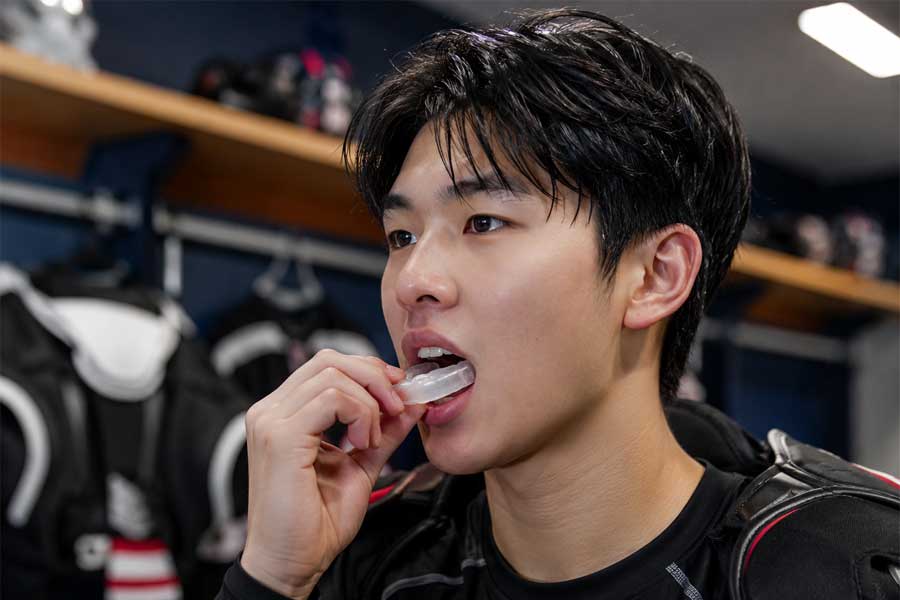
A Mouthguard is an important piece of protective equipment used in ice hockey to help protect the teeth, gums, jaw and other structures inside the mouth from impacts. Ice hockey is a fast-paced sport involving high-speed skating, sticks, pucks and physical contact, so players can be exposed to accidental impacts to the face and mouth during both training and competition.
The International Ice Hockey Federation (IIHF) recommends that all players wear a mouthguard, preferably a custom-made mouthguard, and recommends wearing it properly whenever on the ice. The IIHF states that a mouthguard is designed to protect the teeth and jaws from impact and may also help reduce the risk of concussion.

What Is a Mouthguard?

A mouthguard is a flexible protective device placed inside the mouth, usually covering the upper teeth. It is designed to absorb and distribute some of the force generated by an impact, helping reduce direct contact between the teeth and surrounding structures.
Mouthguards are available in several forms, including:

  • Stock Mouthguard – A pre-formed mouthguard that is ready to use but may provide a less precise fit.
  • Boil-and-Bite Mouthguard – A thermoplastic mouthguard that is softened in hot water and then molded around the teeth for a better fit.
  • Custom-Made Mouthguard – Made specifically for an individual by a dental professional. This type generally provides the most precise fit and is the type preferred by the IIHF.

Why Is a Mouthguard Important in Ice Hockey?

Ice hockey is played at high speed and involves equipment and situations that can create sudden impacts. A mouthguard provides an additional layer of protection for the mouth and jaw.
Its main benefits include:

1. Protecting the Teeth

A mouthguard can help reduce the chance of chipped, fractured or damaged teeth when the mouth is exposed to an impact.

2. Protecting the Jaw and Mouth

The mouthguard provides cushioning between the upper and lower teeth and can help reduce the force transmitted through the jaw during certain impacts.

3. Reducing the Risk of Soft-Tissue Injuries

A properly fitted mouthguard can help reduce contact between the teeth and the lips, cheeks and other soft tissues inside the mouth.

4. Additional Protection During Physical Contact

Players may experience falls, collisions with other players, contact with the boards, or accidental contact with a stick or puck. A mouthguard provides an additional layer of protection during these situations.

5. Supporting Player Safety

A mouthguard should be considered part of a player’s overall protective-equipment system rather than a replacement for other equipment such as a helmet, face protection or neck protection.

Mouthguard for Players

For forwards and defensemen, a mouthguard is particularly useful because these players frequently skate at high speed and may be involved in physical battles, puck battles and collisions.
Players should choose a mouthguard that:

  • Fits securely and comfortably.
  • Does not interfere significantly with breathing or speaking.
  • Remains in position during skating and physical movement.
  • Is appropriate for the player’s age and level of play.
  • Is inspected regularly for damage or excessive wear.

A custom-made mouthguard can provide a more precise fit and is strongly recommended by the IIHF.

Mouthguard for Goalkeepers

Goalkeepers also benefit from wearing a mouthguard. Although goalkeepers occupy a different position from skaters, they can still be exposed to pucks, sticks, collisions and falls.
Goalkeepers should therefore consider a mouthguard as part of their overall protective equipment. It should work comfortably together with the goalkeeper’s helmet and face mask without interfering with breathing or communication.
The IIHF rules specifically require goalkeepers to wear an approved protective face mask during game action, while the mouthguard serves as additional protection for the teeth and jaw.

Choosing the Right Mouthguard

When choosing a mouthguard for ice hockey, consider the following factors:
Fit:
It should fit securely without constantly falling out or requiring the player to bite down excessively to keep it in place.
Comfort:
A comfortable mouthguard is more likely to be worn correctly and consistently.
Protection:
Choose a product designed specifically for sports protection and appropriate for the player’s age and level.
Breathing and Communication:
Players should be able to breathe comfortably and communicate with teammates and coaches.
Quality and Condition:
Replace a mouthguard if it becomes damaged, excessively worn, deformed or no longer fits properly.

Custom-Made Mouthguard

A custom-made mouthguard is produced according to an individual’s dental structure. A dental professional takes an impression or digital scan of the teeth and creates a mouthguard designed for that specific mouth.
This type of mouthguard generally offers a more precise fit than generic models. For players who train and compete regularly, particularly young athletes, a discussion with a dentist about the appropriate type of mouthguard can be beneficial.

How to Use a Mouthguard Properly

Players should:

  1. Check the mouthguard before every training session or game.
  2. Make sure it fits securely.
  3. Wear it correctly throughout time on the ice.
  4. Avoid chewing or deliberately biting the mouthguard.
  5. Clean it after use.
  6. Store it in a ventilated protective case.
  7. Allow it to dry before storage.
  8. Check regularly for cracks, tears or deformation.
  9. Replace it when it no longer fits properly or becomes damaged.

Players should also follow the equipment requirements of their league, tournament, rink and national governing body because rules can differ according to competition and age category.

Mouthguard and Other Hockey Equipment

A mouthguard is only one component of an ice hockey player’s protective equipment.
A complete protective system may include:

  • Helmet
  • Face protection / visor or cage
  • Neck laceration protector
  • Shoulder pads
  • Elbow pads
  • Hockey gloves
  • Hockey pants
  • Shin guards
  • Skates
  • Mouthguard

Goalkeepers use specialized equipment including a goalkeeper mask, chest and arm protector, leg pads, blocker, catching glove and goalkeeper skates.

Important Safety Note

A mouthguard does not eliminate the possibility of dental injury, jaw injury or concussion. It should be used together with appropriate protective equipment, safe playing techniques, proper coaching and compliance with the rules of the competition.
Equipment requirements can also change between seasons and may differ between organizations. Players and teams should always check the latest rules applicable to their competition. The IIHF maintains the current official rulebooks and regulations on its website.
Neck Guard

What is a Neck Guard?

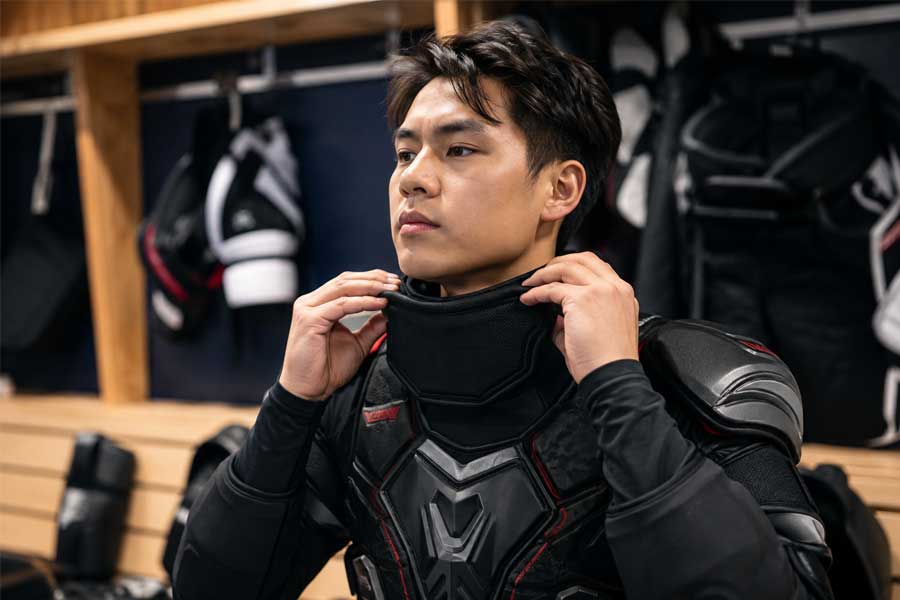
A Neck Guard, also known as a Neck Laceration Protector or Neck and Throat Protector, is an important piece of protective equipment used in ice hockey. It is designed to protect the player’s neck and throat area from cuts or laceration injuries that can occur from contact with skate blades, hockey sticks, or other sharp edges during play.

Because ice hockey involves high-speed skating, physical contact and rapidly moving equipment, protecting the neck is an important part of a player’s overall safety equipment.

Under the current IIHF Official Rule Book 2026/27, a neck laceration protector designed specifically for this purpose is mandatory for players in all categories of IIHF competitions. The IIHF also requires it to be worn properly, to cover as much of the neck as possible, and not to be modified or altered.

Main Purpose of a Neck Guard

The primary purpose of a Neck Guard is to provide a protective barrier around the neck and throat. It is particularly important because the neck contains vulnerable areas that are not naturally protected by other hockey equipment.

A Neck Guard can help:

  • Reduce the risk of cuts and lacerations to the neck.
  • Protect the front and sides of the throat area.
  • Provide an additional layer of protection between the skin and skate blades or sticks.
  • Improve overall safety when playing at high speed and during physical contact.
  • Provide additional protection for young and developing players.

A Neck Guard is not designed to stop every type of impact or injury, so it should always be used together with the other appropriate protective equipment.

Neck Guard for Players

For ice hockey players, the Neck Guard is normally worn around the neck underneath the jersey. Most designs use a soft, flexible construction that allows the player to turn their head and move naturally while skating.

A good Neck Guard should:

  • Fit comfortably around the neck.
  • Cover a substantial portion of the neck and throat.
  • Stay securely in position during skating and contact.
  • Allow normal head and neck movement.
  • Be made from appropriate cut-resistant protective materials.
  • Not interfere with the helmet, shoulder pads or jersey.

Players should always follow the manufacturer’s instructions for fitting, cleaning and maintenance.

Neck Protection for Goalkeepers

Goalkeepers face many of the same risks as skaters, but their equipment configuration is different. In addition to their neck protection, goalkeepers normally wear a throat protector attached to the lower area of the facemask.

Under IIHF rules, a goalkeeper may attach a throat protector to the chin area of the facemask, provided that it is made from a material that will not cause injury.

Goalkeepers should ensure that their neck and throat protection does not interfere with their vision, head movement or the proper operation of the mask.

Neck Guard and Throat Protector – What Is the Difference?

Although the terms are sometimes used interchangeably, they can refer to different pieces of equipment.

Neck Guard / Neck Laceration Protector
Designed primarily to protect the neck and throat from lacerations, particularly from skate blades.

Throat Protector
Usually refers to a rigid or semi-rigid protective component positioned in front of the throat. For goalkeepers, it may be attached directly to the facemask.

Some modern products combine neck and throat protection into one integrated design.

Choosing the Right Neck Guard

When selecting a Neck Guard, players and parents should consider several factors:

1. Proper Fit
The protector should fit securely without being excessively tight. It should remain in position while skating, turning and making contact.

2. Coverage
Choose a design that provides good coverage of the neck and throat. The current IIHF rule specifically calls for a design that covers as much of the neck as possible.

3. Cut-Resistant Protection
Look for products specifically designed and tested for ice hockey neck-laceration protection.

4. Comfort and Mobility
A Neck Guard should allow the player to move their head naturally without restricting skating or stick handling.

5. Quality and Condition
Inspect the protector regularly for damage, worn materials, loose stitching or deterioration. Replace it if its protective performance or structural integrity is compromised.

6. Competition Requirements
Always check the rules of the league, tournament, federation or age category in which the player participates. Equipment requirements can vary between competitions.

How to Wear a Neck Guard Correctly

A Neck Guard should be positioned so that it provides continuous protection around the intended area of the neck and throat.

Players should:

  1. Put the Neck Guard on before the jersey.
  2. Position it comfortably around the neck.
  3. Make sure it covers the intended protective area.
  4. Secure all fasteners correctly.
  5. Check that it does not move excessively during skating.
  6. Make sure the jersey does not push the protector out of position.
  7. Inspect the equipment regularly.

Do not cut, remove, alter or modify the protective material. Under the current IIHF rules, the neck laceration protector must not be modified or altered.

Why Is a Neck Guard Important?

Ice hockey is a fast and physical sport. Players can fall, collide with other players, be struck by sticks or come into contact with skate blades.

A neck injury can be serious, which is why neck protection should be considered an essential part of a player’s equipment rather than an optional accessory.

For children and young players, developing good equipment habits from an early age is especially important. Wearing a properly fitted Neck Guard every time they go onto the ice helps make safety part of their normal hockey routine.

Neck Guard for Every Hockey Player

Whether playing recreational hockey, youth hockey, competitive hockey or professional-level hockey, players should use appropriate neck protection that meets the requirements of their competition.

The International Ice Hockey Federation (IIHF) currently requires neck laceration protection for players in all categories of IIHF competitions.

Always check the latest rules of your local federation, league or tournament before participating in a game.

Hockey Stick

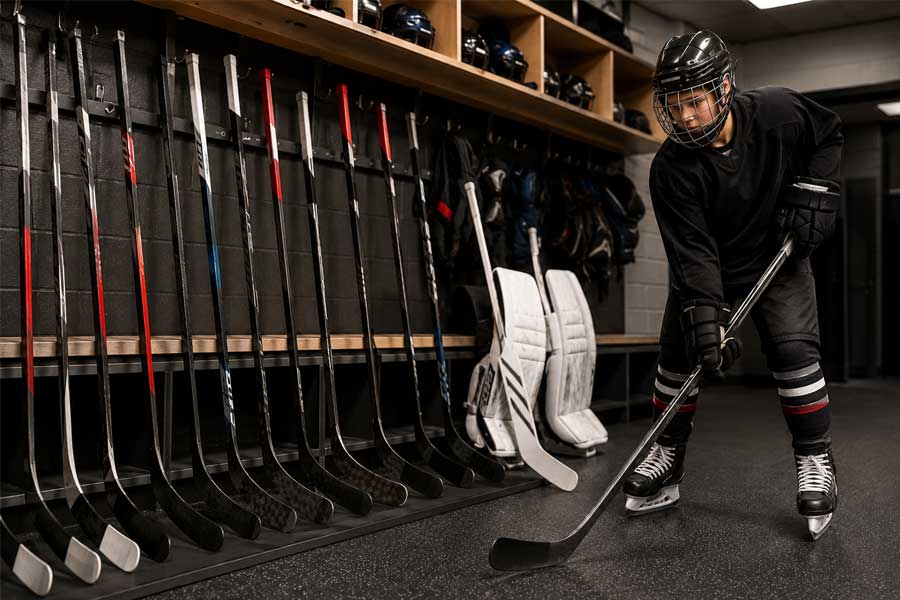
The Hockey Stick is one of the most important pieces of equipment in ice hockey. It is used by players to control, pass, carry, shoot, and handle the puck, while goaltenders use a specially designed stick to stop shots and control the puck around the goal crease.

Modern hockey sticks are designed to be lightweight, strong, and responsive. Choosing the right stick can significantly affect a player’s shooting power, puck control, passing accuracy, and overall performance on the ice.

1. Hockey Stick for Players

A standard player hockey stick consists of two main sections:

  • Shaft – The long section that the player holds with both hands.
  • Blade – The curved lower section that makes contact with the puck.

Player sticks are available in different lengths, flex ratings, blade patterns, and materials. These characteristics allow players to select a stick that matches their age, body size, playing style, and position.

Stick Length

The correct stick length is important for puck control and skating posture. A stick that is too long or too short can make handling the puck more difficult.

Young players generally use shorter and lighter sticks, while adult players usually use longer sticks with specifications suited to their strength and playing style.

Stick Flex

Flex describes how much the shaft bends when force is applied to it.

A lower flex number generally means the stick bends more easily, while a higher flex number requires more force to load the shaft.

Choosing the right flex depends on factors such as:

  • Player’s body size and strength
  • Shooting technique
  • Playing position
  • Personal preference

A properly selected flex can help players generate better shot speed while maintaining control and consistency.

Blade Pattern and Curve

The blade is available in different curve patterns and face angles. These differences affect:

  • Puck control
  • Passing
  • Wrist shots
  • Snap shots
  • Slap shots
  • Backhand control

Players often choose a blade pattern based on their position and individual playing style.

2. Types of Player Hockey Sticks

Wooden Hockey Sticks

Wooden sticks are traditional and are still used by some recreational players and beginners. They are generally durable and provide a familiar feel when handling the puck.

Composite Hockey Sticks

Composite sticks are made from materials such as carbon fiber and other lightweight composites. They are widely used in modern competitive hockey because they provide a combination of low weight, stiffness, and energy transfer.

Composite sticks are commonly available as:

  • One-piece sticks
  • Two-piece stick systems

Modern professional and competitive players frequently use lightweight composite sticks for improved shooting performance and puck handling.

3. Hockey Stick for Goaltenders

A Goaltender Stick, also called a goalie stick, is significantly different from a regular player stick.

The lower portion of a goalie stick has a much wider blade designed to help the goaltender block shots and control rebounds. The shaft is also designed to provide a strong grip and allow the goaltender to move the puck when necessary.

A goaltender may use the stick to:

  • Block shots
  • Deflect pucks away from the net
  • Control rebounds
  • Cover the lower part of the goal
  • Pass or clear the puck
  • Move the puck to teammates

Goaltender sticks are available in different sizes and designs to accommodate different player heights and preferences.

4. Choosing the Right Hockey Stick

When selecting a hockey stick, players and parents should consider several important factors:

Age and Height

The stick should be appropriate for the player’s age, height, and physical development. Youth sticks are shorter and lighter, making them easier for young players to control.

Weight

A lighter stick can make puck handling and shooting easier, while the overall construction must still provide sufficient durability for the player’s level of play.

Flex

The flex should match the player’s strength and shooting technique. The correct flex allows the player to load the stick effectively during a shot.

Position and Playing Style

Forwards, defensemen, and goaltenders may have different preferences.

For example, an offensive player may prioritize a stick that provides quick release and good puck control, while a defenseman may prefer characteristics that support powerful shots and passing.

Handedness

Players need to select a stick based on whether they shoot left-handed or right-handed.

Handedness refers to which hand is positioned lower on the shaft when the player holds the stick in a normal shooting position.

5. Hockey Stick Safety and Care

A hockey stick can experience significant stress during shooting, passing, checking, and contact with other sticks or the boards. Players should regularly inspect their sticks for damage.

Check for:

  • Cracks in the shaft
  • Damage to the blade
  • Loose or damaged tape
  • Splinters on wooden sticks
  • Visible damage to composite materials

A damaged stick should be replaced when it is no longer safe or reliable for play.

Players should also avoid leaving sticks in extreme heat or direct sunlight for extended periods, as excessive heat can affect some materials and construction components.

6. Stick Tape

Many players use hockey tape on the blade and shaft.

Tape on the blade can help provide additional grip and improve the player’s feel for the puck. Tape on the shaft can improve grip and help protect the surface of the stick.

Players may use different taping techniques depending on personal preference and playing style.

7. Hockey Stick for Different Age Groups

Hockey sticks are generally available in different categories to suit players of different ages and sizes, such as:

  • Youth – Designed for very young players
  • Junior – Designed for younger developing players
  • Intermediate – Designed for teenagers and smaller players
  • Senior – Designed primarily for adult players

The exact specifications vary between manufacturers, so players should always check the manufacturer’s size and flex recommendations.

Conclusion

The Hockey Stick is a fundamental piece of ice hockey equipment for both players and goaltenders. The right stick can help improve puck control, passing, shooting, and overall confidence on the ice.

When choosing a hockey stick, players should consider length, weight, flex, blade pattern, handedness, playing position, and skill level. Most importantly, the stick should be comfortable, appropriate for the player’s size, and suitable for their style of play.

Hockey Skates

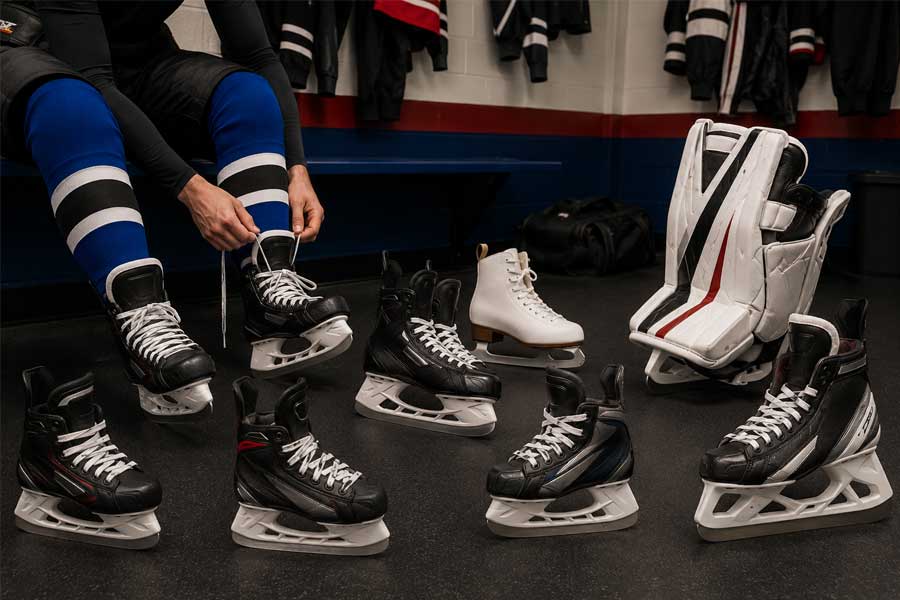
Ice hockey skates are one of the most important pieces of equipment for every ice hockey player. They are specially designed to provide stability, speed, agility, protection, and precise control while skating, turning, stopping, and accelerating on the ice.

Unlike recreational ice skates, hockey skates are built to withstand the high-impact and fast-paced nature of competitive ice hockey. A good pair of skates should fit securely around the foot and ankle while still allowing the player to move naturally and comfortably.

Main Parts of Ice Hockey Skates

1. Boot
The boot surrounds and supports the player’s foot and ankle. Modern hockey skate boots are usually made from strong, lightweight synthetic materials or composite materials. The boot needs to provide a balance between protection, stiffness, and comfort.

2. Holder
The holder is the plastic or composite component attached to the bottom of the boot. It connects the boot to the steel runner and allows the runner to be replaced when necessary.

3. Runner / Steel Blade
The steel runner is the part that makes direct contact with the ice. It is designed with a specific profile and hollow to provide the right balance between grip, glide, turning, and stopping.

4. Tongue
The tongue protects the top of the foot and helps distribute pressure from the laces. Many hockey skates use a reinforced tongue to provide additional protection against sticks, pucks, and other impacts.

5. Laces and Eyelets
Laces secure the foot inside the skate and allow the player to adjust the tightness around different areas of the foot and ankle. Proper lacing helps improve stability and control.

6. Ankle and Heel Support
The heel and ankle area helps keep the foot securely positioned inside the boot. Proper heel lock is important because excessive movement inside the skate can reduce skating efficiency and increase the risk of discomfort or injury.

Ice Hockey Skates for Players

Player skates are designed for quick acceleration, sharp turns, fast stops, and rapid changes of direction. Players need a skate that provides good energy transfer while remaining comfortable enough for long periods on the ice.

Skates are available in different levels, from entry-level models for beginners to high-performance models designed for advanced and professional players. The main differences can include boot stiffness, materials, weight, fit, holder construction, and runner technology.

Goaltender Skates

Goaltender skates are specifically designed for the unique movements of ice hockey goalkeepers. They generally have a different blade and holder configuration compared with player skates.

The design emphasizes stability, lateral movement, and protection. Goaltender skates are built to support movements such as butterfly positioning, lateral pushes, quick recoveries, and movement within the crease.

Because goalkeepers frequently drop into butterfly positions and move from side to side, their skates must provide a stable platform while protecting the foot and lower leg from pucks and sticks.

Choosing the Right Ice Hockey Skates

Choosing the correct skate size and fit is extremely important. Hockey skates should fit more snugly than ordinary shoes, but they should never cause excessive pain, numbness, or pressure points.

When selecting skates, players should consider:

  • Foot length and width
  • Heel lock and ankle support
  • Overall skate fit
  • Boot stiffness
  • Playing level and skating ability
  • Frequency of use
  • Player position
  • Age and foot growth, especially for children

For young players, parents should avoid buying skates that are excessively large simply to allow more room for growth. A skate that is too large can reduce stability and skating control.

Skate Sharpening

Regular skate sharpening is essential for maintaining grip and control on the ice. The steel runner is sharpened with a hollow that creates two edges, allowing the skater to grip the ice while still maintaining the ability to glide.

The appropriate sharpening depends on factors such as the player’s weight, skating style, ice conditions, and personal preference. Players should also regularly inspect their runners for damage, excessive wear, or loss of proper edges.

Skate Maintenance

Proper maintenance can significantly extend the life of hockey skates.

After every use, players should:

  • Wipe moisture from the boot and steel
  • Allow the skates to dry naturally
  • Avoid leaving wet skates inside a closed equipment bag
  • Use skate guards when walking off the ice
  • Check the steel and holder regularly
  • Inspect laces, eyelets, and boot materials
  • Have damaged components repaired or replaced when necessary

Never use hard plastic skate guards while storing wet skates for extended periods because trapped moisture can contribute to rust and damage to the steel.

Safety and Performance

Ice hockey skates are more than footwear. They are a critical connection between the player and the ice. Proper fit, correct sharpening, regular maintenance, and suitable skate selection can improve skating performance while helping players maintain stability and control.

Whether playing recreational hockey, youth hockey, competitive hockey, or playing as a goaltender, choosing the right skates is an important part of building a safe and effective hockey equipment setup.

Shin Guards

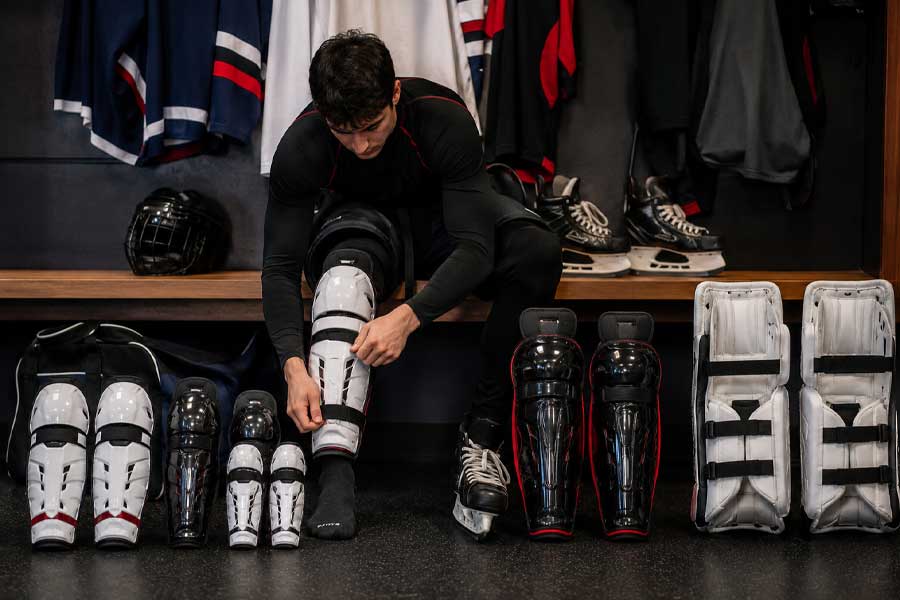
Shin Guards are an essential piece of protective equipment in ice hockey. They are designed to protect the lower legs, shins, knees, and the areas around the front of the legs from impacts caused by hockey pucks, sticks, skates, collisions, and falls on the ice.

Because ice hockey is a fast and physical sport, players can be exposed to high-speed pucks and accidental contact during every shift. A properly fitted pair of shin guards helps reduce the risk of injuries while allowing players to skate, turn, and move comfortably.

What Are Shin Guards?

Shin guards are protective shells worn on the front of the lower legs. They normally consist of a hard outer shell combined with foam or other impact-absorbing materials.

The shin guard is shaped to cover the shin and knee area while allowing the player to bend the leg naturally. Many models also include straps or fastening systems that help keep the shin guard securely in position during skating and gameplay.

Why Are Shin Guards Important?

Shin guards provide protection against several common hazards in ice hockey, including:

  • Direct impact from a hockey puck
  • Contact with a hockey stick
  • Accidental contact with another player’s skate
  • Collisions between players
  • Falls and contact with the ice
  • Impact during blocking or defensive play

The lower leg is particularly vulnerable because players are frequently positioned close to the ice surface and puck. Shin guards create a protective barrier between the player’s body and these impacts.

Main Parts of a Shin Guard

A typical ice hockey shin guard includes several important components:

1. Hard Protective Shell
The outer shell provides impact protection and helps distribute the force of a puck, stick, or other contact over a larger area.

2. Knee Cap
The knee section protects the kneecap and surrounding area. It is designed to provide protection while still allowing the player to bend and skate naturally.

3. Shin Protection
The main lower section covers the shin bone, one of the most exposed areas of the lower leg.

4. Impact-Absorbing Foam
Foam padding is placed inside the shin guard to absorb and reduce impact forces while improving comfort.

5. Straps and Fastening System
Straps help keep the shin guard in the correct position. A secure fit is important because a shin guard that moves during play may leave parts of the leg exposed.

6. Calf and Ankle Protection
Some shin guards provide additional coverage around the calf and lower leg to improve overall protection.

Shin Guards for Players

For forwards and defensemen, shin guards are an important part of everyday protective equipment. Players should choose a model that provides sufficient coverage without restricting skating or leg movement.

Forwards may prefer lighter and more flexible designs because they often accelerate, turn, and change direction quickly. Defensemen may prefer models with additional coverage and protection because they can experience more puck impacts while blocking shots and defending their zone.

Shin Guards for Goaltenders

Goaltenders also require protection for their lower legs, but their equipment is designed differently from regular player shin guards.

Goaltenders normally use specialized leg pads rather than standard player shin guards. Goalie leg pads are much larger and are designed to protect the legs while also helping the goaltender make saves and control rebounds.

Under or around the goalie leg equipment, additional protective gear may be used depending on the player’s equipment setup and level of play.

Choosing the Right Shin Guards

When selecting shin guards, players should consider several factors:

Correct Size
The shin guard should cover the knee and shin properly without being excessively long or short.

Secure Fit
The guard should stay in position while skating, stopping, turning, and making contact with other players.

Comfort
Padding should provide protection without creating excessive pressure points.

Mobility
The design should allow the player to bend the knees and skate naturally.

Protection Level
Players who regularly face high-speed shots or physical contact may benefit from models with more extensive protection.

How Should Shin Guards Fit?

A properly fitted shin guard should sit securely over the shin and knee without interfering with the player’s skating stride.

The knee should sit comfortably inside the knee cap area. The lower part of the shin guard should provide adequate coverage while working correctly with the player’s hockey skates.

Players should avoid wearing shin guards that are too small because they may leave areas of the lower leg exposed. Shin guards that are too large can restrict movement or interfere with other equipment.

Shin Guard and Hockey Sock

Shin guards are normally worn underneath the hockey sock. The sock helps hold the shin guard in place and provides a clean layer between the protective equipment and the player’s leg.

Players should make sure the shin guard and hockey sock work together properly so that the protective equipment does not shift during play.

Maintenance and Care

Proper care can help extend the life of shin guards.

After training or a game:

  • Remove the shin guards from the hockey bag when possible.
  • Allow them to dry in a well-ventilated area.
  • Wipe away sweat and moisture.
  • Check straps and fasteners regularly.
  • Inspect the shell and padding for cracks or damage.
  • Replace damaged equipment when necessary.

Avoid leaving wet shin guards inside a closed hockey bag for long periods, as moisture can create unpleasant odors and contribute to deterioration of the materials.

Shin Guards for Children and Young Players

Young players should wear shin guards that are correctly sized for their height and leg length. Children grow quickly, so parents should regularly check whether the equipment still provides adequate coverage.

Buying equipment that is excessively large simply to allow room for growth is not recommended because oversized shin guards can move out of position and reduce protection.

Conclusion

Shin guards are a fundamental part of ice hockey protective equipment. They protect the player’s knees and lower legs from pucks, sticks, skates, collisions, and falls while allowing the player to move freely on the ice.

Choosing the correct size, maintaining a secure fit, and regularly inspecting the equipment are important steps for safe and comfortable play. For goaltenders, specialized leg pads provide the primary lower-leg protection and are designed specifically for the demands of the goaltending position.

ICE HOCKEY FAMILY
Learn • Play • Protect • Love Ice Hockey

Hockey Pants

Hockey Pants: Essential Protection in Ice Hockey

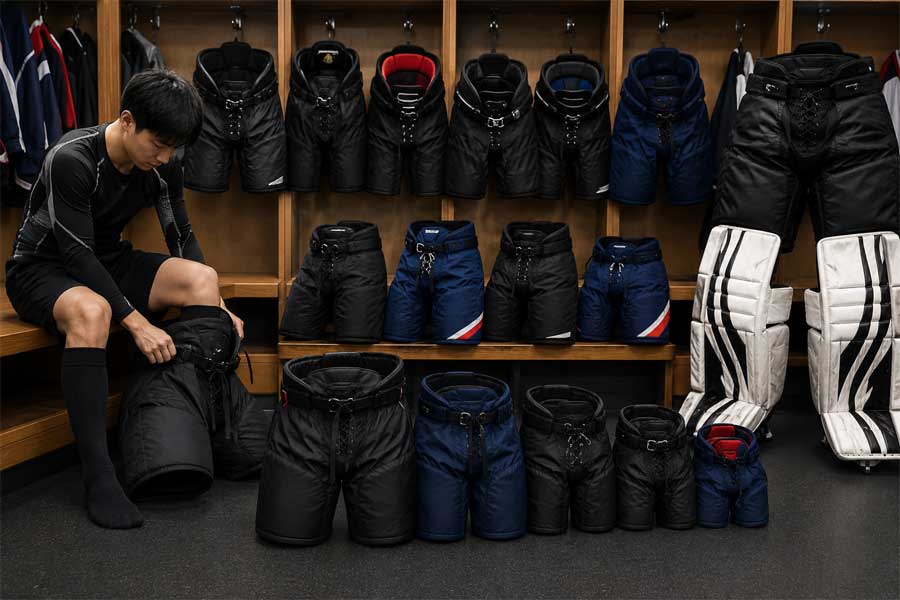
Hockey Pants are an important piece of protective equipment in ice hockey. They are designed to protect the lower body from impacts, falls, collisions, sticks, pucks, and contact with the ice.

Unlike ordinary sports shorts, hockey pants are specially constructed with protective padding around key areas such as the hips, thighs, pelvis, and lower back. They allow players to move freely while providing protection during fast and physical play.

The International Ice Hockey Federation (IIHF) recognizes pants as part of the protective equipment used by ice hockey players. Protective equipment must be designed and used for player protection and must comply with applicable safety and competition regulations.


What Are Hockey Pants?

Hockey pants are padded protective shorts worn over the player’s lower-body base layer and under the jersey. They are usually made from durable synthetic materials combined with internal protective foams and molded protective components.

The design provides a balance between:

  • Protection
  • Mobility
  • Comfort
  • Flexibility
  • Durability

Hockey pants are normally secured around the waist and extend down the upper part of the thighs. The length and fit are designed to work together with the player’s shin guards and other protective equipment.


What Do Hockey Pants Protect?

Hockey pants are designed to provide protection to several vulnerable areas of the lower body.

1. Hips

The hip area can receive significant impact during collisions, falls, and contact with the boards. Protective padding helps absorb and distribute impact.

2. Thighs

The thighs can be exposed to sticks, pucks, collisions, and falls. Padding in this area helps reduce the force of impacts.

3. Pelvis and Groin Area

Hockey pants provide protective coverage around the pelvic region. This protection works together with other equipment to reduce the risk of injury.

Players should also use an appropriate athletic protector designed for ice hockey.

4. Lower Back

Many hockey pants include padding around the rear and lower-back area to provide additional protection when a player falls or is involved in contact.


Main Features of Hockey Pants

Modern hockey pants are designed with several important features.

Protective Padding

High-density foam and molded protective materials are positioned around the hips, thighs, pelvic area, and lower back.

Adjustable Waist

Many models include adjustable belts, straps, or fastening systems that allow the player to achieve a secure and comfortable fit.

Flexible Construction

Hockey pants need to provide protection without restricting skating movements. Players must be able to accelerate, turn, stop, crouch, and change direction quickly.

Durable Outer Shell

The exterior is designed to withstand repeated contact, falls, and friction during play.

Ventilation

Some hockey pants incorporate ventilation zones or breathable materials to help manage heat and moisture during intense activity.


Why Proper Fit Is Important

The effectiveness of hockey pants depends greatly on proper fit.

Pants that are too loose can move out of position during skating or collisions. Pants that are too tight may restrict movement and reduce comfort.

When selecting hockey pants, players should check:

  • Waist fit
  • Thigh coverage
  • Hip protection
  • Pelvic coverage
  • Range of motion
  • Compatibility with shin guards
  • Comfort when skating

The pants should remain securely positioned during movement without interfering with skating technique.


Player Hockey Pants vs. Goalkeeper Pants

Although both players and goalkeepers wear protective pants, their designs and purposes are different.

Player Hockey Pants

Player pants are designed primarily for skating mobility and protection against physical contact.

They generally provide protection around:

  • Hips
  • Thighs
  • Pelvis
  • Lower back

The design is relatively streamlined so players can skate, pivot, accelerate, and move efficiently.

The IIHF identifies pants as part of the standard equipment used by players and also regulates how uniforms and protective equipment are worn during competition.


Goalkeeper Hockey Pants

Goalkeeper pants are specially designed for the unique movements and protection requirements of a goaltender.

Goalkeepers frequently move into a deep crouch, drop to their knees, slide laterally, and cover the lower part of the net. Their pants therefore require different protective construction from standard player pants.

Goalkeeper pants generally provide substantial protection around the:

  • Hips
  • Thighs
  • Pelvic area
  • Lower body

The IIHF 2026/27 rules specify that goalkeeper pants must be anatomically proportional and size-specific. The rules also regulate the construction and positioning of thigh protection and prohibit unnecessary padding or modifications that are not required for protection.


Hockey Pants and the Goalkeeper’s Equipment System

Goalkeeper pants are not used alone. They work together with other pieces of specialized goalkeeper equipment, including:

  • Goalie mask
  • Chest and arm protector
  • Goalie pants
  • Leg pads
  • Blocker
  • Catch glove
  • Goalie stick
  • Skates

The IIHF describes the goalkeeper as being heavily protected because of the demands of the position and the speed of the puck.

The pants must allow the goalkeeper to move into the butterfly position and other goaltending movements without creating unnecessary gaps or interference with the leg pads.


How to Choose the Right Hockey Pants

When purchasing hockey pants, consider the following factors.

1. Correct Size

Choose a size that provides complete protection while allowing unrestricted movement.

2. Protection Level

Beginners, recreational players, competitive players, and professionals may have different requirements. Higher-level players may prefer pants with more advanced protective materials and construction.

3. Mobility

Try the pants while standing, crouching, and simulating skating movements. The pants should not restrict hip or leg movement.

4. Comfort

Comfort is important because hockey players may wear their equipment for extended periods during practices and games.

5. Compatibility With Other Equipment

Hockey pants should work properly with the player’s shin guards, shoulder pads, elbow pads, socks, and jersey.


Hockey Pants for Young Players

For children and beginner players, proper sizing is especially important.

Young players are still developing skating technique and balance, so equipment should provide adequate protection without being excessively heavy or restrictive.

Parents and coaches should regularly check:

  • Whether the pants still fit correctly
  • Whether protective padding has shifted
  • Whether straps and fasteners remain functional
  • Whether the equipment has become damaged
  • Whether the player can move comfortably

Children can outgrow hockey equipment relatively quickly, so fit should be checked regularly.


Care and Maintenance

Proper maintenance can extend the life of hockey pants.

After Every Session

Allow the pants to dry completely after training or competition. Avoid leaving damp equipment inside a closed hockey bag for long periods.

Inspect the Padding

Regularly check for cracked protective components, damaged foam, loose stitching, or broken fastening systems.

Clean the Pants

Follow the manufacturer’s cleaning instructions. Do not use cleaning methods that could damage protective materials.

Check Before Games

Before entering the ice, make sure the pants are properly secured and that all protective components remain in their correct positions.


Safety and Competition Considerations

Protective equipment should be used for protection rather than to gain an advantage or increase the risk of injury to another player.

The IIHF states that protective equipment must conform to applicable safety standards and be used to protect players. Officials may require equipment that does not comply with the rules to be corrected or removed.

Competition rules can vary depending on the league, tournament, age group, and governing organization. Players should always check the rules applicable to their competition.

For official international competitions, the latest IIHF rulebook should be consulted. The IIHF currently publishes the 2026/27 Official Rule Book as its latest rulebook.


Conclusion

Hockey pants are much more than ordinary sports shorts. They are an essential part of an ice hockey player’s protective equipment, helping protect the hips, thighs, pelvis, and lower back while allowing the player to skate and move efficiently.

For goalkeepers, specialized goalie pants provide additional protection and are designed to work together with the rest of the goaltending equipment.

Choosing the correct size, maintaining the equipment properly, and following applicable safety regulations are all important parts of playing ice hockey safely.

Hockey Pants = Protection + Mobility + Comfort + Confidence on the Ice


Gloves

What Are Ice Hockey Gloves?

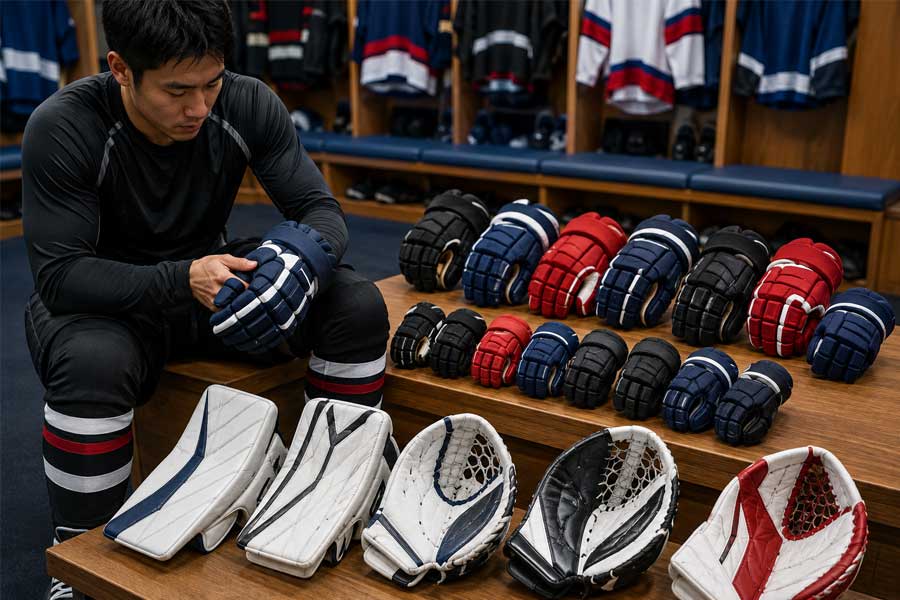
Ice hockey gloves are an essential piece of protective equipment designed to protect a player’s hands, fingers, wrists, and parts of the forearms while allowing enough flexibility to control the hockey stick.

Hockey gloves must provide a balance between protection, mobility, comfort, grip, and durability. Players use their hands constantly during a game, whether shooting, passing, stickhandling, checking, or battling for the puck. A properly fitted pair of gloves helps players perform these movements safely and effectively.


Main Parts of an Ice Hockey Glove

A typical ice hockey glove consists of several important protective sections:

1. Palm

The palm is the part of the glove that directly contacts the hockey stick. It is usually made from durable synthetic or leather-like materials designed to provide a secure grip while maintaining good stick feel.

The palm is also one of the areas that experiences the most wear, particularly for players who frequently practice stickhandling or shooting.

2. Fingers

The fingers are protected by padded sections that help reduce the impact of sticks, pucks, and contact with other players.

The glove must allow the fingers to bend naturally so that players can maintain control of the stick without excessive restriction.

3. Backhand Protection

The backhand area contains protective padding, commonly using foam and other impact-absorbing materials.

This section protects the back of the hand from impacts caused by sticks, pucks, falls, and physical contact.

4. Cuff

The cuff protects the wrist and lower forearm while allowing the player to move the wrist during shooting, passing, and stickhandling.

Different glove designs offer different cuff lengths and levels of mobility. Players generally choose a style based on their position, playing style, and personal preference.

5. Thumb Protection

The thumb is particularly important because it is essential for gripping and controlling the hockey stick.

Many modern hockey gloves include reinforced thumb protection and flexible construction to help reduce the risk of injury while maintaining mobility.


Why Are Hockey Gloves Important?

Hockey gloves provide several important functions during a game:

  • Protect the hands and fingers from impacts.
  • Reduce the risk of cuts and abrasions.
  • Protect the wrists and lower forearms.
  • Improve grip and control of the hockey stick.
  • Allow players to maintain hand mobility.
  • Provide comfort during extended periods of play.
  • Help protect against contact with sticks, pucks, boards, and other players.

Because hockey is a fast and physical sport, gloves should always be considered an essential part of a player’s protective equipment.


Types of Hockey Gloves

Hockey gloves are generally designed according to the player’s role and level of play.

Player Gloves

Player gloves are designed for forwards, defensemen, and other skaters. They emphasize a combination of protection and flexibility.

Different models may have different finger lengths, cuff designs, palm materials, and levels of padding.

Players should choose gloves that allow natural hand movement while providing adequate protection.

Goaltender Gloves

Goaltenders use specialized gloves that are significantly different from regular player gloves.

A goaltender normally uses two different types:

Catcher Glove — worn on the hand opposite the blocker. It has a large catching pocket designed to catch and control the puck.

Blocker Glove — worn on the stick hand. It includes a large protective blocking surface that helps the goaltender deflect or stop shots.

Because goaltender gloves have specialized functions, they should not be treated as interchangeable with standard player gloves.


How Should Hockey Gloves Fit?

Proper fit is extremely important.

A hockey glove should feel secure without being excessively tight. The fingers should sit comfortably inside the finger stalls, while the player should still be able to bend and move the fingers naturally.

A glove that is too large may reduce stick control, while a glove that is too small may restrict movement and cause discomfort.

When trying on gloves, players should:

  1. Check that the fingers reach comfortably into the finger stalls.
  2. Make sure the thumb can move naturally.
  3. Check that the wrist can move freely.
  4. Hold a hockey stick to test grip and control.
  5. Move the hands as if passing, shooting, and stickhandling.
  6. Make sure there are no uncomfortable pressure points.

Hockey Gloves and Safety

Hockey gloves are an important component of the overall protective system, but they cannot prevent every injury.

Players should use gloves together with other appropriate protective equipment, including a helmet, shoulder pads, elbow pads, hockey pants, shin guards, skates, and a mouthguard where appropriate.

Gloves should also be inspected regularly. Damaged padding, torn palms, loose stitching, broken protective components, or significant wear may reduce their effectiveness.


Caring for Hockey Gloves

Proper maintenance can help extend the life of hockey gloves.

After playing:

  • Allow gloves to dry completely.
  • Remove excess moisture whenever possible.
  • Avoid leaving wet gloves inside a closed hockey bag.
  • Check the palms and stitching regularly.
  • Clean the gloves according to the manufacturer’s instructions.
  • Repair or replace heavily damaged gloves.

Good ventilation is particularly important because gloves can accumulate sweat and moisture during training and competition.


Choosing the Right Hockey Gloves

When selecting hockey gloves, players should consider:

Protection — Does the glove provide adequate impact protection?

Fit — Does it fit securely without restricting movement?

Mobility — Can the fingers, thumb, and wrist move naturally?

Grip — Does the palm provide good contact with the hockey stick?

Comfort — Can the gloves be worn comfortably throughout a game or training session?

Durability — Can the materials withstand regular use?

The best glove is not necessarily the most expensive model. The right glove is the one that provides an appropriate combination of protection, fit, mobility, comfort, and performance for the individual player.


Gloves Are an Essential Part of Hockey Equipment

Ice hockey gloves play a critical role in protecting one of the most important parts of a player’s body: the hands.

Whether playing recreational hockey, youth hockey, amateur competition, or high-level hockey, players should use properly fitted and well-maintained gloves.

For goaltenders, specialized catcher and blocker gloves provide additional protection and functionality required for the unique demands of the position.

Protect your hands. Improve your control. Play hockey with confidence.

Elbow Pads

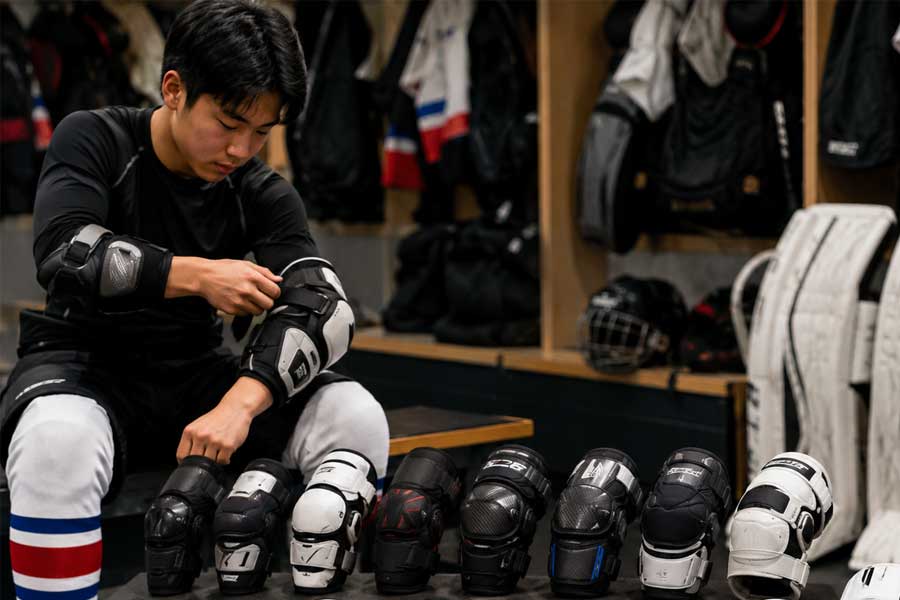
Elbow Pads are an essential piece of protective equipment in ice hockey. They are designed to protect the elbows, forearms, and parts of the upper arm from impacts, falls, contact with other players, and collisions with the ice or boards.

Ice hockey is a fast and physical sport. Players can lose their balance, fall onto the ice, or make contact with another player during a play. Properly fitted elbow pads help reduce the risk of injuries while allowing players to move their arms freely and handle the stick effectively.

What Are Elbow Pads?

Elbow pads are protective gear worn over the player’s arms. They generally consist of several sections that cover the elbow joint, forearm, and upper arm.

The elbow area normally includes a hard or reinforced protective shell surrounded by impact-absorbing padding. The design allows the elbow to remain protected while still providing enough flexibility for skating, passing, shooting, and stickhandling.

Why Are Elbow Pads Important?

The elbow is particularly vulnerable when a player falls or receives contact during a game. A direct impact can cause bruising, cuts, or more serious injuries.

Elbow pads provide several important benefits:

  • Impact Protection — Helps absorb and distribute force from collisions and falls.
  • Elbow Protection — Protects the elbow joint from direct contact with the ice, boards, or another player.
  • Forearm Protection — Covers the forearm against impacts and contact from sticks or other equipment.
  • Upper Arm Protection — Provides additional protection around the lower part of the upper arm.
  • Mobility — Allows players to move their arms naturally while skating and playing.
  • Confidence — Proper protection can give players greater confidence when competing for the puck.

Main Parts of an Elbow Pad

Although designs vary between brands and models, most elbow pads include several important components.

1. Elbow Cap
The elbow cap is the primary protective section covering the elbow joint. It is usually made from a hard or reinforced material designed to resist impacts.

2. Forearm Protection
The forearm section protects the lower arm from contact with the ice, boards, sticks, and other players.

3. Bicep or Upper Arm Protection
The upper section provides protection around the lower part of the upper arm and helps create a more complete protective system.

4. Impact-Absorbing Foam
Foam padding is positioned around the protective shell to absorb and disperse impact energy.

5. Straps and Adjustment System
Straps help keep the elbow pad securely positioned during play. A good adjustment system prevents the pad from rotating or sliding down the arm.

How Should Elbow Pads Fit?

Correct fit is one of the most important factors when choosing elbow pads.

An elbow pad should remain securely positioned on the arm without restricting movement or causing discomfort. The elbow should sit naturally inside the protective cup, while the forearm and upper-arm sections should provide adequate coverage.

A properly fitted elbow pad should:

  • Stay in position during skating and contact.
  • Cover the elbow joint completely.
  • Provide sufficient forearm coverage.
  • Allow comfortable arm movement.
  • Not feel excessively tight.
  • Not slide down or rotate during play.
  • Work comfortably with the player’s gloves and shoulder pads.

Players should avoid choosing elbow pads simply because they are the same size as another piece of equipment. Different brands and models can have different sizing systems, so players should always check the manufacturer’s sizing guide and try the equipment on whenever possible.

How to Choose Elbow Pads

When selecting elbow pads, players should consider several factors.

Protection Level
Players who participate in competitive or highly physical hockey may prefer models with more extensive impact protection.

Fit
The pad should fit securely without creating pressure points or restricting movement.

Mobility
A good elbow pad should allow natural movement of the arms and shoulders. This is especially important for shooting, passing, and stickhandling.

Comfort
Players may wear elbow pads for long periods during practices and games, so comfortable padding and ventilation can make a significant difference.

Adjustment System
Secure and easy-to-use straps help keep the equipment correctly positioned throughout the game.

Compatibility
Elbow pads should work comfortably with the player’s shoulder pads and gloves without creating excessive gaps or restricting movement.

Common Types of Elbow Pad Fit

Different elbow pads may use different fitting designs.

Traditional Fit
Provides a more relaxed feel with additional space around the arm. It may be suitable for players who prefer greater freedom of movement.

Contoured Fit
Designed to sit closer to the body and provide a more secure, close-fitting feel.

Hybrid Designs
Combine elements of traditional and contoured designs to provide a balance between mobility, comfort, and protection.

The best option depends on the player’s body shape, playing style, position, and personal preference.

Elbow Pads and Player Safety

Elbow pads are an important part of a complete hockey protection system, but they should not be considered a guarantee against injury.

Players should always use properly fitted protective equipment and follow the rules of the game. Equipment should also be inspected regularly for damaged shells, worn straps, loose components, or deteriorated padding.

If an elbow pad has suffered a significant impact or has visible damage, it should be inspected carefully and replaced when necessary.

Maintenance and Care

Taking care of elbow pads can help maintain their performance and comfort.

After practice or a game:

  1. Remove the elbow pads from the hockey bag.
  2. Allow them to air dry in a well-ventilated area.
  3. Avoid leaving damp equipment inside a closed hockey bag.
  4. Check straps and protective components regularly.
  5. Clean the equipment according to the manufacturer’s instructions.
  6. Do not use harsh chemicals or cleaning methods that could damage the protective materials.

Proper drying is particularly important because moisture and sweat can contribute to unpleasant odors and deterioration of materials over time.

Elbow Pads for Young Players

Young hockey players should use elbow pads designed for their age and body size. Proper fit is especially important because oversized equipment can move out of position and reduce protection.

Parents and coaches should regularly check the fit as young players grow. Equipment that was properly fitted at the beginning of the season may become too small or incorrectly positioned as the player grows.

Conclusion

Elbow Pads are an essential part of ice hockey protective equipment. They protect the elbow and surrounding areas while allowing players to maintain the mobility required for skating, passing, shooting, and stickhandling.

Choosing the right size, fit, protection level, and adjustment system can make elbow pads more comfortable and effective. Regular inspection and proper care are also important to keep the equipment in good condition.

For every hockey player, from beginner to competitive athlete, properly fitted elbow pads are an important part of playing the game with confidence and protection.

Shoulder Pads

Shoulder Pads in Ice Hockey

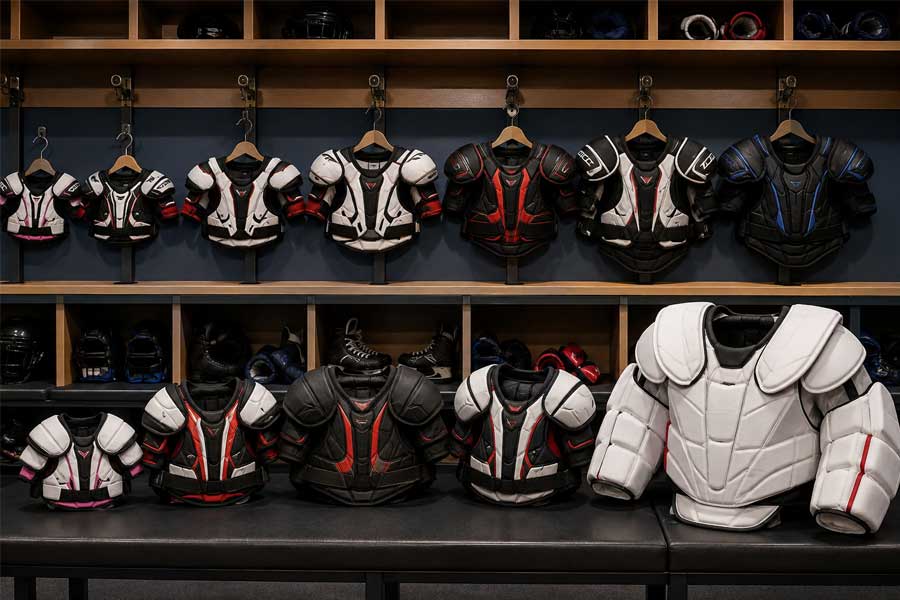
Shoulder Pads are an essential piece of protective equipment in ice hockey. They are designed to help protect the upper body from impacts that can occur during skating, body contact, collisions with the boards, falls on the ice, and contact with the puck or hockey stick.

Shoulder pads are normally worn underneath the hockey jersey and are designed to provide protection while still allowing players to move their arms, rotate their shoulders, and skate freely. They are part of the standard protective equipment used by ice hockey players.

What Do Shoulder Pads Protect?

Modern ice hockey shoulder pads generally provide protection to several important areas of the upper body, including:

  • Shoulders — Helps protect the shoulder joint from direct impacts.
  • Shoulder Blades — Provides padding around the upper back and shoulder blade area.
  • Collarbone — Helps protect the clavicle from impacts and contact.
  • Chest — Provides additional protection to the upper chest.
  • Ribs and Upper Back — Some designs extend protection around the sides and back of the torso.
  • Upper Arms — Provides protection around the upper portion of the arms.

The exact coverage varies depending on the design, size, model, and level of protection.

Why Are Shoulder Pads Important?

Ice hockey is a fast and physical sport. Players can reach high speeds and may experience sudden contact with other players, the boards, or the ice. A properly fitted shoulder pad can provide an important layer of protection against these impacts.

Shoulder pads are particularly useful when a player falls, is checked into the boards, or receives contact around the upper body. However, no protective equipment can eliminate the risk of injury completely. Players should always use properly fitted equipment and follow the safety rules of their league or governing organization.

Main Parts of Shoulder Pads

Most ice hockey shoulder pads consist of several protective sections:

1. Shoulder Caps
The shoulder caps sit over the shoulders and are designed to distribute impact away from the shoulder joint.

2. Chest Protection
Padding across the front of the torso helps protect the chest from impacts involving players, boards, sticks, and pucks.

3. Back Protection
The rear section provides additional protection around the upper back and shoulder blade area.

4. Sternum and Collarbone Protection
Many designs include additional padding around the center of the chest and collarbone area.

5. Bicep or Upper-Arm Protection
Some shoulder pads include adjustable protection around the upper arms. This section should work together with the elbow pads without restricting movement.

Choosing the Right Shoulder Pads

Choosing the correct size is extremely important. Shoulder pads that are too large may move around during play and can interfere with skating and stickhandling. Pads that are too small may leave important areas insufficiently protected.

When trying on shoulder pads, players should check that:

  • The shoulder caps sit securely on the shoulders.
  • The chest protection remains centered.
  • The pads do not slide excessively when moving the arms.
  • The shoulder pads allow a full range of motion.
  • The upper-arm protection works comfortably with the elbow pads.
  • The equipment does not interfere with the hockey jersey.
  • The player can skate, shoot, pass, and turn comfortably.

For young players, sizing should be checked regularly because children can outgrow protective equipment quickly.

Shoulder Pads and Mobility

Protection is important, but mobility is equally important in modern ice hockey. Players need to rotate their shoulders, raise their arms, handle the stick, pass, shoot, and maintain balance while skating.

Modern shoulder pads are therefore designed to combine protective padding with lighter construction and greater freedom of movement. The best shoulder pad is not necessarily the largest or most heavily padded model; it should provide appropriate protection while allowing the player to move naturally.

How to Wear Shoulder Pads Correctly

Shoulder pads should be worn underneath the hockey jersey and positioned correctly before entering the ice.

Players should make sure that the shoulder caps are correctly positioned over the shoulders and that the chest and back protection remains centered. The straps or adjustment systems should be secured without making the equipment excessively tight.

Shoulder pads should also work together with other protective equipment, especially the elbow pads, hockey pants, helmet, gloves, and neck protection.

Care and Maintenance

Proper care can help keep shoulder pads clean and in good condition.

After every practice or game:

  1. Remove the shoulder pads from the hockey bag.
  2. Allow them to air-dry in a well-ventilated area.
  3. Avoid leaving wet equipment inside a closed hockey bag.
  4. Check the straps, stitching, padding, and protective shells regularly.
  5. Clean the equipment according to the manufacturer’s instructions.
  6. Replace damaged or heavily worn protective components when necessary.

Good equipment maintenance is especially important because hockey gear is frequently exposed to sweat, moisture, and repeated impacts.

Shoulder Pads for Different Players

Shoulder pads are available in different sizes and designs for Youth, Junior, Intermediate, and Senior players. Some models prioritize maximum coverage, while others focus more on lightweight construction and mobility.

Players should select equipment according to their age, body size, playing level, position, personal preference, and the rules of their league.

Safety First

Shoulder pads are an important part of an ice hockey player’s protective equipment, but they should not be considered a guarantee against injury. Correct fitting, proper use, regular equipment inspection, and safe playing techniques are all important parts of injury prevention.

Players should also check the equipment requirements of their specific hockey association or competition because equipment regulations can differ between leagues and age groups.

Conclusion

Shoulder Pads are more than just protective gear — they are an important part of a player’s confidence and safety on the ice.

A good pair of shoulder pads should provide appropriate protection for the shoulders, chest, collarbone, back, and upper arms while allowing the player to skate and handle the puck comfortably.

For every ice hockey player, from beginner to advanced level, selecting the right shoulder pads and wearing them correctly is an important step toward safer and more enjoyable hockey.

Helmet

What Is an Ice Hockey Helmet?

An ice hockey helmet is one of the most important pieces of protective equipment worn by an ice hockey player. It is designed to help protect the head from impacts that can occur during skating, body contact, falls, collisions with other players, the boards, the ice surface, or equipment such as sticks and pucks.

Because ice hockey is a fast and physical sport, players can experience sudden impacts at high speed. Wearing a properly fitted and approved hockey helmet is therefore an essential part of playing the sport safely.

According to the International Ice Hockey Federation (IIHF), players must wear a helmet designed, constructed and approved for ice hockey, with the chin strap properly fastened. The helmet must be secured so that it cannot easily fall off during play.


Why Is a Helmet Important?

The primary purpose of a hockey helmet is to provide protection against head impacts.

During a game, a player may fall backward onto the ice, collide with another player, hit the boards, or be struck by a stick or puck. A properly designed helmet can help reduce the severity of some impacts and provide an important layer of protection.

However, a helmet cannot eliminate the risk of head injury or concussion. Players should always play within the rules, use proper technique and report suspected injuries to an appropriate adult, coach or medical professional.


Main Parts of an Ice Hockey Helmet

A modern ice hockey helmet generally consists of several important components:

1. Outer Shell

The outer shell provides the helmet’s structural protection. It is designed to withstand impacts and help distribute forces across the helmet.

2. Protective Liner

Inside the helmet is a layer of protective foam or other energy-absorbing material. The liner is designed to help manage impact energy and provide cushioning around the player’s head.

3. Adjustment System

Many hockey helmets include an adjustment mechanism that allows the player to customize the fit. A helmet should fit securely and comfortably without excessive movement.

4. Chin Strap

The chin strap helps keep the helmet securely positioned on the player’s head.

Under IIHF rules, the chin strap must be properly fastened while players are participating in the game and during the pre-game warm-up.

5. Ear Protection

Some helmets include integrated ear protection designed to help protect the sides of the head and ears.

6. Face Protection

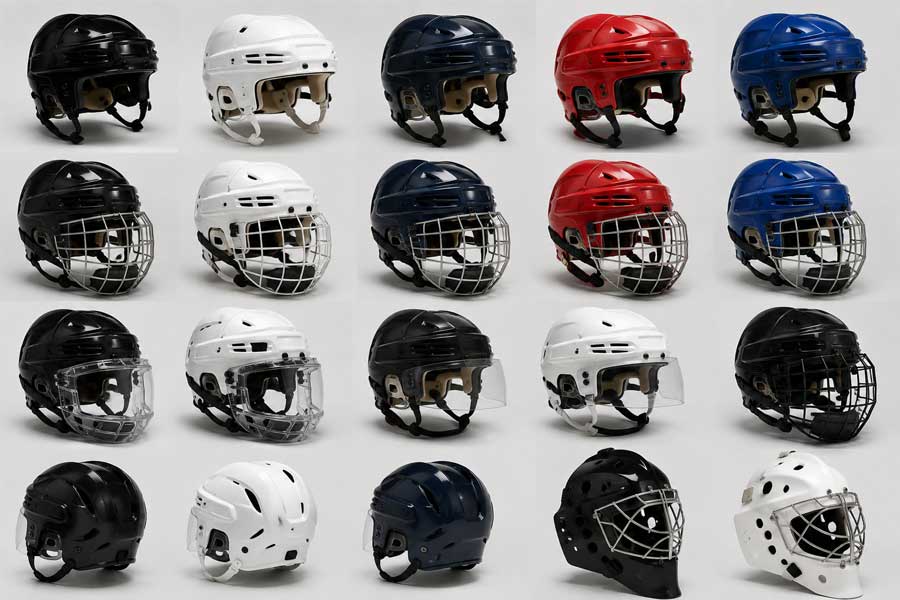
Depending on the player’s age, league and applicable rules, a hockey helmet may be combined with a full face mask, cage, half visor or full visor.

Face protection is especially important for younger players because the face can be exposed to sticks, pucks and other players’ equipment.


How Should a Hockey Helmet Fit?

A hockey helmet should fit securely on the player’s head without being excessively tight or loose.

A properly fitted helmet should:

  • Sit level on the head.
  • Cover the appropriate areas of the head.
  • Stay securely in position while skating.
  • Not move excessively when the player shakes their head.
  • Have the chin strap properly fastened.
  • Feel comfortable without creating excessive pressure.

A helmet that is too loose may move during an impact and may not provide the intended level of protection.

A helmet that is too tight may cause discomfort and make it difficult for the player to concentrate during training or competition.


Helmet Safety and Certification

Players should choose a hockey helmet that meets the safety and certification requirements applicable to their league, federation or country.

Certification systems can vary between regions. For example, USA Hockey-sanctioned games require HECC-certified helmets and facemasks.

Players should always check the requirements of their local hockey organization before purchasing or using a helmet for competition.

It is also important not to make unauthorized modifications to certified protective equipment. Adding or changing components may affect the certification or safety performance of the helmet.


When Should a Hockey Helmet Be Replaced?

A hockey helmet should be inspected regularly for signs of damage or wear.

Consider replacing a helmet when:

  • The shell is cracked or significantly damaged.
  • The protective liner is damaged, compressed or deteriorated.
  • Adjustment components no longer work properly.
  • The chin strap is damaged or cannot be securely fastened.
  • The helmet has experienced a significant impact and the manufacturer recommends replacement.
  • The helmet no longer fits the player correctly.
  • The helmet has reached the manufacturer’s recommended service life.

Players and parents should follow the manufacturer’s instructions regarding inspection, maintenance and replacement.


Helmet Care and Maintenance

Proper maintenance can help keep a hockey helmet in good condition.

After training or competition:

  1. Allow the helmet to dry naturally.
  2. Remove moisture and sweat from the interior.
  3. Inspect the shell, liner and chin strap.
  4. Check that adjustment mechanisms are functioning properly.
  5. Clean the helmet according to the manufacturer’s instructions.
  6. Store it in a cool, dry and well-ventilated location.

Avoid using harsh chemicals or making modifications that are not approved by the manufacturer.


Helmet for Players and Goalkeepers

Although both skaters and goalkeepers require head protection, goalkeeper equipment is different from a standard player helmet.

Goalkeepers normally wear a specialized goalie mask designed specifically for the demands of their position. The mask provides protection from pucks travelling at high speed while also allowing the goalkeeper adequate vision.

Players should always use equipment specifically designed for their position and level of play.


Helmet Safety for Young Players

For children and young hockey players, choosing and fitting a helmet correctly is especially important.

Parents and coaches should check the helmet before every training session and game. The helmet should be the correct size, properly adjusted and securely fastened.

Young players should also be taught never to play without their required protective equipment.

Creating good equipment habits from an early age helps young athletes develop a strong culture of safety.


Helmet Is More Than Just Equipment

In ice hockey, the helmet is more than part of a player’s uniform. It is a critical piece of protective equipment that supports safer participation in a fast and physical sport.

A good helmet, combined with proper fitting, correct use and responsible playing habits, can help players enjoy ice hockey with greater confidence.

Safety should always come first — before speed, competition and winning.

1 2 3 5