ΰΈͺΰΈ±ΰΈΰΈΰΈ²ΰΈΰΈΰΈ£ΰΈ£ΰΈ‘ΰΈΰΈ²ΰΈ£
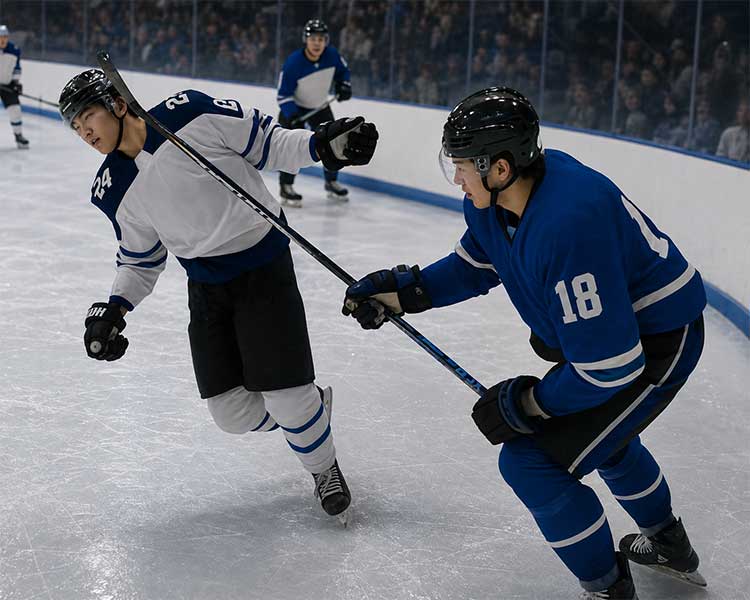
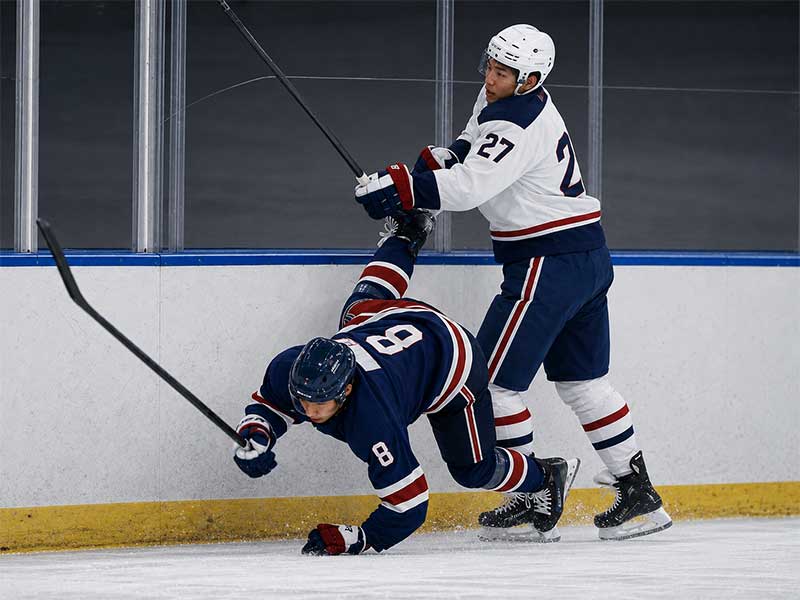
Slashing is one of the stick infractions in ice hockey. It occurs when a player swings their stick at an opponent, whether or not contact is made. Under IIHF Rule 61, a forceful or powerful chop with the stick against an opponent’s body, stick, or on or near the hands can be penalized when the action is judged not to be an attempt to play the puck.
Slashing is generally associated with a player using the stick in a forceful chopping or swinging motion against another player.
The infraction may occur when the stick makes contact with:
Importantly, contact does not have to occur for an action to be considered slashing. The act of swinging the stick at an opponent can itself constitute the infraction.
However, not every stick-to-player contact is automatically slashing. The IIHF rules specifically state that non-aggressive stick contact with the pants or the front of the shin pads should not be penalized as slashing. The referee evaluates the nature, force and circumstances of the action.
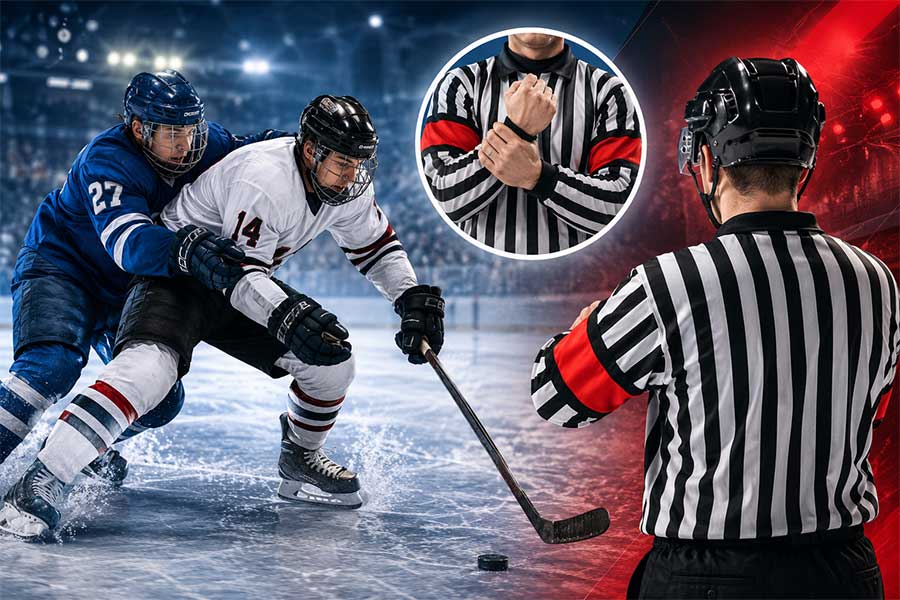
The official IIHF signal for Slashing is:
βA chopping motion with the edge of one hand across the opposite forearm.β
The referee makes a chopping motion across the opposite forearm, using the edge of one hand to represent the action of a hockey stick striking another player.
This gesture visually represents the chopping action associated with a slashing infraction and allows players, coaches and spectators to quickly identify the penalty being called.
Under IIHF Rule 61.2, the referee may assess a Minor Penalty for slashing, with the decision based on the degree of force and violence involved.
In more serious situations, a Major Penalty and automatic Game Misconduct Penalty may be assessed when the player recklessly endangers the opponent and a minor penalty would not be sufficient. Factors include:
Serious slashing incidents can also result in additional disciplinary measures after the game, depending on the circumstances and the applicable competition regulations.
Examples may include:
1. Striking an opponent’s hands
A player swings the stick and strikes an opponent’s hands rather than attempting to play the puck.
2. Forcefully striking an opponent’s stick
A player delivers a powerful chop against an opponent’s stick without a legitimate attempt to play the puck.
3. Swinging the stick at an opponent without contact
A player aggressively swings the stick toward an opponent, even if the stick does not make contact.
4. Dangerous or reckless stick swing
A player makes a violent swing that creates a significant risk of injury to an opponent.
These situations are judged by the referee according to the circumstances and the degree of force involved.
One of the important distinctions in applying the rule is intent and the nature of the stick action.
A player may legitimately use the stick to attempt to play the puck. However, if the stick action becomes a forceful or powerful chop against an opponent, their stick, or their hands and is judged not to be an attempt to play the puck, it can be penalized as slashing.
Therefore, players should maintain control of their stick and avoid unnecessary or dangerous swinging motions.
Referee signals are an essential part of communication in ice hockey.
Because the game moves at high speed, players and spectators may not immediately hear or understand the referee’s verbal announcement. The standardized hand signal provides a clear visual explanation of the type of infraction.
For Slashing, the chopping motion across the opposite forearm immediately communicates that a stick-related penalty has been called.
Learning these signals helps players, coaches, parents and fans better understand what is happening during a game.
| Item | Details |
|---|---|
| Infraction | Slashing |
| IIHF Rule | Rule 61 |
| Category | Stick Infraction |
| Referee Signal | Chopping motion with the edge of one hand across the opposite forearm |
| Typical Penalty | Minor Penalty |
| Serious Cases | Major Penalty + Game Misconduct may apply |
| Contact Required? | No |
| Main Concern | Forceful or powerful stick action not considered an attempt to play the puck |
Official Reference: IIHF Official Rule Book 2026/27, Rule 61 β Slashing and Appendix I β Game Official Signals.
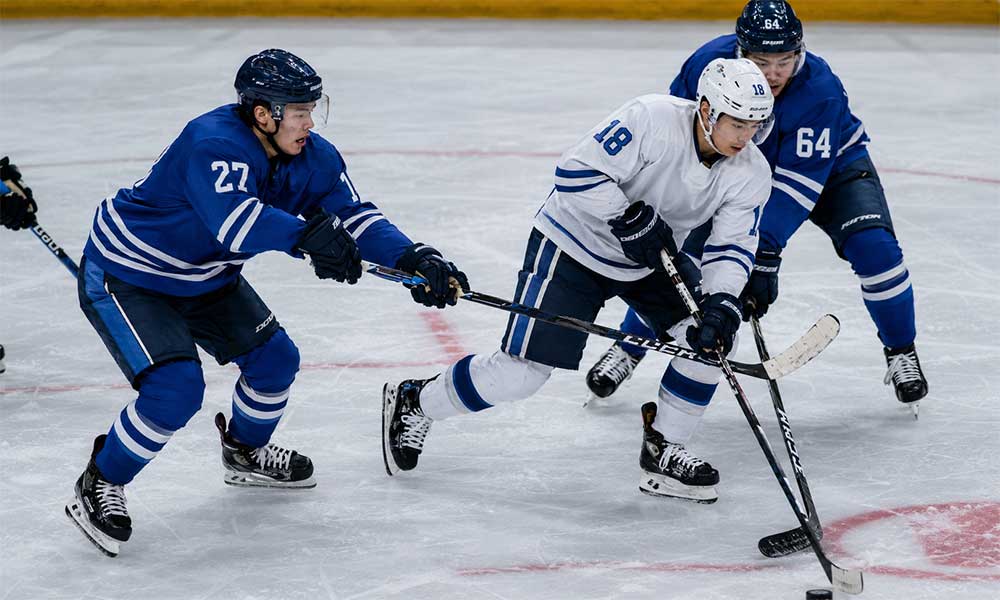
Holding is an infraction in ice hockey that occurs when a player restrains or impedes the progress of an opposing player, regardless of whether the opponent has possession of the puck.
Under IIHF Rule 54 β Holding, a player may not use their hands, arms, or legs to hold or restrict an opponent’s movement.
Holding can occur in many situations, including along the boards, in front of the net, during a battle for position, or while an opponent is attempting to skate into open ice.
A referee may call Holding when a player:
The key consideration is whether the player’s action restrains or impedes the opponent’s progress.
Not every physical contact is considered Holding.
A player is permitted to use their arm as part of a legitimate strength move when they have established body position, provided they are not using their hands in a holding manner.
This distinction is important because legal body positioning and illegal holding can look similar during a fast-paced play.
A player is also prohibited from holding an opponent’s stick.
Under the IIHF rules, holding an opponent’s stick is assessed as a minor penalty and is announced as βHolding the Stick.β A player may defend themselves against an opponent’s stick, but must release it immediately and allow normal play to continue.
The referee signals Holding by:
Clasping one wrist with the opposite hand in front of the chest.
This is the official IIHF game-official signal for Rule 54 β Holding.
When you see the referee:
This signal communicates that a player has been penalized for restraining or impeding an opponent.
Under IIHF Rule 54.2, a player who holds an opponent using their hands, arms, or legs is subject to a Minor Penalty.
The referee may stop play and assess the penalty according to the circumstances of the infraction.
Holding is designed to prevent players from gaining an unfair advantage by restricting an opponent’s ability to skate, defend, receive a pass, or pursue the puck.
Without this rule, a player could gain an advantage simply by physically preventing an opponent from participating in the play.
Holding can sometimes be confused with other restraining infractions.
Holding
Uses the hands, arms, or legs to restrain an opponent.
Holding the Stick
A player deliberately holds an opponent’s stick.
Hooking
Uses the stick to restrain or impede an opponent.
Interference
Impeding an opponent who does not have possession of the puck.
Understanding these differences helps players, coaches, officials, and spectators better understand why a particular penalty has been called.
INFRACTION: Holding
IIHF RULE: Rule 54
SIGNAL: One wrist clasped by the opposite hand in front of the chest
TYPICAL PENALTY: Minor Penalty
MAIN PURPOSE: Prevent players from restraining or impeding an opponent illegally
βPlay the puck, not the player.β
Good ice hockey allows players to compete physically while respecting the boundaries of the rules. Understanding referee signals helps everyone follow the game more clearly and appreciate the decisions made on the ice.
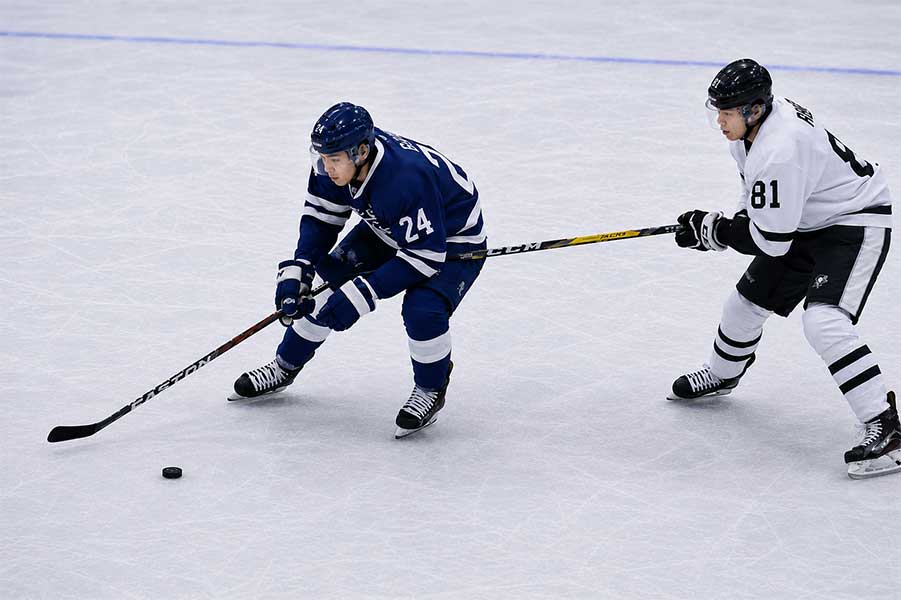
Hooking is a stick infraction in ice hockey that occurs when a player uses the stick in a way that restrains or impedes the progress of an opposing player.
Under the current IIHF Rule Book, Hooking is defined as using the stick to restrain an opponent. If the stick is used against or near an opponentβs hands, the action may be penalized as hooking. However, simple stick-to-stick contact during a legitimate checking action is not considered hooking.
A Hooking penalty may occur when a player:
The key point is that the stick is being used to restrain or impede the opponent, rather than simply making normal stick contact.
When a referee calls Hooking, the official uses the designated hooking signal.
The signal is made by moving one arm in a hooking motion, representing the action of using the hockey stick to hook or restrain an opponent.
This visual signal allows players, coaches, spectators and other game officials to quickly identify the type of infraction being called.
Under IIHF Rule 55, a standard Hooking infraction results in a Minor Penalty when a player impedes an opponent’s progress by hooking with the stick. The rule also specifically addresses the use of the stick shaft above the upper hand to hold or hook an opponent.
In more serious situations, the referee may assess a Major Penalty plus an automatic Game Misconduct when the hooking is reckless and endangers the fouled player to a degree that a minor penalty would not sufficiently address.
Not every stick contact is a Hooking penalty.
For example:
Legal:
A player uses the stick to challenge an opponent’s stick and there is only stick-to-stick contact during a legitimate play.
Hooking:
A player uses the stick to catch, wrap, pull, or restrain an opponent, particularly around the hands or body, preventing the opponent from skating freely.
The distinction is whether the stick is being used as part of a legitimate hockey play or as a means of restraining the opponent.
Hooking can give a player an unfair advantage by reducing an opponent’s ability to skate, control the puck or create a scoring opportunity.
Because ice hockey is played at high speed, restricting an opponent with the stick can also create dangerous situations. IIHF emphasizes that officials assess physical play based on the nature of the action and whether it recklessly endangers an opponent.
| Item | Details |
|---|---|
| Infraction | Hooking |
| Rule | IIHF Rule 55 |
| Equipment involved | Hockey stick |
| Main action | Using the stick to restrain or impede an opponent |
| Typical penalty | Minor Penalty |
| Serious cases | Major Penalty + automatic Game Misconduct, at referee’s discretion |
| Referee | Signals the infraction using the Hooking signal |
Tripping is an infraction in ice hockey that occurs when a player uses their stick, leg, foot, arm, hand, or other part of the body to cause an opposing player to lose balance and fall.
Tripping is generally penalized when the action is considered an illegal attempt to impede an opponent’s movement. The infraction may occur during skating, puck battles, or while competing for position.
When a referee calls Tripping, the official uses a recognizable hand signal to communicate the infraction to players, coaches, spectators, and the penalty box.
Signal:
The referee extends one leg forward and makes a downward sweeping motion with the opposite hand, indicating the action of causing an opponent to trip or fall.
The signal is normally accompanied by the referee stopping play and indicating the offending player or team.
Tripping may include:
Tripping can create dangerous situations because players are moving at high speed on ice. A player who suddenly loses balance may fall awkwardly or collide with another player, the boards, or the goal.
The rule is therefore intended to protect player safety and maintain fair competition.
Depending on the applicable rules and circumstances of the play, a tripping infraction may result in a Minor Penalty. More serious situations may be subject to additional or different penalties under the governing competition rules.
Important: Penalty enforcement can vary according to the specific rule set and competition regulations, so players and teams should always refer to the rules governing their tournament or league.
In ice hockey, Offside occurs when an attacking player enters the attacking zone before the puck completely crosses the blue line.
The key principle is simple: the puck must enter the attacking zone before the attacking players do.
The attacking zone is generally considered to begin at the blue line. For a player to be legally onside, the player must not precede the puck into the attacking zone.
When an offside situation occurs, the Linesperson stops play and signals the infraction.
The Linesperson’s primary responsibility is to determine whether attacking players have legally entered the attacking zone in relation to the puck.
A typical sequence is:
The standard signal associated with an offside situation is made by the Linesperson.
The Linesperson raises an arm to indicate the offside situation and communicates the ruling to the players, officials, and spectators.
The signal allows everyone around the rink to quickly recognize that the attacking team has entered the zone illegally.
OFFSIDE = Attacking player enters the attacking zone before the puck.
In situations where the rules permit a delayed offside, the Linesperson may allow play to continue rather than immediately stopping the game.
The attacking team must clear the attacking zone before the puck is played or advanced in a way that creates an offside situation.
If all attacking players legally exit the zone, the offside situation can be cleared and play may continue.
This is commonly referred to as delayed offside.
The blue line is one of the most important reference points for determining offside.
Players and officials must constantly judge the relationship between:
The puck must legally enter the attacking zone before an attacking player does.
Because hockey moves extremely quickly, Linespersons must maintain excellent positioning, awareness, and timing.
Offside and icing are two different infractions and should not be confused.
Offside relates to entering the attacking zone illegally.
Icing generally relates to sending the puck from behind the center red line across the opponent’s goal line without it being legally played under the applicable rules.
The Linespersons are responsible for making these important judgments during play.
Players should remember these basic principles:
Understanding offside helps players make better decisions when entering the offensive zone and reduces unnecessary stoppages in play.
| Situation | Official | Meaning |
|---|---|---|
| Offside | Linesperson | An attacking player entered the attacking zone before the puck |
| Delayed Offside | Linesperson | Offside situation is being delayed while the attacking team clears the zone |
| Play Stoppage | Referee / Linesperson | Play has been stopped according to the applicable rule |
PUCK FIRST β PLAYERS SECOND.
The fundamental idea behind offside is that the puck must establish entry into the attacking zone before the attacking players.
Icing is one of the most common stoppages in ice hockey. It occurs when a team shoots or sends the puck from behind the centre red line across the opponent’s goal line without either team touching the puck before it crosses the goal line.
When icing is called, play is stopped and a face-off is conducted in the defensive zone of the team that committed the icing.
Icing is designed to prevent a team from simply sending the puck the entire length of the ice to relieve pressure without attempting to make a play.
According to IIHF terminology, icing occurs when the puck is sent from behind the centre red line across the opponent’s goal line and is not touched before crossing the line. However, icing is not called in every situationβfor example, when the attacking team reaches the puck first or when the officials determine that the defending team had a reasonable opportunity to play it. A shorthanded team cannot be called for icing under the IIHF rule.
Because ice hockey is a very fast sport, officials use clear hand and arm signals to communicate decisions to players, coaches, scorekeepers and spectators.
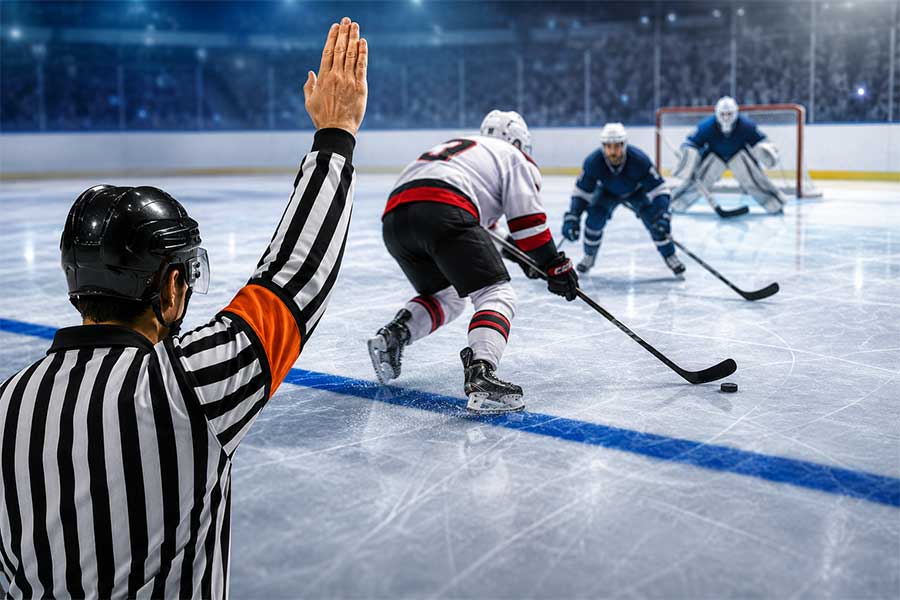
When an official determines that a play may result in icing, the appropriate official raises one arm above the head.
This is a signal that icing is being considered, not necessarily a final icing call.
The arm remains raised while the officials determine whether the puck will cross the goal line and whether the defending team has an opportunity to play the puck.
The current IIHF officiating procedures describe the icing signal as raising the non-whistle arm while moving through the neutral zone.
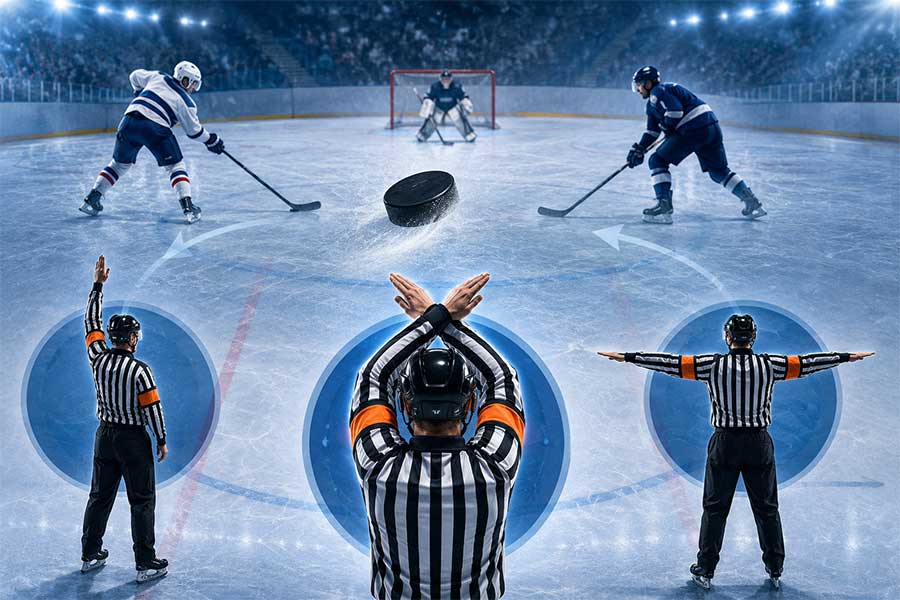
If the puck crosses the opponent’s goal line without being legally played, and icing is confirmed, play is stopped with a whistle.
The official then uses the icing signal by crossing both arms in front of the chest.
This tells the players, benches and spectators that icing has been called.
The puck is then taken to the appropriate face-off location in the defensive zone of the team that committed the icing.
If icing is not applicable, the linesperson uses the wash-out signal.
The official extends both arms outward at approximately shoulder level and sweeps them sideways.
This signal means that there is no icing and play should continue.
The wash-out signal may also be used for other situations, such as indicating no offside or cancelling a potential call, depending on the situation and the official making the signal.
1. Puck is shot from behind the centre red line
β
2. Official raises one arm
β
3. Puck travels toward the opponent’s goal line
β
4. Defending team does not legally play the puck
β
5. Puck crosses the goal line
β
6. Whistle stops play
β
7. Official crosses both arms in front of the chest
β
8. Face-off in the defensive zone of the team that committed icing
A potential icing play may be cancelled when:
In the standard officiating system, linespersons are primarily responsible for determining icing and offside situations.
The IIHF identifies linespersons as the on-ice officials generally responsible for calling offside and icing.
In certain officiating systems, referees may also have responsibilities related to icing calls and signals. The exact procedure can vary according to the officiating system being used.
Understanding the icing signal makes it much easier for spectators and young players to follow the game.
When you see an official raise an arm, it means βpossible icing.β
When play is stopped and the official crosses both arms in front of the chest, it means βicing has been called.β
When the official sweeps both arms outward, it indicates βwash-out β no icing.β
These signals allow everyone at the rink to understand what is happening even before the announcement is made.
| Signal | Meaning |
|---|---|
| π One arm raised | Possible Icing |
| βοΈ Arms crossed in front of chest | Icing Called |
| βοΈ Both arms swept outward | Wash-Out / No Icing |
| π Face-off in defending zone | Result of an icing call |
Remember:
Raised arm = Possible Icing
Crossed arms = Icing Called
Wash-out = No Icing
Rules and officiating procedures may vary according to the competition and officiating system. For competitions following IIHF regulations, always refer to the latest IIHF Official Rule Book and applicable officiating procedures.
Copyright Β© Ice Hockey Family